Charleston County has taken a major step forward in advancing a long-awaited public transport project, but not without sparking legal and community debate. The latest decision could shape how the project moves from planning to reality.
What Is the Lowcountry Rapid Transit Project
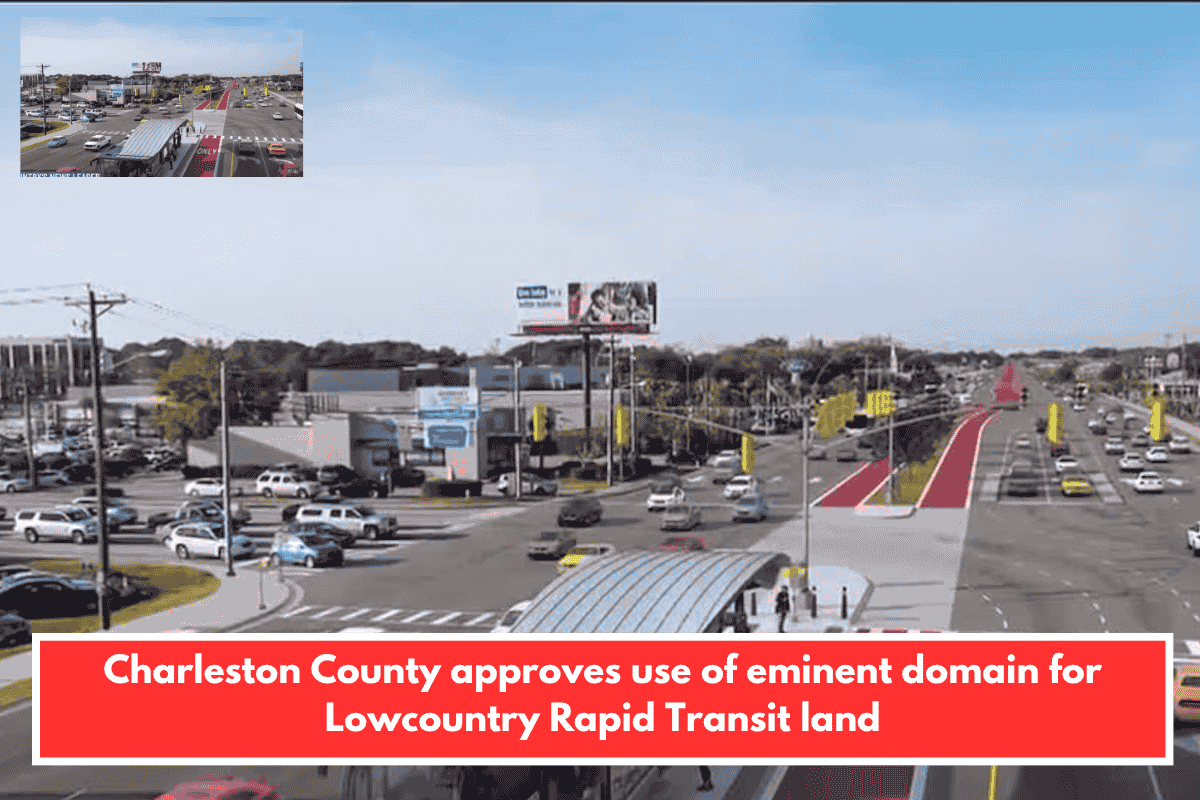
The Lowcountry Rapid Transit system is a planned bus rapid transit (BRT) network designed to improve connectivity across the region.
The project aims to:
- Create a more than 20-mile transit corridor
- Improve access to downtown Charleston
- Reduce traffic congestion
- Offer faster and more reliable public transport
At the centre of the latest update is a key location near the Exchange Park fairgrounds.
Key Decision by Charleston County
Leaders in Charleston County have approved a proposal that allows the Charleston Area Regional Transportation Authority (CARTA) to move forward with land acquisition if needed.
This involves around six acres of land near the fairgrounds, which is planned to serve as the northern end of the transit line.
The site is expected to become:
- A park-and-ride hub
- A central connection point for commuters
What Is Eminent Domain
With this approval, CARTA can use eminent domain if negotiations with the property owner fail.
Eminent domain means:
- The government can take private land for public use
- Compensation must be provided to the owner
- It is usually used for infrastructure projects
This step is often controversial, especially when property owners disagree.
Legal Dispute Over the Land
The decision has led to a legal challenge from the fairgrounds’ leadership.
The Exchange Club of Charleston has filed a lawsuit to block the move, arguing:
- The process may not have followed proper procedures
- The approval came too late under existing rules
- The land should not be taken
They have stated they will continue to fight the case in court.
CARTA’s Position
CARTA leaders say:
- This land has always been part of the original plan
- Most of the project route is already finalised
- No large additional land acquisitions are expected
They also argue the project could benefit the fairgrounds by:
- Increasing visitor traffic
- Improving parking access
- Making the area easier to reach
What Happens Next
The project is now entering a more advanced phase.
Next steps include:
- Continuing legal proceedings over the land
- Negotiations with the property owner
- Waiting for federal funding approval
Officials expect a major funding agreement in the coming months, which could push the project further ahead.
Why This Decision Matters
This development is important for several reasons:
- It marks a shift from planning to execution
- It highlights the challenges of land acquisition
- It raises questions about balancing public benefit and private rights
- It could significantly impact transportation in the region