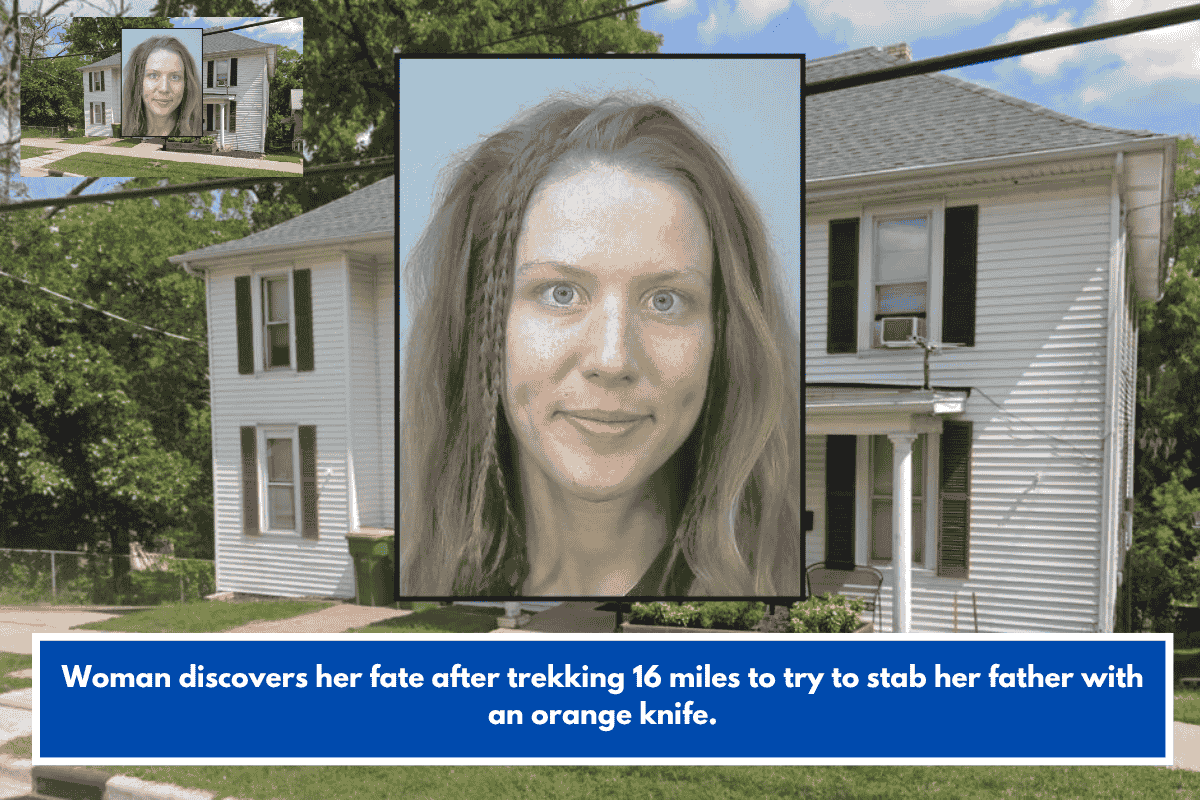
A disturbing case from Wisconsin has ended with a long-term mental health commitment after a woman attacked her father during what authorities described as a severe hallucination episode.
What Happened in the Incident
The incident took place in Stoughton, a town near Madison, on July 1, 2025.
The accused, Jamie Anderson, 34, walked nearly 16 miles to her father’s home early in the morning.
According to investigators:
- She arrived around 5 a.m. and rang the doorbell
- Told her father she wanted to stop hallucinating
- Asked him for a hug
Moments later, the situation turned violent.
Violent Attack Inside the Home
Police say that after a brief exchange, Anderson suddenly attacked her father with a knife.
Authorities reported:
- Multiple attempts to stab him in the head
- Several cuts and injuries inflicted
- Repeated threats during the attack
The struggle continued inside the house until her father managed to escape.
Victim’s Injuries
The father suffered serious injuries, including:
- Wounds requiring staples to his head
- Injuries that needed surgery on his arm
Despite the attack, he later told police that the incident was not reflective of his daughter’s true self.
Arrest and Confession
Officers arrived shortly after and found the victim outside the home.
Anderson was located nearby:
- Walking with a knife in hand
- She complied when ordered to drop the weapon
- She was arrested without further incident
Police say she admitted to the assault and claimed she believed her father was the “devil” due to hallucinations.
Mental Health Plea
In court, Anderson entered a plea of:
- Not guilty by reason of mental disease or defect
This means the court recognised that her mental condition played a major role in the incident.
Court Decision and Sentence
Mario White sentenced Anderson to:
- 20 years in a mental health inpatient facility
This type of sentence focuses on treatment rather than traditional imprisonment.
Why This Case Is Important
This case highlights several serious issues:
- The impact of untreated or severe mental health conditions
- How hallucinations can lead to dangerous behaviour
- The role of the legal system in handling mental health cases
It also shows how courts may prioritise treatment when mental illness is a key factor.