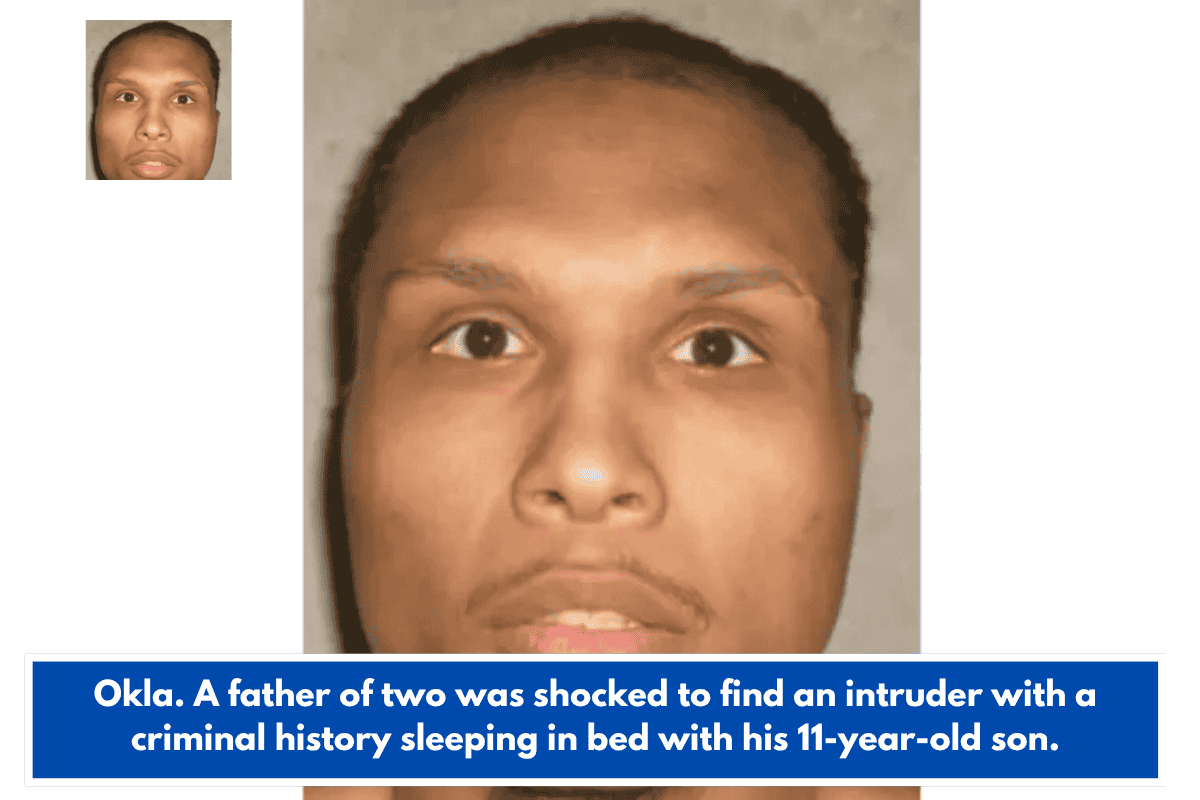
An Oklahoma man, 46‑year‑old Charles Bradford, has been arrested after breaking into an Oklahoma City home and falling asleep in an 11‑year‑old boy’s bed, leading to chaotic but ultimately non‑fatal confrontation with the child’s father.
What happened inside the home
On March 14, the boy’s father, Josh Hodnik, said he was woken by his son at about 8 a.m., who told him a man was in his bed. Hodnik initially thought his son was confused or sleepwalking, but when he checked he found Bradford, a grown man, lying in the child’s bed with a blanket he had brought and only one sock on, no shoes.
Hodnik confronted Bradford, removed him from the boy’s room, and took him to the living room, where he punched him, later saying he felt he had to act after realizing a stranger had been in the children’s bedroom while they slept. Neither child was physically harmed, and no one was injured in the incident.
Arrest, charges, and mental‑health context
Oklahoma City Police arrested Bradford at the scene. He was booked into the Cleveland County Detention Center on a first‑degree burglary charge and five misdemeanors, including trespassing and assault, and is being held on a $75,000 bond.
Records show Bradford has a prior felony conviction for first‑degree manslaughter in 2002, after killing a cellmate in prison, plus multiple assault‑related charges. He had recently been placed in Oklahoma County’s DREAMS Court (a mental‑health treatment court) after pleading guilty to an assault‑and‑battery charge in February, but his alleged new crime while in the program may lead to his removal and revocation from the program.
Community reaction and legal questions
Hodnik expressed frustration that Bradford, who has a history of mental‑health issues and violent behavior, was on the street; he acknowledged concerns about Bradford’s mental illness but stressed that “he came in my home, laid in my kid’s bed” and should not be free to do so again. Legal experts and officials have said the DREAMS Court was intended to stabilize him with treatment and medication, but the case raises questions about how individuals with repeated violent histories are supervised in such programs.