A major debate is building in South Carolina as federal officials move forward with plans for a new nuclear weapons facility, while environmental groups continue to raise concerns about safety, cost, and long-term impact. With questions still unanswered, both sides are preparing for a closer look at the project in the coming days.
Federal officials to host rare site tour
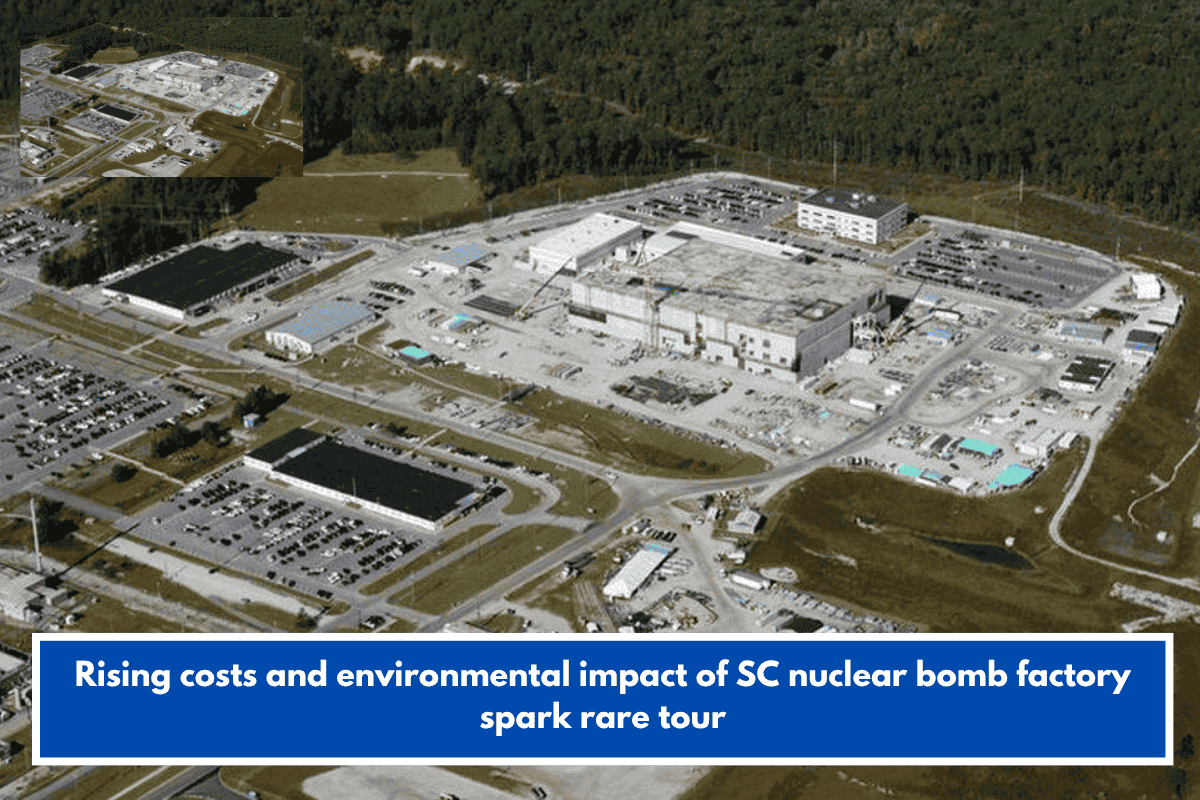
Next week, officials at the Savannah River Site will host a rare tour for environmental groups. The facility, a large nuclear complex near Aiken, spans around 310 square miles.
The visit is part of an agreement following a lawsuit filed by environmental organisations. During the tour, officials are expected to answer questions about the plant’s cost, construction progress, and potential environmental risks.
Such tours are uncommon, making this a significant opportunity for critics to directly assess the project.
What is the plutonium pit plant?
The project focuses on building a facility to produce plutonium pits, which are key components used in nuclear weapons.
The United States has not produced these pits on a large scale since 1989, when a plant in Colorado shut down. Federal officials say new production is necessary to maintain and modernise the country’s nuclear stockpile.
The plan includes converting a previously failed plutonium fuel plant at the Savannah River Site into a functioning pit production facility, along with upgrades at Los Alamos National Laboratory.
Rising costs and expanded production goals
One of the biggest concerns is the rising cost of the project. Earlier estimates placed the cost at around $5 billion, but current projections range between $25 billion and $30 billion.
Production goals have also increased. Originally, the plan was to produce 80 pits per year between the two sites. Now, proposals suggest a possible output of up to 205 pits annually, with a larger share coming from South Carolina.
These changes have added to the debate about whether the scale of the project is justified.
Environmental and safety concerns
Environmental groups have raised serious concerns about the risks involved. A recent environmental study found that transporting plutonium between states could expose workers and the public to low levels of radiation.
Plutonium is known to be highly toxic and can remain dangerous in the environment for thousands of years. Critics are also worried about the waste generated during production and how it will be managed.
Some experts say accidents during transport or storage could have long-term health effects, including increased cancer risk.
Critics question the need for more weapons material
Opponents of the project argue that the United States already has a large supply of plutonium pits and does not need to produce more.
They believe the government has not clearly proven the need for expanding nuclear weapons production. For them, the focus should be on reducing risks rather than increasing output.
Environmental groups involved in the case continue to push for more transparency and stronger safety measures.
Supporters highlight jobs and security
Despite the criticism, the project has strong support from many political and community leaders in South Carolina.
Supporters say the plant will create thousands of jobs, including around 2,800 direct positions and thousands more during construction. They also argue that maintaining a strong nuclear programme is important for national security, especially in uncertain global conditions.
Some organisations believe the project will bring economic growth to the region while strengthening the country’s defence capabilities.
What happens next?
The current environmental report is still in its early stage. The public has time until late July to review and comment on the findings.
A final decision on the project is not expected until at least next year. Meanwhile, the upcoming site tour could play an important role in shaping opinions and future actions.
Key details at a glance
| Detail | Information |
|---|---|
| Project | Plutonium pit production plant |
| Location | Savannah River Site, South Carolina |
| Estimated cost | $25–30 billion |
| Previous estimate | Around $5 billion |
| Production goal | Up to 205 pits per year |
| Other site | Los Alamos National Laboratory |
| Concerns | Radiation risk, waste, cost |
| Status | Under review, public comments open |
This issue highlights a complex balance between national security, economic growth, and environmental safety. While supporters see the project as necessary for defence and job creation, critics worry about long-term risks and rising costs.
As discussions continue and more information comes to light, the final decision will likely have a lasting impact not just on South Carolina, but on the country’s nuclear policy as a whole.