A serious environmental concern is unfolding in South Carolina, where residents are questioning why potentially harmful waste continues to be spread on farmland already known to be contaminated. The issue centres around chemicals that may pose long-term health risks.
What Is Happening in Darlington County
The problem is centred in Darlington County, near farmland along Journeys End Road.
Residents like Cecilia Williams say they have been living near fields where industrial waste sludge has been used for years as fertilizer.
In 2019, government agencies found that the land—and even nearby drinking water—contained dangerous “forever chemicals,” also known as PFAS.
What Are PFAS and Why They Matter
PFAS (per- and polyfluoroalkyl substances) are chemicals used in many industrial products. They are called “forever chemicals” because they do not break down easily in the environment.
Health risks linked to PFAS include:
- Cancer
- Thyroid problems
- Weak immune system
These chemicals can remain in soil and water for many years, making contamination a long-term issue.
Why Residents Are Concerned
Even after discovering contamination in 2019, the S.C. Department of Environmental Services allowed more sludge to be spread on the same farmland in later years.
Reports suggest:
- Over 5 million gallons of waste sludge have been applied since then
- The land had already been exposed to textile plant waste in the past
- Nearby wells and creeks showed high levels of contamination
Residents are worried that adding more waste could make the situation worse.
Source of the Pollution
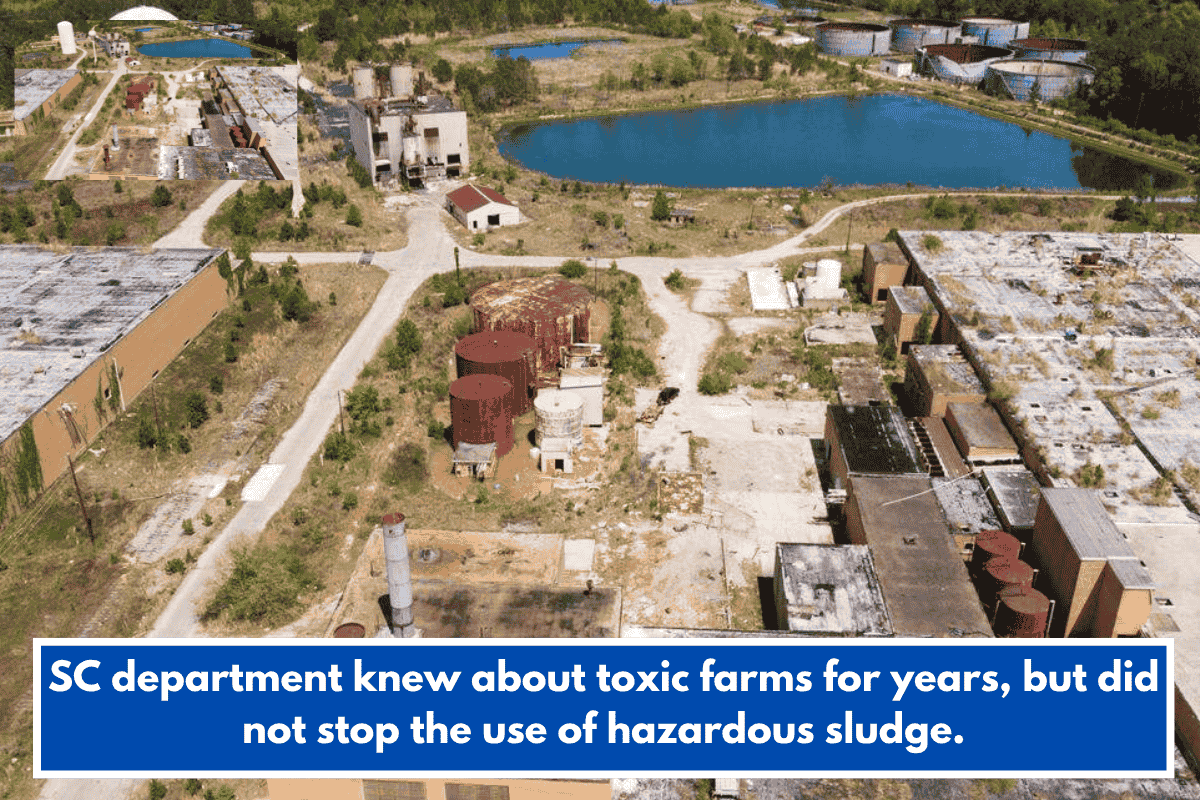
The contamination is linked to waste from the old Galey and Lord plant.
This facility produced sludge containing:
- Metals
- PFAS chemicals
Later, sludge from meat processing plants was also spread on the same fields. This type of waste can include:
- Animal by-products
- Bacteria
- Heavy metals
However, it is still unclear whether this newer sludge also contains PFAS.
Major Concern: Lack of Testing
One of the biggest issues raised is that:
- There is no clear testing being done for PFAS in the new sludge
- Companies are not required to check before spreading it
- Authorities say there are no proper standards yet
Critics argue that regulators do have the authority to test but are not taking action.
Reaction from Leaders and Experts
Several officials and environmental experts have raised concerns.
J. A. Moore warned that continuing this practice could make pollution worse and harm public health.
Environmental advocates say the lack of testing is risky, especially when dealing with substances that can stay in the environment for decades.
Wider Impact on Communities
The issue is not limited to one farm. Thousands of acres in eastern South Carolina have been used for sludge disposal over the years.
Some residents believe long-term exposure to contaminated water may have contributed to illnesses in their families.
There are also concerns that waste from other states is being brought into South Carolina for disposal.
What Happens Next
Lawmakers are now pushing for stricter rules, including:
- Limiting the use of PFAS-contaminated sludge
- Requiring proper testing before land application
- Increasing transparency from environmental agencies
Investigations and discussions are ongoing.
This situation highlights the challenges of managing industrial waste and protecting public health. While sludge has long been used as fertilizer, the presence of dangerous chemicals like PFAS raises serious concerns. Residents are asking for clearer answers and stronger action from authorities. As awareness grows, the focus will be on ensuring proper testing, stricter regulations, and long-term safety for communities living near these affected areas.