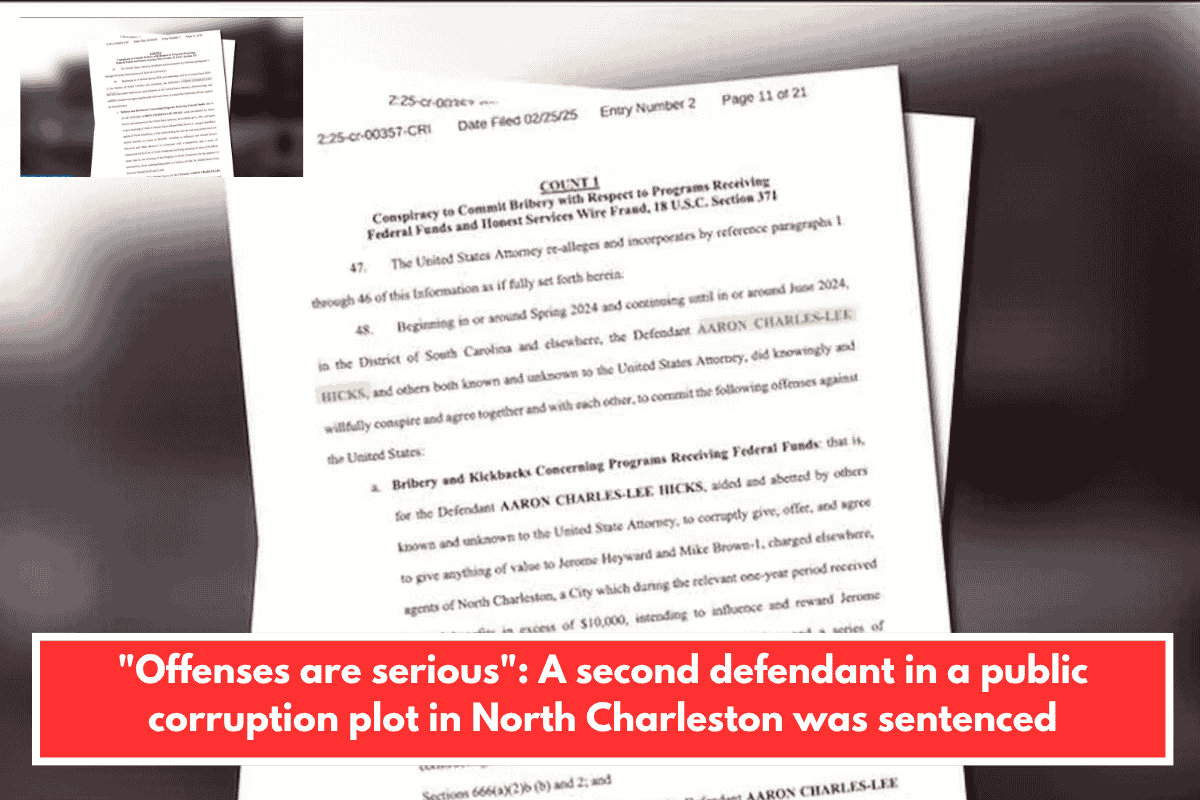
A federal corruption case tied to local government decisions in South Carolina has led to a prison sentence for a consultant involved in a bribery scheme. The case highlights how financial influence in public decisions can lead to serious legal consequences.
What the Case Is About
The मामला took place in North Charleston, where Aaron Charles-Lee Hicks was accused of playing a key role in a public corruption scheme.
Hicks was involved in efforts to influence a rezoning vote connected to a boat manufacturing company, Sea Fox Boats.
Charges and Conviction
Hicks pleaded guilty to multiple federal charges, including:
- Conspiracy to commit bribery
- Honest services wire fraud
Prosecutors said he solicited and distributed kickbacks to influence public officials involved in the rezoning decision.
Sentence Announced
Richard Gergel sentenced Hicks to:
- 15 months in federal prison
His sentence is set to begin after June 1.
The judge acknowledged Hicks’ otherwise clean background but emphasised that the crimes were serious and involved planned financial wrongdoing.
How the Scheme Worked
According to court documents:
- Hicks received payments from Sea Fox Boats
- The total amount was around $30,000
- He allegedly passed some of that money to city council members
These payments were reportedly made in exchange for support in a rezoning vote that would benefit the company.
Investigators also cited conversations suggesting the intent was to continue benefiting financially from the deal.
Role of Other Individuals
The case involves multiple people:
- Council members Jerome Heyward and Mike Brown were allegedly involved
- Another defendant, Hason Tatorian “Tory” Fields, has already been sentenced
In total, eight individuals have been charged in connection with the broader corruption scheme.
Statements from Court
Emily Limehouse stressed that the case sends a clear message:
- Consultants and lobbyists can also be held accountable
- Bribery and misuse of influence will lead to punishment
The goal, she said, is to deter others from engaging in similar conduct.
Defense Argument
Hicks’ lawyer and supporters described him as:
- A family-oriented individual
- A person with a clean past
- Someone who accepted responsibility
Hicks himself admitted his actions and acknowledged the impact on his family.
Why This Case Matters
This case raises important issues about:
- Public trust in government decisions
- The role of money in influencing policy
- Accountability beyond elected officials
- The need for transparency in local governance
It also shows how federal authorities monitor and act against corruption at all levels.