NORTH CHARLESTON, S.C. — The Berkeley County Planning Commission has postponed a decision on the proposed 5,500-home mixed-use “Lake Village” development in Cane Bay, citing ongoing community concerns over traffic, flooding, and infrastructure.
Project Overview
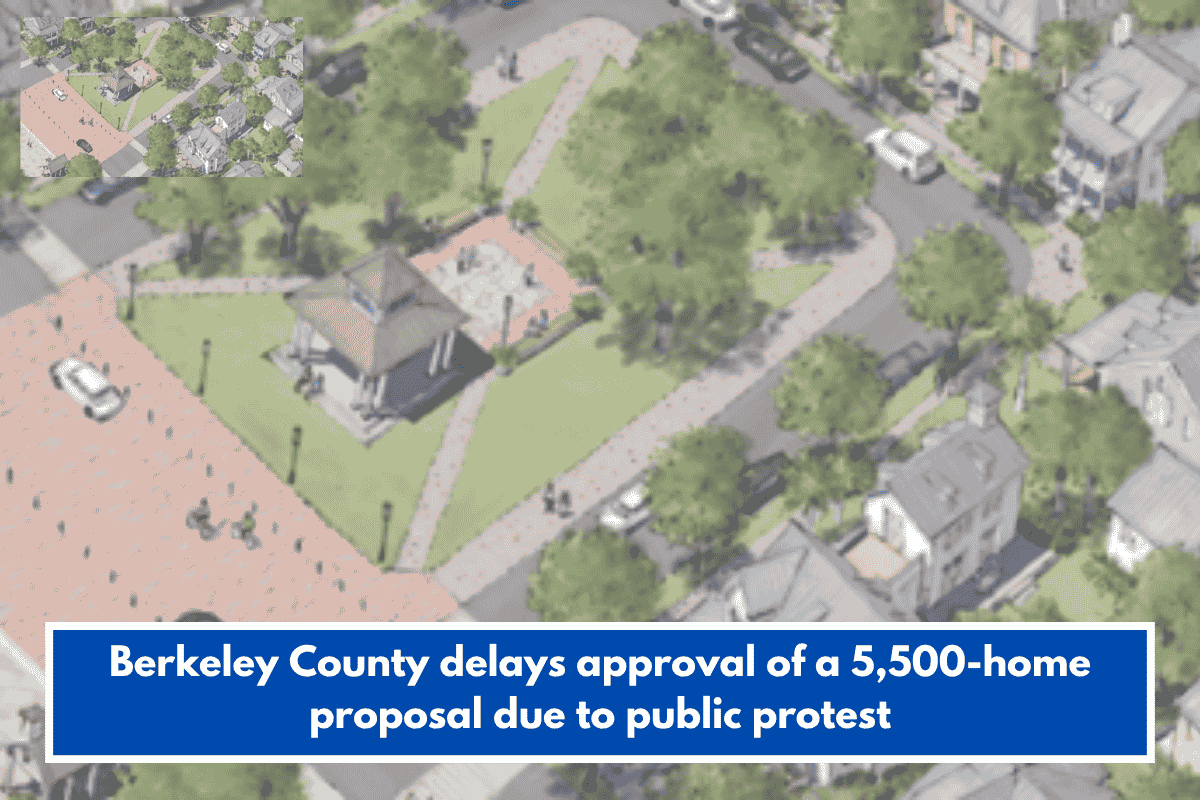
The 2,000-acre development would include 5,500 single- and multi-family homes, commercial and retail spaces, recreational areas, waterfront access, and civic buildings such as a school and fire station.
Lake Village is planned as the final section of Cane Bay Plantation and borders the Lakewood and Windwood communities.
Developers Ben Gramling of Gramling Brothers Real Estate and DPZ CoDesign Group reduced the project from an initial 9,000 residences to allow more commercial, retail, and outdoor spaces. Gramling emphasized the addition of waterfront dining and other amenities intended to enhance residents’ quality of life.
Community Concerns
Residents voiced significant concerns at a May 27 meeting. Key issues included:
- Traffic: Locals worry the addition of 15,000 residents will overburden existing roads.
- Flooding: Previous developments led to backyard flooding and water drainage issues in neighboring communities.
- Environmental Management: Concerns were raised over poorly maintained lakes, dead fish, and invasive plants.
James Thomas of Thomas & Hutton, who has managed stormwater control for Cane Bay Plantation, noted that no homes have flooded during major historical events, such as 1,000-year floods in 2015 or Hurricane Matthew in 2016.
Next Steps
The planning commission deferred the vote to allow developers to gather more input from community stakeholders regarding traffic, flooding, and other infrastructure-related impacts. Commissioners initially recommended approval with conditions, including:
- Commercial square-footage caps
- Attainable housing standards
- Strengthened traffic impact analysis with automatic mitigation triggers
A decision could be made at the next planning commission meeting on June 23, though it may be further delayed. Once the commission votes, the plan will proceed to County Council for three readings, during which the public can provide additional input.