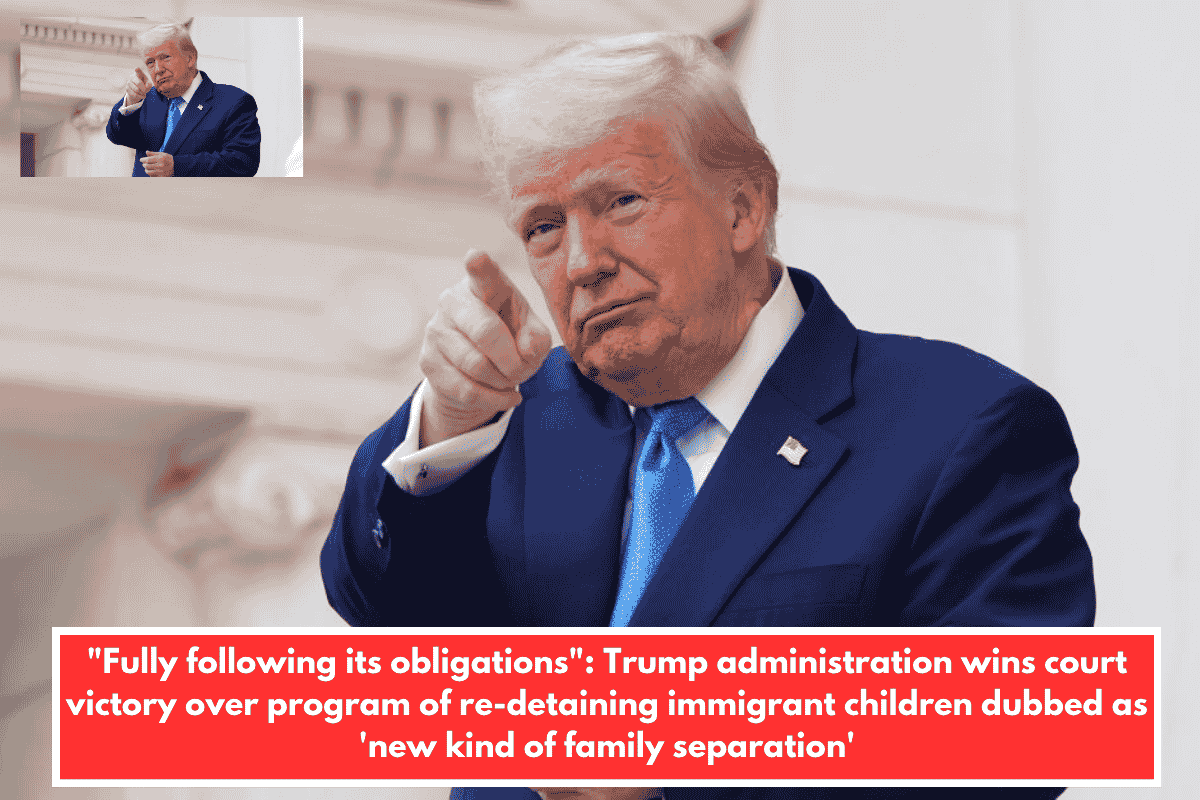
A recent U.S. court decision has allowed the government to continue a policy involving immigrant children who are returned to federal custody after being released to sponsors. The ruling has sparked debate, with advocacy groups raising concerns while officials argue the policy is meant to protect children.
Court backs government in immigration case
A federal judge has ruled in favour of the government, allowing the Office of Refugee Resettlement (ORR) to continue its current approach. The decision was made by Carl Nichols, who denied a request to block the policy.
The case involved claims that children who were previously released to approved sponsors were being taken back into custody and forced to go through the process again.
What the policy involves
The Office of Refugee Resettlement oversees the care of unaccompanied immigrant children. Under the current approach, if a child is re-detained, their sponsor must submit a new application.
This means the government reassesses whether the sponsor is still suitable to care for the child, even if they were approved in the past.
Concerns raised by advocacy groups
Advocacy organisations argued that the policy creates unnecessary delays and harms children. They claim:
- Children are separated from families again
- The process can take months to complete
- Some sponsors struggle to meet identification requirements
They described the situation as a new form of family separation, saying it disrupts education and emotional well-being.
Government’s response
Officials from the Department of Health and Human Services and related agencies defended the policy.
They argued that there is no special “blanket policy” targeting previously released children. Instead, they say each case is handled individually.
The government also stressed that re-checking sponsors helps ensure children are placed in safe environments and protected from risks like exploitation or trafficking.
Judge’s reasoning
In his decision, Judge Nichols said the policy may slow down reunification but is not unreasonable. He noted that:
- The law requires authorities to ensure children are placed safely
- Time gaps between release and re-detention justify re-checking sponsors
- There is no rule preventing a second review
He added that the process appears to follow legal requirements and aims to protect children’s best interests.
Due process concerns addressed
Advocates also argued that the delays violated children’s rights. However, the court disagreed, stating that the process still allows families to be heard within a reasonable time.
The judge noted that some sponsor applications are already being processed or approved, showing the system is still functioning.
Broader context
The case involves coordination between multiple agencies, including the Department of Homeland Security, which handles immigration enforcement, and ORR, which manages child custody.
The situation highlights ongoing challenges in balancing immigration enforcement with child welfare.
What happens next
For now, the court’s decision means the policy will remain in place while the case continues. Advocacy groups may pursue further legal action as the case moves forward.