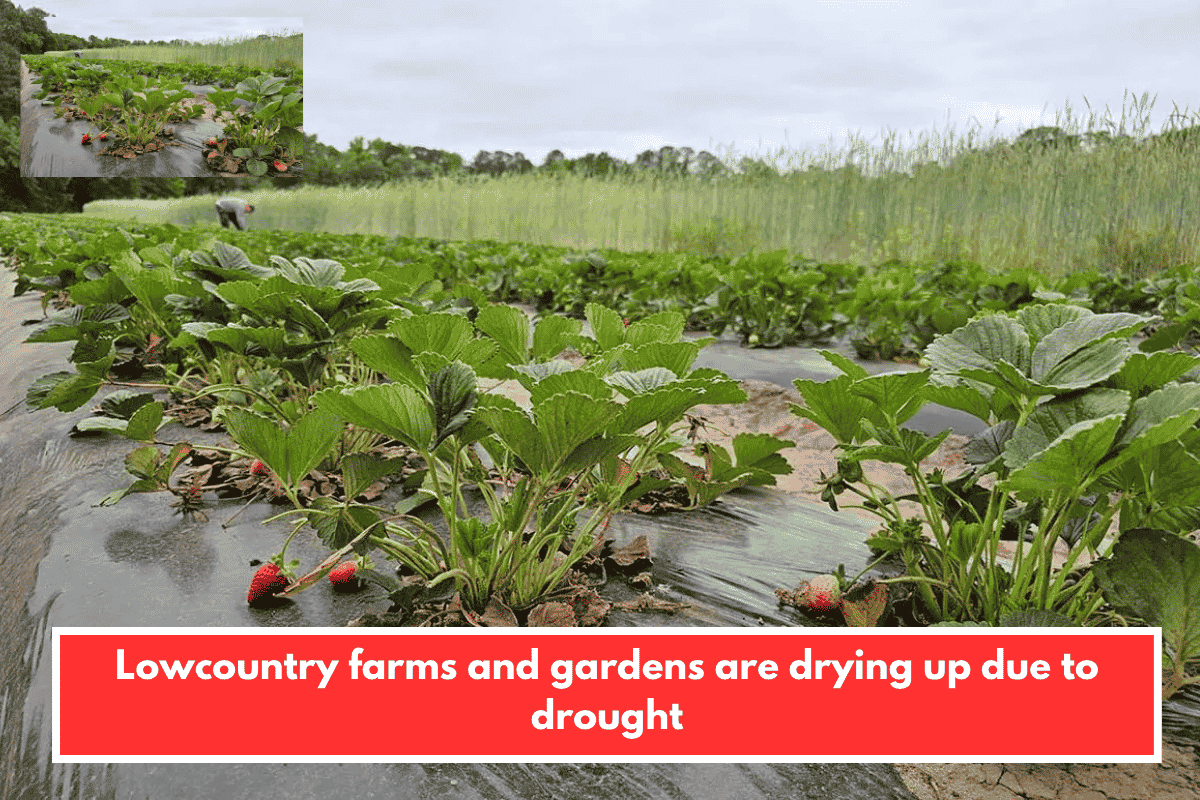
Farmers across South Carolina, including those in the Lowcountry, are facing dire conditions as an ongoing drought continues to threaten crops and livestock, with some fearing the worst for the season.
Drought conditions wreak havoc on local farms
For Thomas Legare, a ninth-generation farmer at the 301-year-old Legare Farm on Johns Island, the situation is becoming increasingly urgent. He’s concerned about his upcoming pumpkin patch harvest, with planting set to begin in June. If the drought persists, he warns the results could be disastrous for his farm.
“We’re already in a crisis, but it will get even worse,” Legare said, as he described how dry conditions are hurting his cow pasture, leaving the cows without enough grass to graze. He expressed concern that even with some forecasted rain, it may not be enough to reverse the damage.
Widespread impact across the state
Legare isn’t alone in his concerns. Many farms in the area, including popular U-pick farms, have seen their fields turn dry and dusty. While some farms use irrigation to keep crops alive, the dry dust kicked up between the rows of plants serves as a constant reminder of the ongoing drought.
Eva Moore, communications director for the South Carolina Department of Agriculture, explained that most of the state’s 22,000 farms are experiencing the effects of the drought. “Soil moisture is very low right now,” Moore said, adding that the dry conditions are affecting the planting of crops like cotton and peanuts, forcing many farmers to irrigate just to get their seeds to germinate.
The state’s third-driest March on record
According to the National Weather Service, March 2025 was South Carolina’s third-driest March on record, following an already dry winter. The state has seen little rain in April as well, further deepening the drought’s effects.
Legare noted the unusual timing of the drought, saying that while late summer droughts are common, dry conditions this early in the year are unprecedented, and the impacts could last for some time.
The effects of drought on agriculture
The drought is putting crops and livestock at risk. In addition to water shortages, plants are stressed by the heat, making them more vulnerable to disease and pests. For farmers, the dry conditions could result in further losses down the line, as crops struggle to grow and livestock suffer from the lack of grazing opportunities.
Government relief efforts
The South Carolina Department of Agriculture is urging farmers to report their drought conditions to state and federal officials to help trigger disaster declarations. In response, the U.S. Department of Agriculture (USDA) declared a disaster in 30 counties, including Charleston, Berkeley, and Dorchester counties. This designation opens up access to emergency loans for farmers, which can be used to help replace equipment, purchase feed, and cover other recovery costs.
Additionally, the South Carolina Senate allocated $35 million in financial assistance for farmers in its state budget, with the House of Representatives increasing it to $50 million.
Farmers cautiously optimistic about aid
While Legare appreciates the assistance available, he remains concerned about the timeline for relief. He’s unsure whether his livestock-focused farm will qualify for the aid, as the support has primarily been aimed at row crop farmers.
“There are some government programs out there, but we don’t know if that’s going to be just for row crop farmers or specialty crops people are growing,” he said. Despite his concerns, Legare acknowledged that any support is welcome, even if it takes time to arrive.
The road to recovery
South Carolina farmers have already faced significant financial hardships in recent years. According to the Farm Bureau, row crop farmers alone have lost about $700 million over the last two years. With drought compounding these challenges, recovery may take a long time.
“It’s just going to take a while for the industry to bounce back,” Legare said, reflecting the uncertainty many farmers in the state are feeling as they navigate the ongoing drought and its economic impact.