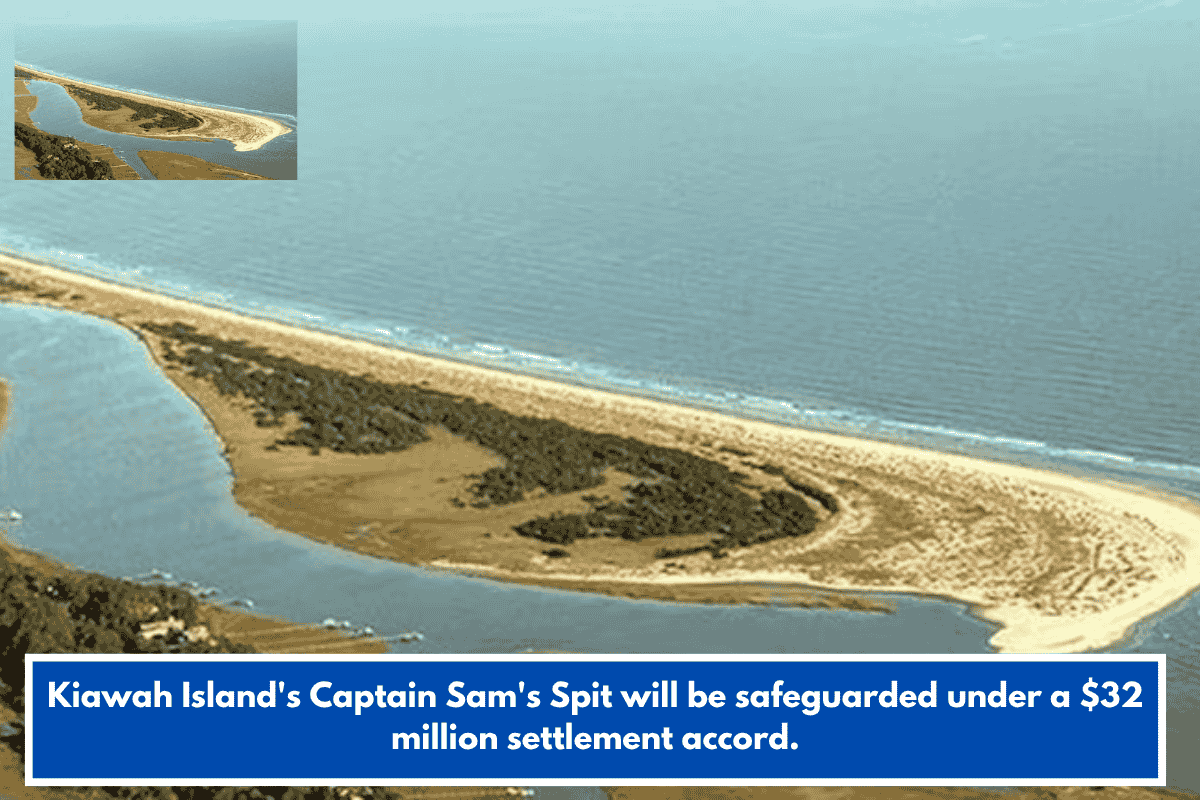
A proposed $32 million state payment is part of a broader deal that would permanently protect Captain Sam’s Spit, a 170‑acre undeveloped barrier‑spit habitat at the eastern tip of Kiawah Island, South Carolina, from luxury home development. The agreement has been approved by the State Fiscal Accountability Authority, but still needs funding attached in the state budget, leaving its final fate in the hands of the legislature.
What the settlement would do
Under the plan, the state would pay $32 million, with the Town of Kiawah Island and the Conservancy of the Sea Islands adding about $3.7 million and $1.3 million, respectively, to buy out the developer’s interest in the land. The entire spit would be placed under permanent conservation easements, portions would transfer to the South Carolina Department of Natural Resources, and protected parkland at nearby Beachwalker Park would be expanded. Conservation groups emphasize that the area is one of only a few remaining undeveloped spits on the coast and home to roughly 18 endangered or threatened species.
Why the dispute arose
Developers had long sought to build up to 50 luxury homes on the spit and filed a “takings” case asking the state for about $200 million after repeatedly being denied permits, partly because of the land’s vulnerability to erosion, storms, and sea‑level rise. The state Supreme Court in 2021 blocked a large seawall, reinforcing concerns that hardening the beach for development would be risky and environmentally damaging. Without this settlement, the attorney general’s office has warned the state could face large future legal liabilities if the litigation drags on.
Uncertainty and political pushback
The proposed deal has strong support from many conservation groups, the conservation easement framework, and Governor Henry McMaster, but Senate Finance Chairman Harvey Peeler opposes it, raising questions about whether lawmakers will include the $32 million in the final budget. If the funding passes, the spit would be locked as public‑benefit, low‑impact habitat, ending one of South Carolina’s longest‑running coastal‑development fights.