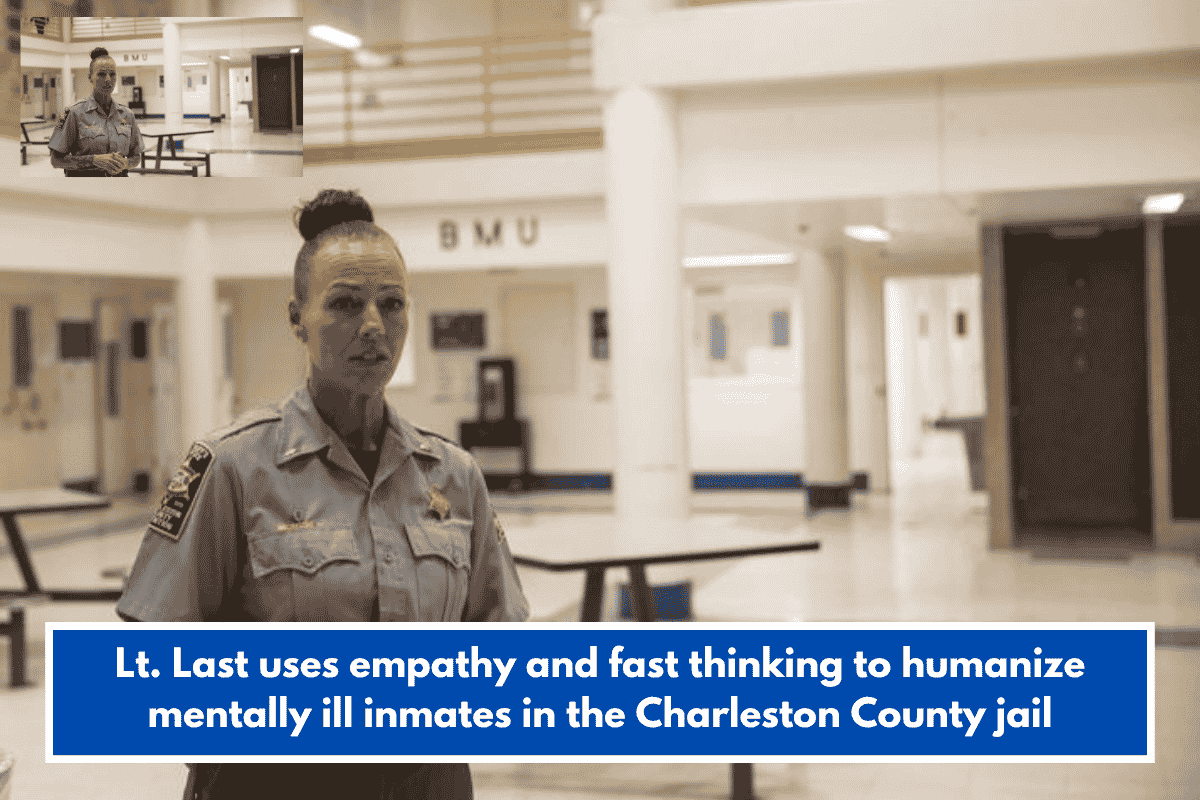
Melissa Last never expected to pursue a career in law enforcement, but for more than a decade she has dedicated her life to caring for mentally ill inmates at the Charleston County jail. As lieutenant in the Tactical Operations Division, Last has become a familiar and trusted presence for inmates who regularly cycle through custody.
A Role Beyond Law Enforcement
Last began working at the Sheriff Al Cannon Detention Center in 2010 and now oversees the Behavioral Management Unit (BMU), where she provides specialized support to inmates with psychiatric complications.
She approaches each individual as she would a family member, emphasizing empathy and humanity in her work.
“I work with [an inmate] as if this was my father, my mother, my brother or sister, my son or daughter,” Last said. She expects fellow deputies to approach their duties with the same level of compassion.
Changing Culture in Detention
When Last started, many deputies treated all inmates the same. Over time, societal awareness and training have shifted the culture, acknowledging that mentally ill defendants often face unique challenges.
Last noted that many individuals fall into a cycle of emergency hospitalizations, arrests, and confinement without long-term treatment.
Challenges of Mental Health in Jail
South Carolina has limited mental health resources, including only one public psychiatric hospital providing restoration treatment for defendants deemed incompetent to assist in their own defense. Wait times can reach eight months, leaving inmates in jail or returning them to unstable environments.
The BMU cannot function without teamwork, patience, and creative approaches to de-escalate crises. Last often uses calm, non-confrontational methods, relying on communication and trust rather than force.
Compassion in Action
Last recalled helping a claustrophobic man during processing. By speaking calmly, crouching to his level, and offering a simple agreement, she convinced him to remain compliant. These approaches allow her to manage inmates safely while respecting their dignity.
She also monitors medications, observes behavioral patterns, and advocates for inmates’ stability upon release. Maintaining rapport while setting boundaries is key to her role.
In-Custody Deaths and Oversight
Last has faced challenges, including the June 2024 death of Jordan Bell, 33, in BMU custody. The State Law Enforcement Division (SLED) investigated the incident, interviewing deputies and healthcare staff.
Officials determined Last and others acted within policy. Jail administrator Stan Davis praised her for combining compassion and strength in her work.
Finding Purpose in the Job
Despite the mental and emotional demands, Last finds fulfillment in her role. She describes the work as far beyond traditional law enforcement — one day acting as a mental health counselor, another as a paramedic or firefighter.
“You come into this building and one day you’re a firefighter, one day you’re a paramedic, one day you’re a mental health counselor, one day you’re standing there holding someone’s hand,” she said.
For Last, helping vulnerable inmates navigate a complex system has become her life’s mission, blending empathy, patience, and professional skill.