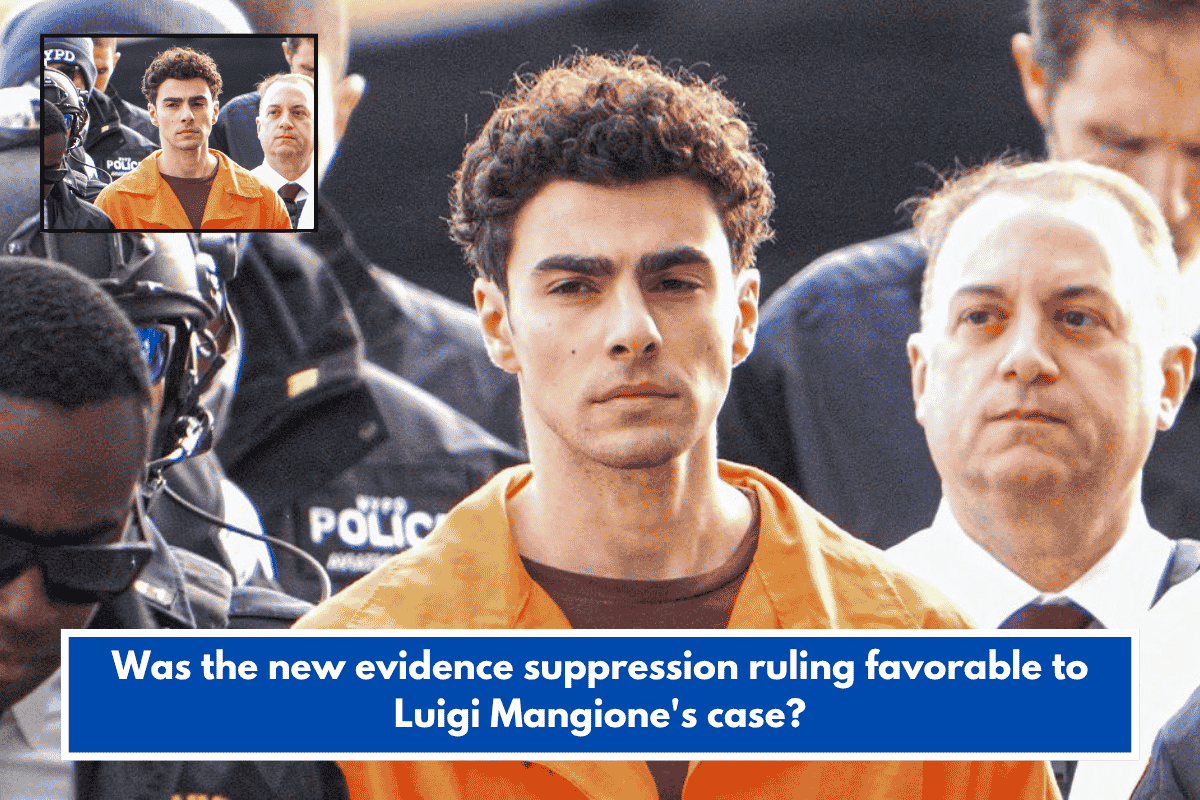
A New York judge has ruled that important evidence found inside Luigi Mangione’s backpack can be used during his state trial, giving prosecutors a significant advantage in the case.
Defense lawyers had argued that the evidence should be thrown out because police officers allegedly searched the backpack without a warrant after Mangione’s arrest. However, the court decided that several items were legally collected as part of normal police inventory and safety procedures.
Among the evidence allowed in court are a 3D-printed 9 mm handgun believed to be the murder weapon and Mangione’s personal notebook. Prosecutors are expected to use these items to support arguments about motive and intent.
Defense Faces Major Setback
The ruling is seen as an important win for prosecutors and a disappointment for the defense team. Legal experts believe the case would have become much harder to prove if the alleged murder weapon had been excluded from evidence.
Since prosecutors carry the burden of proving guilt beyond a reasonable doubt, losing key physical evidence could have weakened their argument before a jury.
Even with the favorable ruling, prosecutors still face the challenge of convincing all 12 jurors to unanimously agree on a guilty verdict.
Questions Raised About Jury Nullification
The case has also sparked discussion about the possibility of jury nullification because Mangione has received strong public support since the beginning of the case.
Jury nullification happens when jurors choose to return a “not guilty” verdict even if they believe the defendant broke the law. This can occur when jurors feel the law is unfair or the punishment is too severe.
If a jury acquits a defendant through nullification, double jeopardy protections prevent prosecutors from trying the person again for the same crime.
Public Frustration May Influence Opinions
Both prosecutors and defense lawyers will carefully question potential jurors during the jury selection process, also known as voir dire. The goal will be to identify people who can remain fair and unbiased during the trial.
However, legal observers note that predicting how a jury will ultimately decide is never certain.
Some analysts believe public frustration with the American health insurance system and corporate decision-makers may shape how some people view the case and the defendant.
While jury nullification is still considered unlikely, experts say the possibility cannot be completely dismissed because of the strong emotions and opinions surrounding the case.