Raleigh, NC – A newly identified lithium deposit in the Appalachian Mountains, concentrated in the Carolinas, has been hailed by the head of the Environmental Protection Agency (EPA) as a significant discovery. The deposit is seen as a crucial development that could help the United States reduce its reliance on China for critical minerals that are essential to modern technology, such as batteries and semiconductors.
A Major Lithium Find in the Carolinas
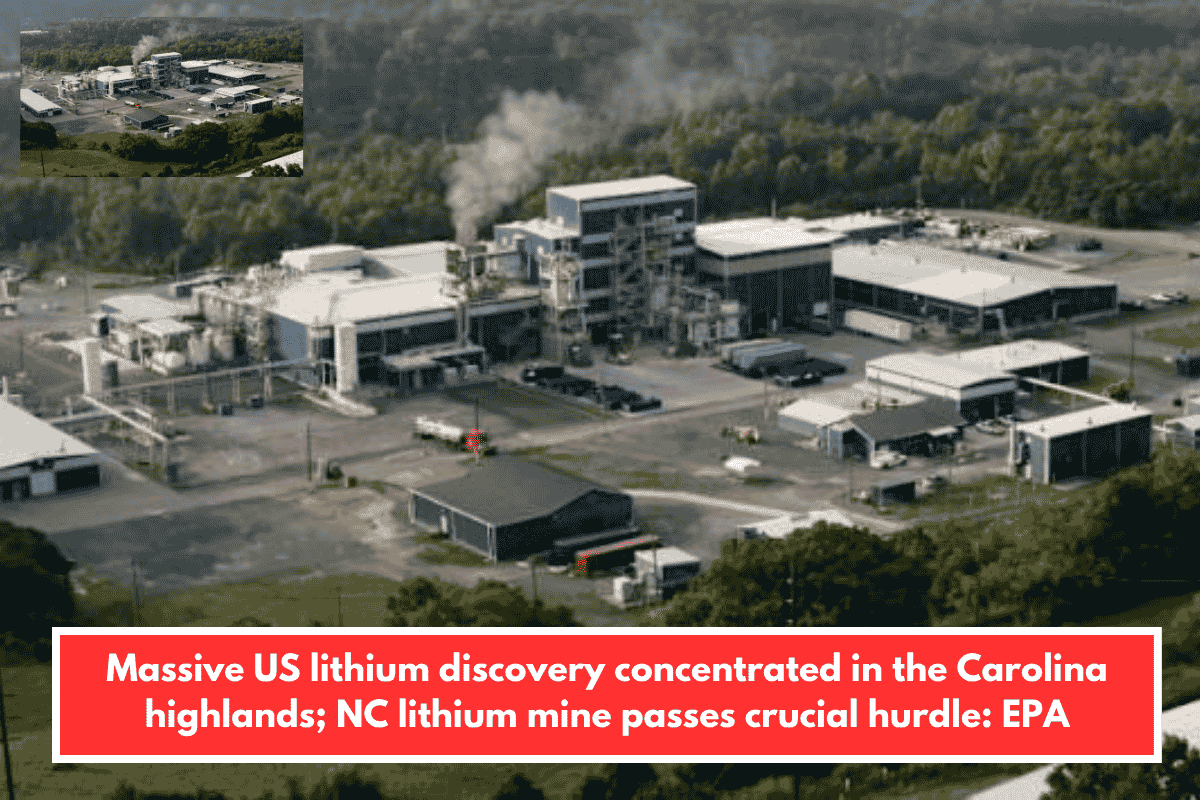
Federal officials made the announcement last week, just as a key permit was granted for the Kings Mountain lithium mine in North Carolina, located west of Charlotte. This mine, which had been dormant since the 1980s, was revived after the U.S. Department of Defense agreed in 2023 to purchase $90 million worth of lithium from the site. This guaranteed purchase paved the way for the mining company, Albemarle, to restart operations and reduce the U.S.’s dependence on foreign sources of lithium.
“You hear a lot about unleashing energy dominance. We also care about batteries and magnets and chips and semiconductors,” said EPA Administrator Lee Zeldin during a NewsNation appearance last weekend. “When we have our own resources within our own country, we should not only be extracting them here — we should be processing them here.”
The Size of the Appalachian Lithium Deposits
The U.S. Geological Survey (USGS) reported last week that an estimated 2.3 million metric tons of recoverable lithium have been identified in the southern Appalachian region, primarily in the Carolinas, with additional deposits in the northern Appalachians in Maine and New Hampshire. This lithium is estimated to be worth over $64 billion.
Kings Mountain Lithium Mine Moves Forward
The Kings Mountain lithium project hit a major milestone in March when it completed the federal permitting process for open-pit mining. This mine is one of the few known hard-rock lithium deposits in the U.S., and Albemarle plans to expand its footprint. The mine is expected to extract approximately 420,000 tons of lithium-bearing spodumene concentrate each year.
Senator Ted Budd (R-N.C.) praised the project’s permitting progress, calling it an example of how “smart, targeted policy” can help make government a true partner to industry. “I am grateful to the Trump administration, the Permitting Council, and Albemarle for unlocking the potential of lithium here in North Carolina,” Budd said.
In March, the Kings Mountain mine also achieved a significant milestone by successfully “dewatering” the site’s open pit, which had been filled with rainwater since the 1990s.
Reclaiming Mineral Independence
Reducing U.S. dependence on China and other foreign suppliers for critical minerals and rare earth elements has been a priority of the Trump administration, especially amid rising geopolitical tensions. If fully extracted and processed, the lithium found in the Appalachian region could replace around 328 years of U.S. lithium imports, based on last year’s consumption levels. The lithium is contained in pegmatites, coarse-grained rocks similar to granite.
“The United States was the dominant world producer of lithium three decades ago, and this research highlights the abundant potential to reclaim our mineral independence,” said USGS Director Ned Mamula in a statement.
The Road Ahead
As the U.S. works to reduce its reliance on foreign suppliers for crucial resources, the discovery of significant lithium deposits in the Appalachian Mountains and the progress at the Kings Mountain mine offer hope for the country’s future in technology and energy independence. The potential of this find may reshape the U.S.’s role in the global lithium market, positioning it as a key player in the critical minerals industry.