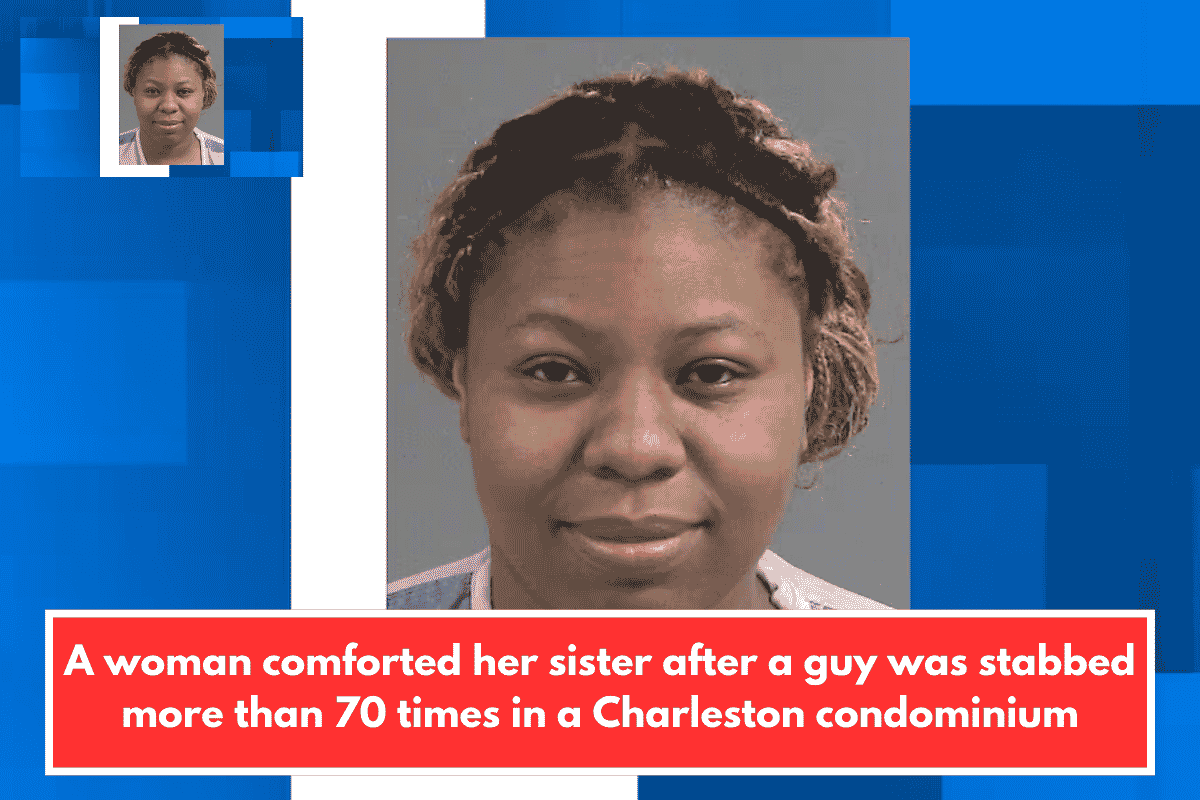
A serious criminal case in Charleston has reached a conclusion after a woman was found guilty of helping her sister following a brutal killing. The case has drawn attention due to the violence involved and the actions taken after the crime.
What Happened in the Case
A Charleston County jury found Keyarra Gosa guilty on April 23 for aiding her sister after a murder. She was sentenced to 10 years in prison, but the sentence was partly suspended. She will serve 5 years behind bars, followed by 5 years of probation.
Details of the 2020 Killing
The incident goes back to May 28, 2020, when Nylesia Mullins fatally stabbed 32-year-old Christopher Brown inside a townhome in North Charleston.
Reports say Brown was stabbed more than 70 times. His body was later found by a family friend, lying in a large pool of blood and partially covered with a trash bag.
Role of the Sister
After the killing, Mullins contacted Gosa for help. Gosa drove to the location early in the morning and stayed there for nearly an hour. Later, both of them left together and went to Gosa’s apartment.
The next day, Gosa and her mother went to the police and gave statements. However, authorities said Gosa provided false and misleading information during questioning.
Evidence Found by Police
Investigators found several items that raised suspicion. A search of Gosa’s car revealed cleaning supplies, gloves with traces of blood, and blood evidence inside the vehicle.
These findings suggested she may have helped after the crime took place.
Attempts to Avoid Arrest
After the incident, Mullins fled the area and hid in another state. She was eventually located and arrested about a month later by authorities.
During this time, records showed that Gosa tried to help her sister avoid being caught.
Outcome for Those Involved
Mullins later pleaded guilty to voluntary manslaughter and was sentenced to 30 years in prison.
Their mother also faced legal consequences for providing false information to police, though her sentence was much shorter.
Why This Case Matters
This case highlights how helping someone after a crime can also lead to serious legal consequences. Even if a person is not directly involved in the act, actions taken afterward can still be considered criminal.
It also shows the importance of honesty during police investigations.