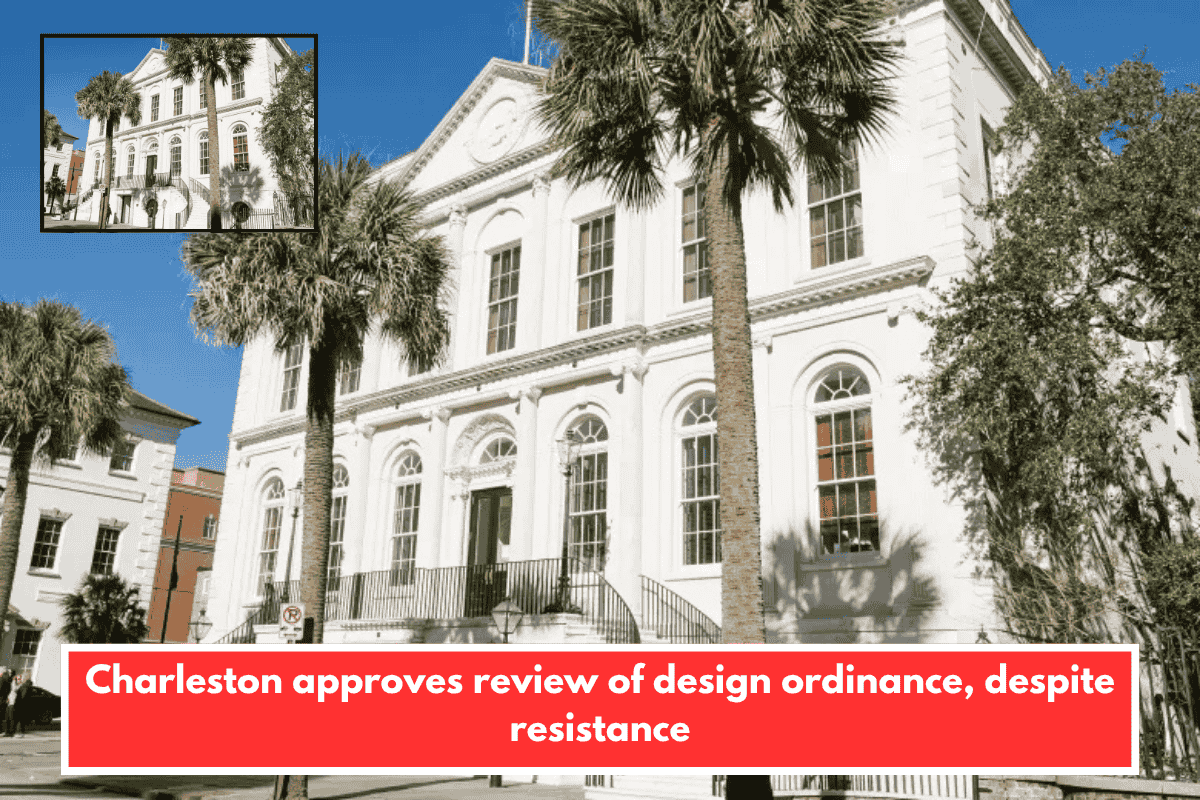
A major decision by Charleston leaders has sparked debate across the city. While officials say the move will speed up public projects, critics feel it may reduce transparency and fairness.
Charleston Council Approves New Ordinance
The Charleston City Council voted 12-1 to approve a new and controversial rule. This ordinance removes many design review requirements for projects led by the city itself.
Only one member, Aaron Polkey, voted against the decision.
Goal: Faster Public Projects
City leaders say the main reason behind this change is to speed up important public developments like fire stations and recreation centres.
Ross Appel explained that delays in design approvals can increase costs significantly. Unlike private developers, these costs are paid by taxpayers.
He highlighted that sending a public project back for redesign can lead to:
- Extra expenses worth thousands of dollars
- Project delays
- Increased burden on taxpayers
According to him, the current system has slowed down development, especially in areas like West Ashley.
What Will Change Now
Under the new rule:
- City projects will still be reviewed for basic feedback
- However, the review board will no longer have voting power on these projects
- Final decisions will be handled by city staff
At the same time, private developers will still need to go through the full design review process, including multiple approvals.
Opposition and Concerns
Even though most council members supported the ordinance, there has been strong opposition.
Groups raising concerns include:
- Preservation organisations
- Local residents
- The Charleston Planning Commission
The Planning Commission had earlier voted 6-1 against the change. Members argued that the city should follow the same rules as private developers.
They also said that:
- Public input may lose importance
- Transparency in decision-making could be reduced
- A formal vote should still happen to show that feedback is considered
Debate Over Fairness and Transparency
Critics believe that giving special treatment to city projects may create an imbalance. They argue that both public and private projects should follow the same process to maintain fairness.
On the other hand, supporters feel that the change is practical and necessary to avoid delays in essential services.