CHARLESTON, S.C. — For the 10th year in a row, Charleston has been named “The Best City in the South” by Southern Living magazine, thanks to its rich history, stunning architecture, and distinctive brickwork that tell the story of the city’s past and the people who helped build it.
The Legacy of Brickmaking in Charleston
At the Palmetto Brick Company in Wallace, South Carolina, approximately 350,000 bricks are produced every day. While modern technology has revolutionized brick production with fully robotic plants, the brickmaking process in Charleston over a century ago was dramatically different — and deeply intertwined with the city’s history of slavery.
The Enslaved Labor Behind Charleston’s Iconic Architecture
Joseph McGill, founder of the Slave Dwelling Project, explains the critical role enslaved people played in shaping Charleston’s architectural legacy. “Any brick building built prior to 1860 is the result of the brick-making knowledge of our enslaved ancestors,” he said.
Certified tour guide Ruth Miller adds that the wealth of Charleston was built on the labor of enslaved men, women, and children, who were forced to build the city’s iconic structures using materials they themselves helped create.
“These buildings downtown were primarily constructed with slave labor and, on top of that, it’s all slave-created materials,” Miller explains. “All were made by hand.”
The Art of Brickwork
Miller points out the intricate patterns in the brickwork that demonstrate the skill and precision of the laborers who made them. “This is making diamonds. Can you see this? See the diamond pattern?” she asks, emphasizing the complexity involved in creating these structures.
The effort put into the brickwork reflects not only the labor but also the wealth and pride of those who commissioned these buildings. “At one time, this was a very, very impressive facade. Somebody is showing you they paid to have it done perfectly,” Miller said.
The Brickmaking Process
In 1849, over six million bricks were produced by enslaved people in Mount Pleasant, South Carolina, where the clay was sourced. Paul Garbarini, a research specialist, describes the grueling process: “It took about six men and a child to make eight to nine thousand bricks a day. They’d start in the autumn and they’d go out into the river at low tide to dig clay.”
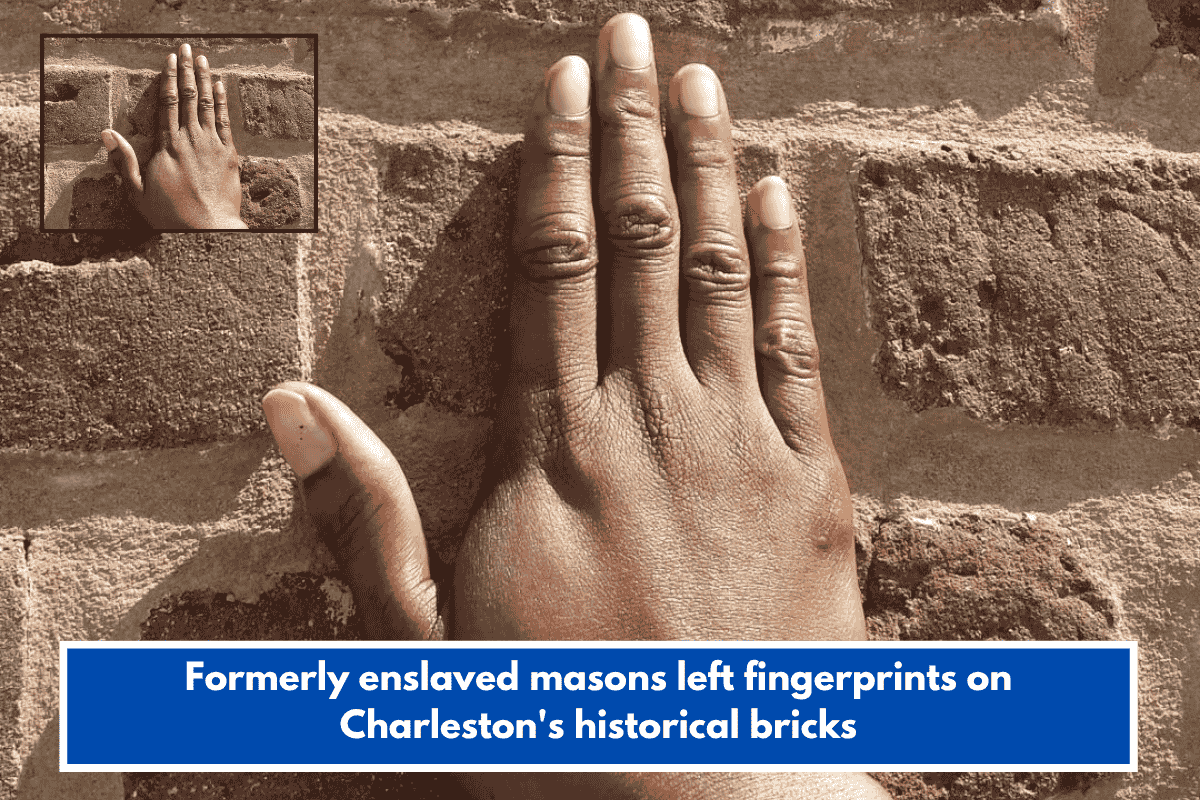
Once the clay was gathered, it was shaped into bricks, left to dry, and then fired in kilns. Sometimes, fingerprints of the enslaved brickmakers remain imprinted in the bricks, visible for anyone paying close attention. McGill notes, “A lot of the bricks… built prior to 1860, our embodied energy are in those bricks.”
Preserving the Legacy of Slave Brickmakers
The physical evidence of this labor can still be seen today, with fingerprints left by enslaved masons still visible in the bricks of Charleston’s historic buildings. At the corner of Church and Chalmers Streets, these marks serve as a silent yet powerful reminder of the past.
Garbarini and artist Natalie Daise have worked to honor these marks by gold-leafing the fingerprints found around the Avery Research Center, creating a poignant tribute to the unnamed brickmakers whose work shaped the city.
“It’s poignant. It moves me deeply,” Garbarini says. “I don’t know their names. But I know that they left a mark.”
The Significance of Charleston’s Bricks
These bricks are more than just materials; they are symbols of the extraordinary skills and relentless labor of those who were enslaved. Without their craftsmanship, Charleston would not have the charm or architectural beauty it is known for today.
McGill reflects on the significance of the bricks: “I was here and still am here. As proof, you can trace your fingers along the imprints of mine.”