The streets of Charleston came alive early Saturday morning as thousands of runners gathered for the much-awaited Cooper River Bridge Run. While the race brings energy, excitement, and community spirit, there’s another important task that begins almost immediately after the runners move ahead—cleaning up the streets.
Massive Cleanup Begins Right After the Race
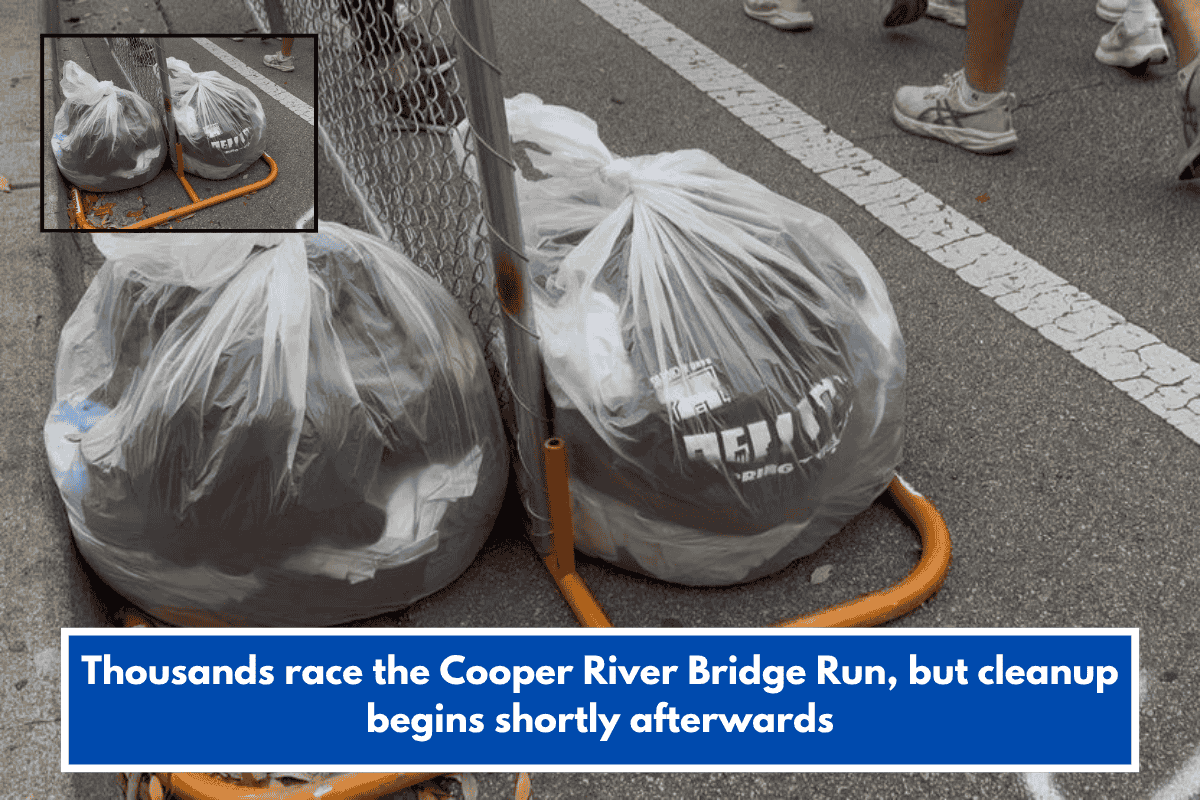
As soon as the last runner crossed the starting point, the roads—especially along Coleman Boulevard—were filled with discarded items. These included water cups, energy gel packets, and even piles of clothes left behind by participants.
Without wasting any time, city workers and volunteers quickly started the cleanup work. They moved step by step, clearing each block to make sure the roads were safe and clean again. Their goal is simple: restore normal traffic as soon as possible.
Well-Planned and Smooth Process
Lewis Moore, who manages the starting corrals, explained that the cleanup system is very organised. According to him, everyone knows their role, which helps the process run smoothly.
- Event teams remove all signs from fences
- The Town of Mount Pleasant clears signs from road dividers
- Special cleanup teams collect trash and waste
Moore shared that this system has improved over the years. With more than a decade of experience, he said the team usually finishes cleanup by 10 a.m., allowing roads to reopen quickly.
Why Do Runners Leave Clothes Behind?
One of the biggest types of waste seen during the event is clothing. Many runners wear extra layers like jackets or sweatshirts to stay warm before the race begins. But once they start running, they quickly feel hot and remove those clothes.
Volunteer Paula Richnafky said this happens every year. Runners simply don’t want to carry extra weight while running across the bridge, so they leave their clothes behind.
Donations Turn Waste into Help
The good news is that not all discarded items go to waste. Many clothes collected after the race are still in good condition. Volunteers and organisers make sure these items are reused instead of being thrown away.
- Clothes are collected and sorted
- Usable items are donated to local organisations
- Some items are recycled if they cannot be reused
In the past, local groups like orphanages have collected these clothes for reuse. This helps people in need and reduces waste at the same time.
Volunteers Go the Extra Mile
Some volunteers take personal efforts to make a difference. Paula Richnafky shared that she brought bags this year just to collect discarded clothes. She plans to wash them and donate them herself.
She supports East Cooper Community Outreach, a local organisation that helps people with food, clothing, and health services. According to her, donating here is simple and makes a real impact on the community.
Community Effort Makes It Successful
The Cooper River Bridge Run is not just about running—it’s also about teamwork and responsibility. From city workers to volunteers, everyone plays a role in keeping the event clean and organised.
The quick cleanup shows how well the community works together. It ensures that while thousands enjoy the race, the city returns to normal without delay. At the same time, the effort to reuse and donate items highlights a thoughtful approach toward sustainability and helping others.
In the end, the event is not just a race but a perfect example of community spirit, care for the environment, and support for those in need. With proper planning and teamwork, even a large-scale event like this can leave a positive impact beyond just the finish line.