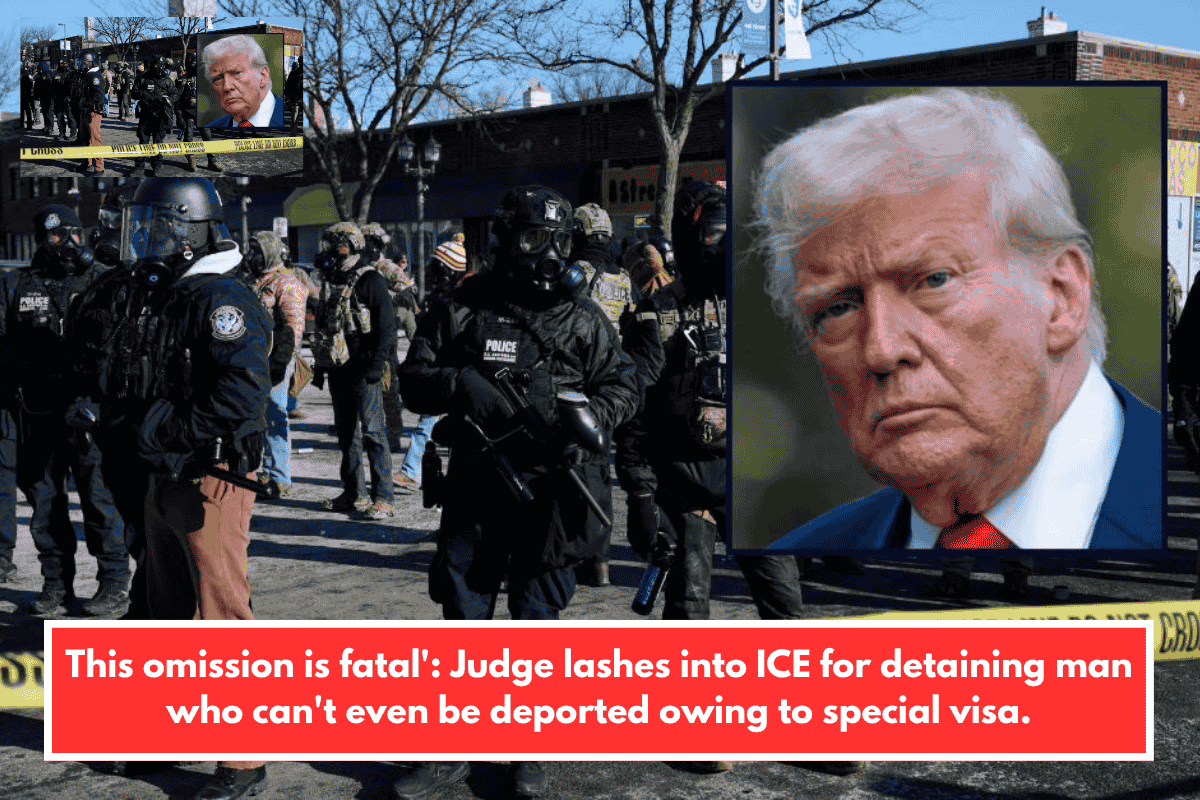
A federal judge in Florida has ordered the immediate release of Alejandro Osvaldo Ghysels Reales, a man who had been detained by Immigration and Customs Enforcement (ICE) despite holding “deferred action” status, which makes him ineligible for deportation. U.S. District Judge Kyle Dudek, appointed by former President Donald Trump, ruled that Reales’ detention was unlawful and violated his constitutional rights.
Case Background and Legal Precedent
The case stems from Reales’ detention by ICE after he had been living under an order of supervision for over a decade. Although Reales had a final deportation order against him since 2010, he had been allowed to remain in the U.S. while seeking to regularize his immigration status. In 2024, U.S. Citizenship and Immigration Services (USCIS) determined that his petition for a U-1 nonimmigrant visa, which is available to undocumented persons who cooperate with law enforcement, was “bona fide,” leading to a grant of deferred action status.
Deferred action status, as defined by the Eleventh Circuit, is essentially a reprieve from deportation, meaning no action will be taken against individuals holding this status. Despite this legal protection, Reales was arrested and detained by ICE earlier this year.
The Court’s Ruling
Judge Dudek’s ruling focuses on the government’s failure to recognize Reales’ valid deferred action status. The judge expressed strong disapproval of the government’s actions, pointing out that while ICE may have discretion to revoke supervision orders, there was no evidence that Reales’ deferred action status had been revoked or even questioned by USCIS or ICE.
In his order, Dudek sharply criticized the government for failing to acknowledge the legal protection Reales had been granted, stating that “wishing a legal obstacle away does not make it disappear.” The judge emphasized that the purpose of immigration detention must align with a legitimate need, such as deportation, which is not applicable in Reales’ case due to his unrevoked deferred action status.
The Government’s Argument and Deficiencies
The government’s argument, led by the Department of Justice, was centered on the claim that ICE had the authority to detain individuals for up to six months, based on a 2001 U.S. Supreme Court precedent. However, Judge Dudek pointed out that this defense ignored the crucial fact that Reales was protected by deferred action status, making detention to facilitate his deportation legally unfounded.
The court also criticized the government’s legal defense, highlighting that it “inexplicably ignores the legal shield preventing his deportation.” Dudek’s ruling underscored that immigrants like Reales have a “substantive due process right to be free of arbitrary confinement pending deportation proceedings” — rights that are clearly violated when the government detains someone who is not subject to removal.
Consequences of the Ruling
Judge Dudek concluded that since the government’s detention of Reales lacked a legitimate purpose — namely, deportation — it was arbitrary and unlawful. As a result, he ordered Reales’ immediate release. This ruling follows a growing trend in the courts of holding the government accountable for detaining individuals without a valid legal basis, particularly when there are clear protections in place, such as deferred action status.
Legal and Immigration Implications
This ruling serves as a reminder of the legal protections afforded to individuals under deferred action status and the importance of respecting these protections in immigration proceedings. The decision also sheds light on the ongoing legal battles surrounding the Trump administration’s handling of immigration laws and policies, particularly those aimed at restricting or detaining individuals with certain immigration statuses.
For Reales, the court’s decision marks a significant victory, ensuring that his legal right to remain in the U.S. is upheld, at least for the time being. The ruling also emphasizes the importance of due process rights and could have broader implications for future cases involving the detention of individuals protected by deferred action status or other legal benefits.