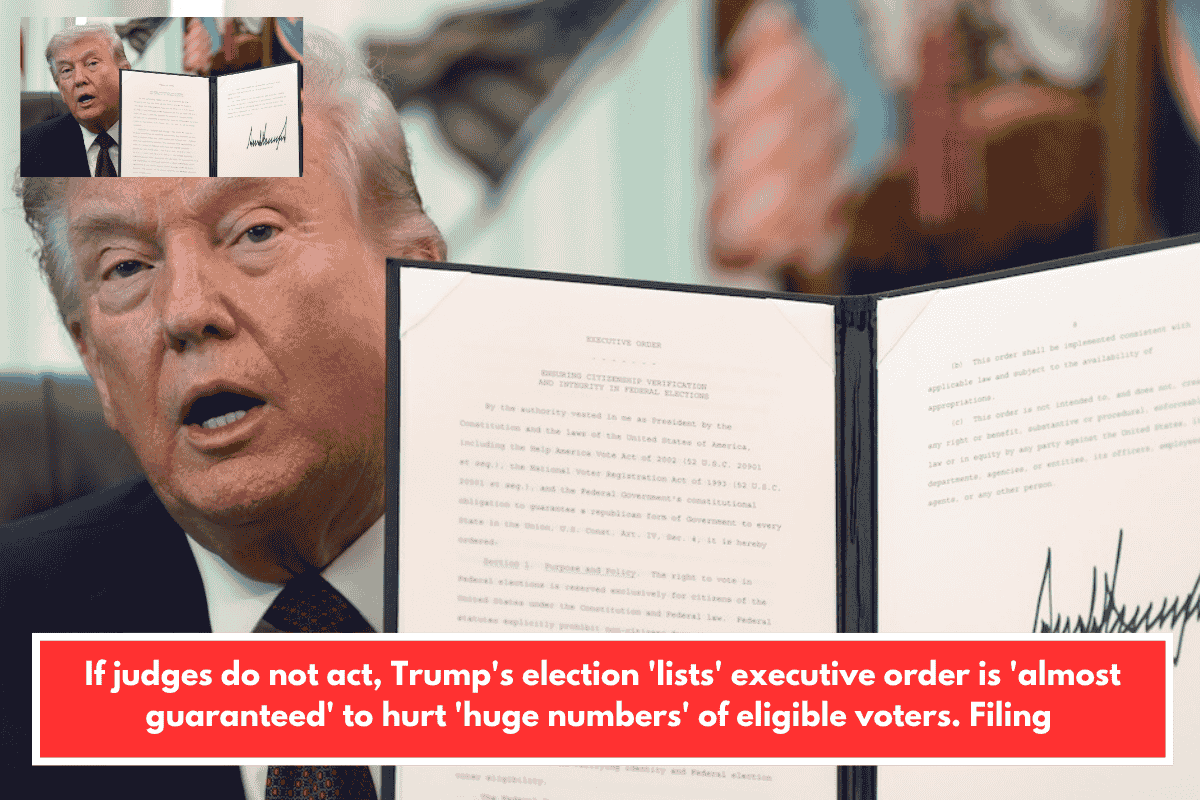
A major legal battle is unfolding in the United States after a new election-related executive order signed by Donald Trump is being challenged in court. Several civil rights groups and political organisations argue that the order could affect voting rights across the country.
What the Executive Order Says
The order, titled “Ensuring Citizenship Verification and Integrity in Federal Elections,” was signed on March 31. It aims to strengthen voter verification by creating what are called “State Citizenship Lists.”
According to the policy, these lists would be built using data from:
- Federal citizenship and naturalisation records
- Social Security Administration databases
- Immigration and verification systems
- Other government records
The order also asks the United States Postal Service to develop uniform standards for handling mail-in and absentee ballots.
Who Is Challenging the Order
The order is being challenged by multiple groups, including:
- League of United Latin American Citizens (LULAC)
- NAACP
- Arizona Students’ Association
- Secure Families Initiative
- Several Senate Democrats
These groups have filed a lawsuit claiming the order could wrongly remove eligible voters from voter lists.
Main Concerns Raised
The plaintiffs argue that the system could:
- Use outdated or incorrect data
- Wrongly identify eligible voters as ineligible
- Lead to large numbers of people losing their voting rights
They say this could result in “disenfranchisement,” meaning people who have the right to vote might not be able to.
Legal Arguments Against the Order
The groups challenging the order claim that the president does not have the authority to:
- Create a nationwide voter eligibility system
- Control how mail ballots are handled through the postal service
They are asking the court to block the order before it is implemented, arguing that it could cause immediate harm.
Related Legal Developments
This case comes after the U.S. Department of Justice faced setbacks in similar efforts to collect detailed voter information from states.
In one instance, a court sided with Rhode Island, stating that requests for sensitive voter data lacked proper justification.
At the same time, separate investigations related to past elections are ongoing, including activity in Fulton County.
What Happens Next
The court will now decide whether to temporarily block the order while the case continues. If blocked, the policy cannot be enforced until a final decision is made.
If allowed, the order could significantly change how voter eligibility is checked in federal elections.