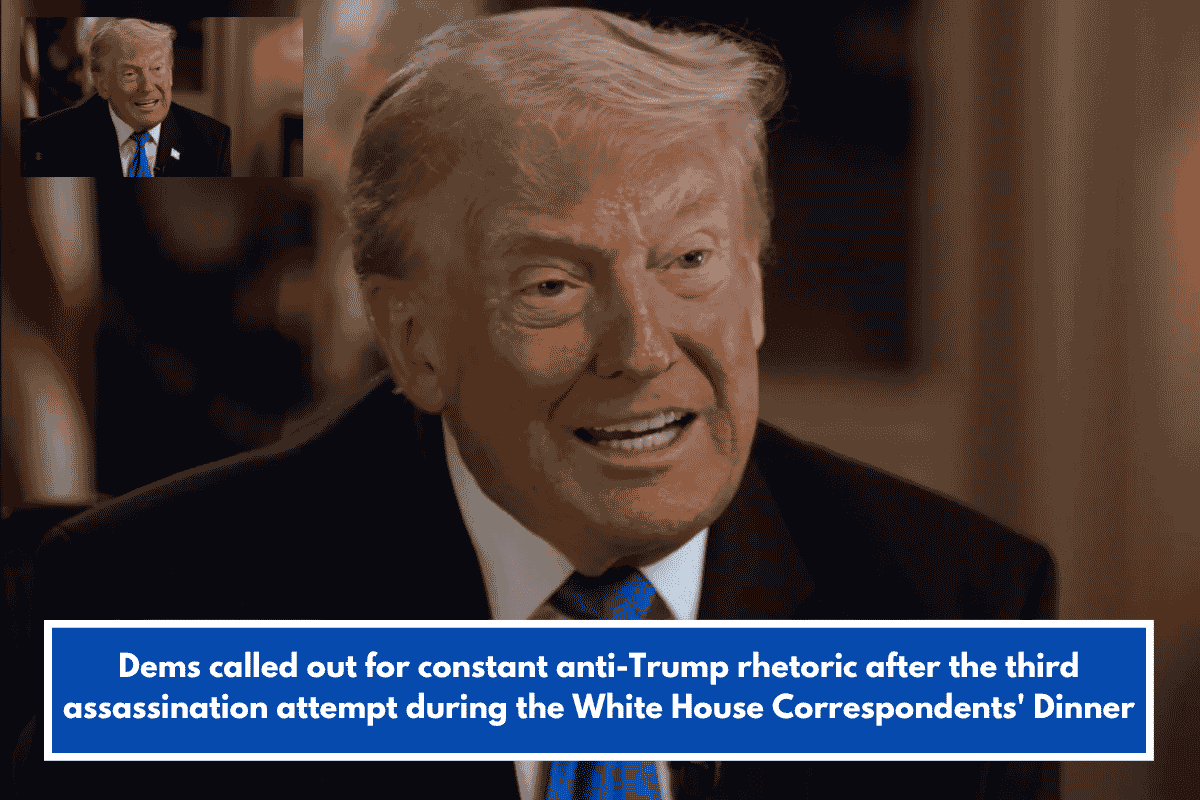
WASHINGTON D.C. — In the aftermath of Saturday night’s White House Correspondents’ Dinner shooting, where Cole Allen, 31, allegedly attempted to storm the venue and assassinate President Donald Trump and other administration officials, several prominent Democratic politicians have rushed to condemn the act of political violence.
However, their statements have drawn criticism from opponents who argue that their past rhetoric contributes to the escalating political climate that may encourage such actions.
Politicians Speak Out
Senator Elissa Slotkin (D-Mich.) was quick to express relief that no one was seriously injured, stating, “Political violence has no place in America.” Her post, shared widely on X (formerly Twitter), thanked law enforcement and acknowledged the safety of President Trump and others present.
However, the Republican National Committee (RNC) Research team highlighted her previous statements, noting that Slotkin had called Trump an “existential threat to democracy”, with some critics arguing that such language may incite violence against the president and his supporters.
Tim Walz’s Criticism
Similarly, Tim Walz, the Governor of Minnesota, echoed Slotkin’s sentiments, saying, “Political violence has become all too prevalent in America.” However, the RNC pointed out his history of extreme rhetoric against Trump, including referring to him as a “fascist” during his 2024 campaign.
Walz had previously stated, “No one has ever been more dangerous to this country than Donald Trump,” adding that Trump was “a fascist to his core.” Critics contend that such inflammatory language from political leaders may play a role in fueling political tensions.
Chuck Schumer and Hakeem Jeffries
Senate Minority Leader Chuck Schumer (D-NY) released a statement expressing his gratitude for law enforcement’s efforts in responding to the situation. However, RNC Research pointed out that Schumer had yet to explicitly condemn the “radical leftist” who allegedly attempted the assassination, raising questions about his stance on violence carried out in the name of political ideology.
Congressman Hakeem Jeffries (D-NY), on X, condemned the violence, stating, “The violence and chaos in America must end.” While his words appeared to advocate for peace, RNC Research reminded the public of Jeffries’ previous calls for “maximum warfare” against President Trump and his administration just days earlier, citing this as an example of the contradictory messaging from Democratic leaders.
A Divided Response
While many Democrats have condemned the specific violence that occurred at the Correspondents’ Dinner, their past comments have sparked a heated debate about the broader role of political rhetoric in America’s increasingly polarized landscape.
RNC Research argues that politicians’ language—particularly when demonizing opponents or labeling them as threats—may contribute to a climate in which violence becomes a more accepted form of political expression.
Former President Joe Biden’s own remarks following the first confirmed assassination attempt against Trump in 2023 have come under scrutiny as well. Biden called for the “lowering of the temperature” in American politics, but critics contend that left-wing leaders continue to engage in extreme rhetoric that might undermine efforts for peace and unity.
Calls for Reflection
As the nation grapples with rising political violence, some have called for more introspection from both sides of the aisle about the words and actions that contribute to a volatile environment. In particular, there is growing pressure on Democratic leaders to adopt a more measured and responsible approach to political discourse, in the interest of reducing the risks of further violence.