Yusiel Lopez Insua, a 46‑year‑old tugboat captain in Florida, is facing federal seaman’s manslaughter charges after a tug‑and‑barge he piloted ran over and capsized a stalled sailboat, killing three children on July 28, 2025. Prosecutors allege the crash occurred because Insua was distracted by browsing online marketplaces on his cellphone and had no proper lookout, despite the barge’s severely obstructed forward view.
What led to the crash
Insua was pushing a 108‑foot construction barge loaded with seawall‑demolition debris through Biscayne Bay near Hibiscus Island when he struck a small sailboat called a Hobie Getaway, carrying five children and a 19‑year‑old sailing‑camp counselor. The boat had stalled after losing wind and was motionless in the barge’s path. The counselor stood up and tried to warn the approaching vessel, but, according to the criminal complaint, Insua did not change course or reduce speed.
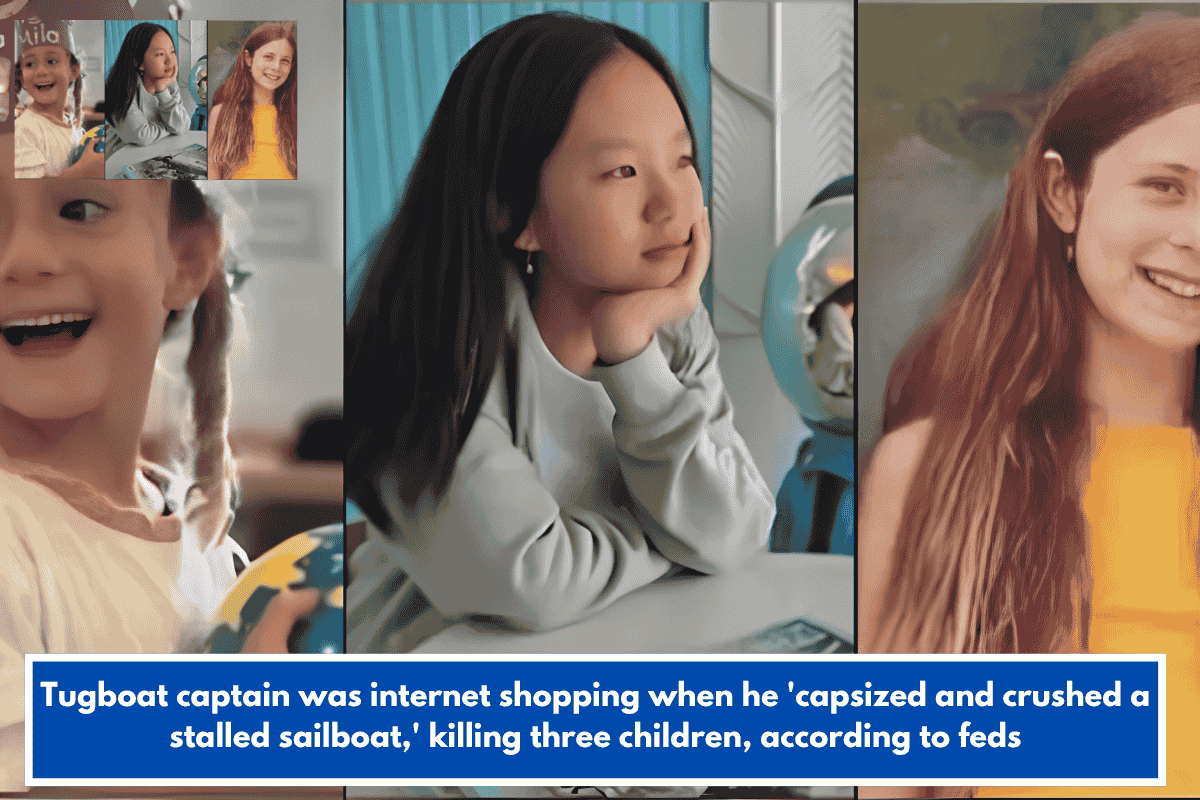
The barge plowed into the sailboat, capsizing and crushing it, dragging the wreckage beneath the hull. Three people—two girls and the counselor—managed to escape being pulled underwater; however, three children—Mila Yankelevich, 7; Erin Ko Han, 13; and Arielle Buchman, 10—became trapped in the overturned craft. The Miami‑Dade medical examiner later ruled all three died from accidental drowning. Buchman survived the impact but died two days later in the hospital.
Alleged safety failures and distractions
Investigators say Insua’s forward visibility was blocked by a welded deckhouse and a crane at the front of the barge plus debris on deck, and the pilothouse did not allow a clear line of sight at the waterline. Insua had been running this type of tug‑and‑barge combination in the same area for about 12 years and had prior “near misses” with sailboats.
Despite these known risks, prosecutors say no one on board was assigned to act as a lookout, even though maritime safety practice calls for lookouts when a vessel cannot see directly ahead. They also say the barge had no cameras, radar, or other aids to compensate for the blocked view, and the tug’s windows were closed, making it harder to hear warning signals from outside.
Forensic analysis of Insua’s cellphone allegedly showed active internet use during the transit, including browsing on internet‑marketplace sites at or near the time of the collision. The tug’s radio was tuned to Channel 9 (for bridge‑traffic communication) instead of the standard emergency Channel 16, limiting the ability to exchange warnings with other boats.
Charges and response
The U.S. Attorney’s Office for the Southern District of Florida has charged Insua with one count of seaman’s manslaughter, a federal crime that can apply when a vessel operator’s negligence causes a death at sea. Prosecutors described the incident in their release as a “preventable loss of life” tied to Insua’s failure to follow basic maritime safety rules and to his cellphone use during transit. The surviving children and counselor were hospitalized or treated and later released.
Insua is scheduled to make his initial court appearance on April 3, where the case will begin moving toward trial or a plea process. The tragedy has renewed scrutiny of how large workboats operate in recreational‑boat‑heavy areas and the adequacy of safety protocols and supervision on such vessels.