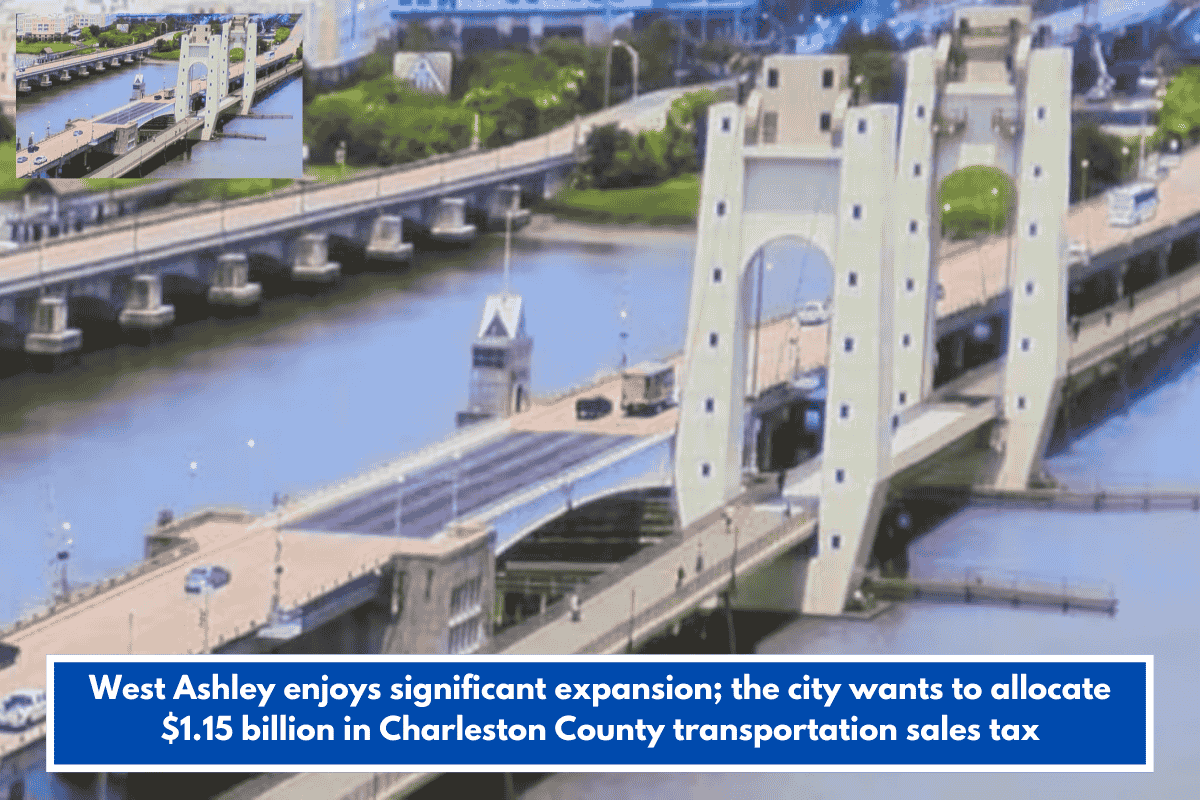
The City of Charleston has presented its priority projects for the proposed 2026 transportation sales tax, allocating approximately $1.15 billion specifically for West Ashley due to its dense population and significant growth. Key projects for West Ashley include improvements aimed at easing congestion, safety enhancements, and raising portions of roadways, especially addressing traffic bottlenecks at the Glenn McConnell Parkway and Magwood Drive intersection. This funding allocation correlates with the fact that about 50% of Charleston’s population resides in West Ashley, making it a central focus for transportation upgrades to improve commute times and accommodate growth. The city is also emphasizing reducing long commutes by promoting more local work opportunities. Public input continues to be gathered through community meetings, such as one recently held at West Ashley High School.
The broader transportation sales tax plan proposes distributing a total of $4.25 billion over 25 years across Charleston’s key areas, including Johns Island, James Island, the peninsula, and West Ashley. West Ashley’s projects include widening parts of US Highway 17 South, drainage improvements, and specific intersection upgrades. City officials are focusing efforts on state-owned roads, which comprise a significant portion of the area’s infrastructure, noting that state funding for these roads has often been insufficient to keep pace with population growth and maintenance needs. The tax is designed to spread the cost among residents and visitors rather than increasing property taxes.
City leaders advocate that improving infrastructure is not only about expanding roads but also about community planning — encouraging living, working, and playing in the same areas to reduce commuting pressures on highways. This holistic approach aims to address traffic congestion while supporting sustainable urban growth.