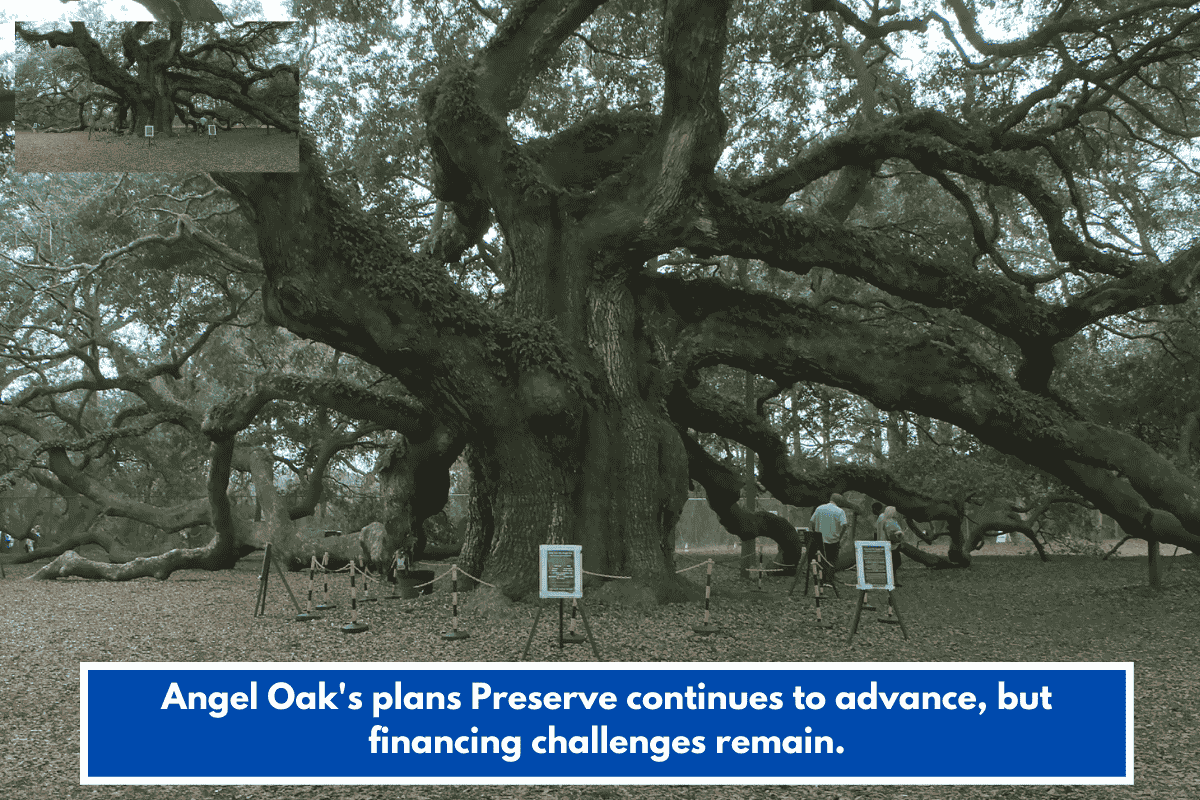
The Angel Oak Preserve in John’s Island, South Carolina, is advancing steadily toward completion. This initiative aims to protect the iconic 400-year-old Angel Oak tree and transform 44 surrounding acres into a free public park featuring boardwalk trails, a children’s nature play area, educational exhibits on the tree’s history and the native Gullah Geechee culture, and wetland ecosystems.
Key Milestones Achieved
- Design Review Approval: Charleston’s Design Review Board granted preliminary approval on Monday, advancing the project to the permitting stage. A third staff-level review and building permits will follow.
- Timeline: Permitting is expected to wrap up this year, kicking off multi-phase construction soon after.
- Cost and Funding: Total budget stands at $13.5 million. Leaders from the Lowcountry Land Trust and Coastal Conservation League are ramping up fundraising from city, state, and private donors to keep entry free forever.
Preservation Goals and Features
Boardwalks will shield the tree’s roots from daily foot traffic by hundreds of visitors, while designs emphasize ecosystem support and cultural storytelling—from Indigenous history to colonization and Gullah Geechee heritage. Currently, only a single plaque provides basic info; the preserve will expand this into immersive education.
City officials, including Planning and Preservation Director Robert Summerfield, highlight the project’s role in stewardship, making Charleston’s history “come alive.” Community groups are collaborating to accelerate funding and completion.
Quotes from Leaders
- Samantha Siegel (Lowcountry Land Trust): Emphasizes no-pay access to combat the scarcity of free nature spaces.
- Torrey Sanders (Coastal Conservation League): Stresses celebrating Gullah Geechee cultural significance.
- Robert Summerfield (City of Charleston): Notes the tree’s witness to Lowcountry history and the city’s collaborative push.
The project remains on track, with organizers confident in securing funds. This aligns with Charleston’s ongoing commitment to green spaces and heritage preservation—perfect for locals interested in trails and cultural sites.
Have you visited the Angel Oak before, or are you following this for hiking/community event planning?