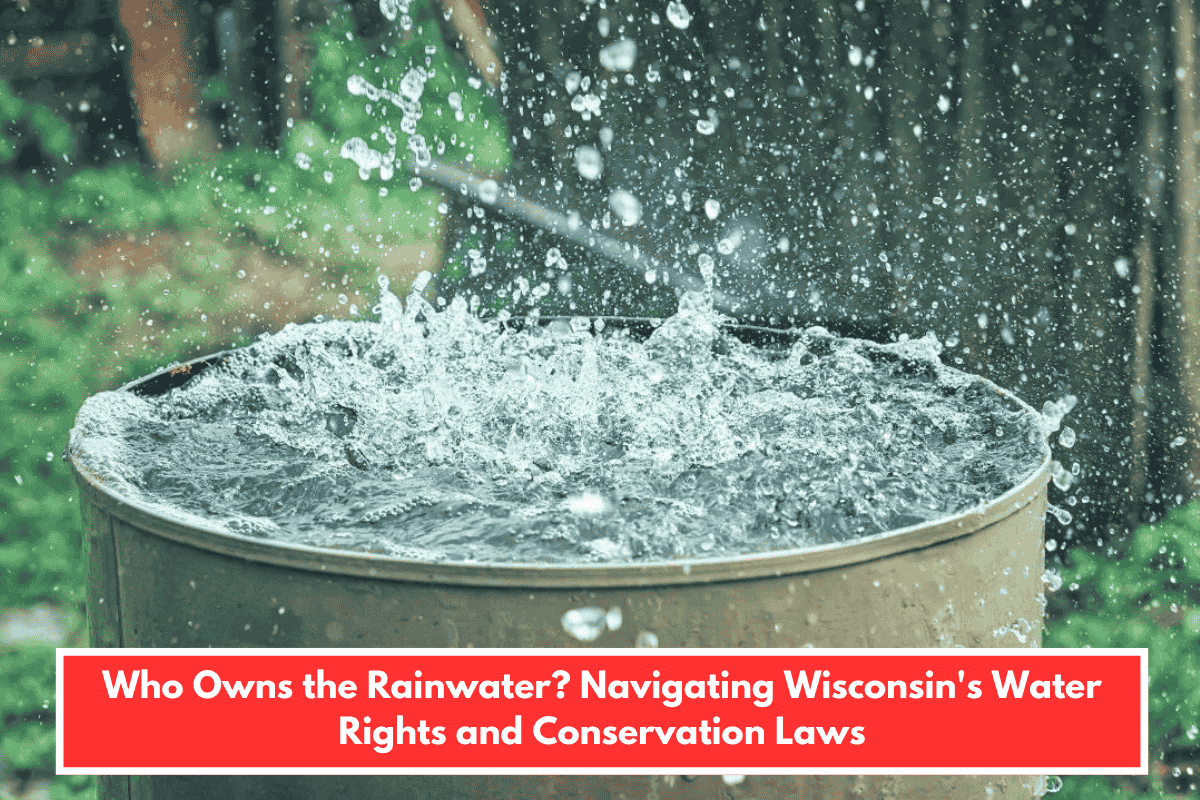
Wisconsin follows a riparian rights system for surface water, where landowners adjacent to navigable waters hold usage rights, but rainwater collection lacks specific ownership restrictions or prohibitions. Landowners generally own rainwater falling on their property, enabling personal harvesting for non-potable uses like irrigation without permits.
Rainwater Harvesting Rules
No state laws ban or regulate rainwater harvesting in Wisconsin as of 2026. Homeowners and farmers can install barrels or cisterns freely for garden or agricultural use, though local zoning may impose setback or capacity limits, and potable reuse requires treatment compliance.
High-capacity systems over certain thresholds might trigger groundwater oversight under NR 812 rules, but simple rooftop collection remains unregulated. Conservation incentives through programs like the Wisconsin DNR encourage harvesting to reduce stormwater runoff.
Riparian and Water Rights Context
Riparian owners enjoy reasonable use of adjacent lakes and streams for domestic, agricultural, or recreational needs, with rights to piers and proportional waterfront access. The public trust doctrine reserves navigable waters for all, limiting exclusive claims.
Wisconsin Statute 30.132 presumes riparian rights for abutting lands unless deeds specify otherwise, protecting against disputes over artificial waterbodies like flowages. Groundwater follows a reasonable use doctrine, prioritizing prior appropriations in conflicts.
SOURCES
[1](https://www.wisbar.org/NewsPublications/WisconsinLawyer/Pages/Article.aspx?Volume=95&Issue=10&ArticleID=29427)
[2](https://docs.legis.wisconsin.gov/document/administrativecode/NR%20812.08(4))
[3](https://4perfectwater.com/blog/rainwater-harvesting-laws)
[4](https://www3.uwsp.edu/cnr-ap/UWEXLakes/Documents/resources/bookstore/Wisconsin%20Water%20Law-Edition2-G3622.pdf)
[5](https://www.wra.org/WREM/Sep25/WaterRights/)