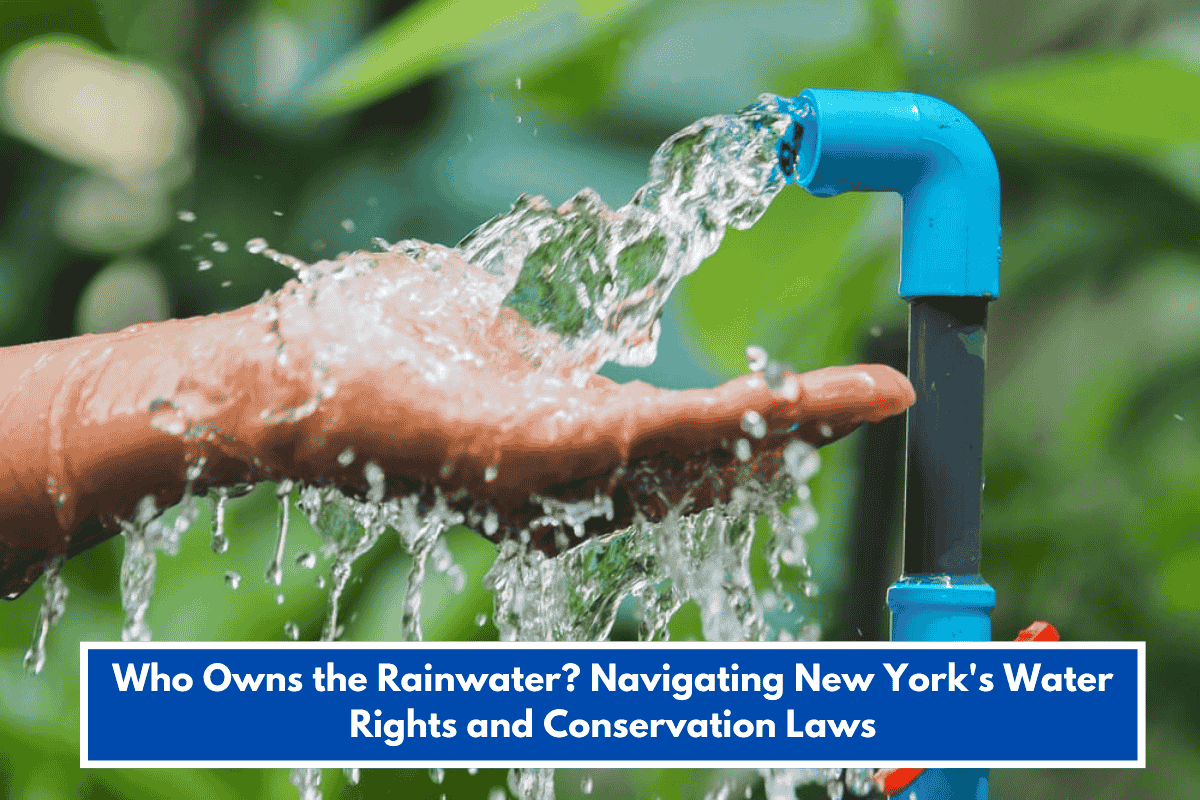
New York grants property owners the right to collect rainwater falling on their roofs without state-level permits, treating it as a supported conservation practice rather than a regulated public resource. No overarching water rights doctrine restricts personal harvesting for non-potable uses like irrigation, though local building codes may apply in urban areas.
Ownership Basics
Rainwater is considered private property once captured from rooftops on one’s land, with no prior appropriation system like in Western states. Homeowners can install barrels or cisterns freely statewide, encouraged by guides from Syracuse University. Potable reuse requires additional filtration to meet health standards, but remains unregulated at the state level.
Conservation Rules
Harvesting aids stormwater management, reducing runoff into sewers, and aligns with green infrastructure incentives. Proposed bills like S7104 and S1175 aim to formalize standards for larger systems in schools or commercial sites, mandating pretreatment and storage specs. New York City codes allow non-potable systems under plumbing rules, with inspections for larger installations.
Local Variations
Rural areas face fewer hurdles than NYC, where conveyance systems must comply with Section 1303 for safety. No volume caps exist statewide, unlike some states, but excess diversion could trigger nuisance claims from neighbors. Ongoing pilots study benefits for education facilities.
SOURCES
[1](https://www.ntotank.com/blog/rainwater-harvesting-laws-regulations-and-rights-by-us-state)
[2](https://worldwaterreserve.com/is-it-illegal-to-collect-rainwater/)
[3](https://www.nysenate.gov/legislation/bills/2023/S7104)
[4](https://efc.syr.edu/wp-content/uploads/2015/03/NYSRainwaterHarvestingGuideR.pdf)
[5](https://assembly.state.ny.us/leg/?default_fld=&Text=Y&term=2025&bn=S1175)