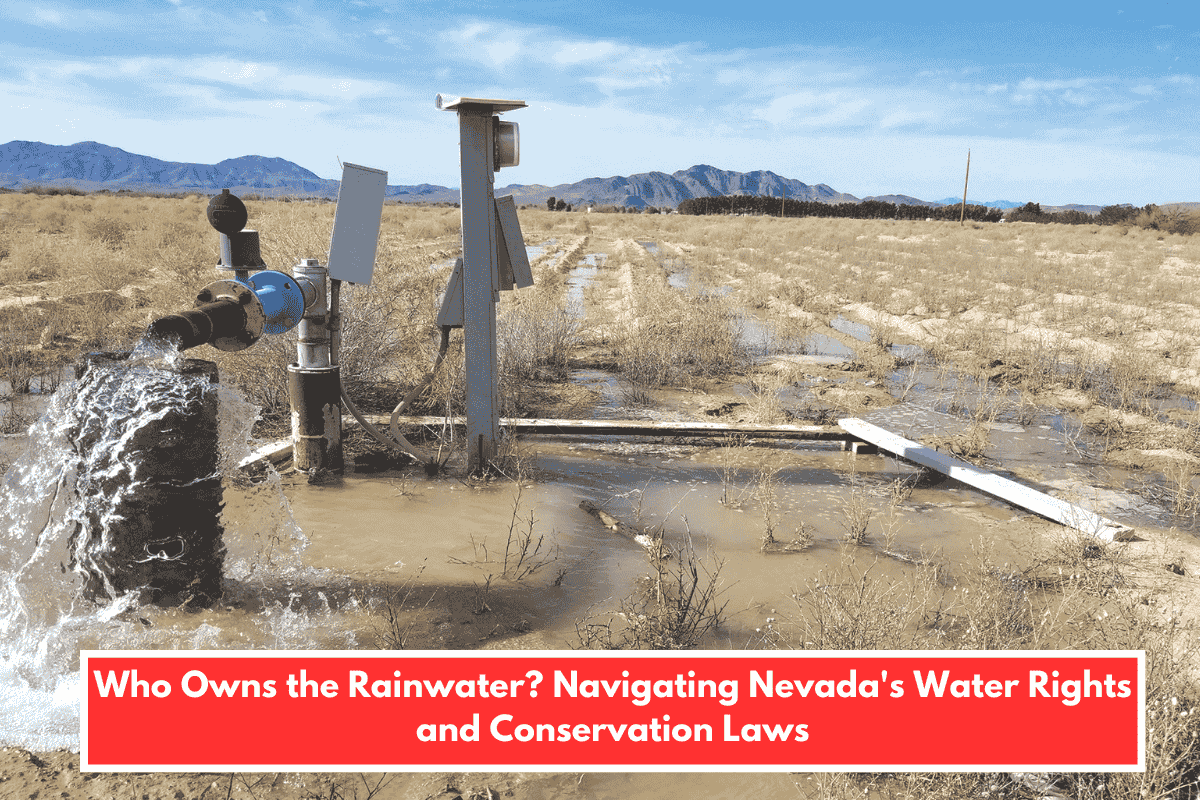
No, individuals in Nevada do not “own” rainwater in the absolute sense due to the state’s prior appropriation water rights system, but homeowners can legally harvest it for limited non-potable uses since 2017.
Water Rights Framework
Nevada follows the prior appropriation doctrine, where the state holds all water rights—including precipitation—allocated via permits from the Division of Water Resources for beneficial uses like irrigation or domestic supply. Rainwater falling on private property isn’t freely claimable without impacting downstream rights, but Assembly Bill 138 (2017) created a “de minimis” exemption for rooftop collection on single-family homes without a permit.
Harvesting Rules
Allowed collection uses rain barrels or cisterns (up to 20,000 gallons) from rooftops covering an acre or less, strictly for non-potable domestic purposes like garden watering or landscaping—no drinking, selling, or large-scale storage. Violations risk fines or water right forfeiture; commercial or potable systems still require full permitting.
Conservation Incentives
State programs promote efficiency through rebates for low-water fixtures and xeriscaping, but rainwater harvesting remains tightly capped to avoid straining aquifers in this arid region. Local ordinances may add setbacks or filtration rules.
SOURCES
[1](https://www.ntotank.com/blog/rainwater-harvesting-laws-regulations-and-rights-by-us-state)
[2](https://worldwaterreserve.com/is-it-illegal-to-collect-rainwater/)
[3](https://worldpopulationreview.com/state-rankings/rainwater-collection-legal-states)
[4](https://water-law.com/can-nevada-gardeners-collect-rainwater/)
[5](https://www.watercache.com/resources/regulations)