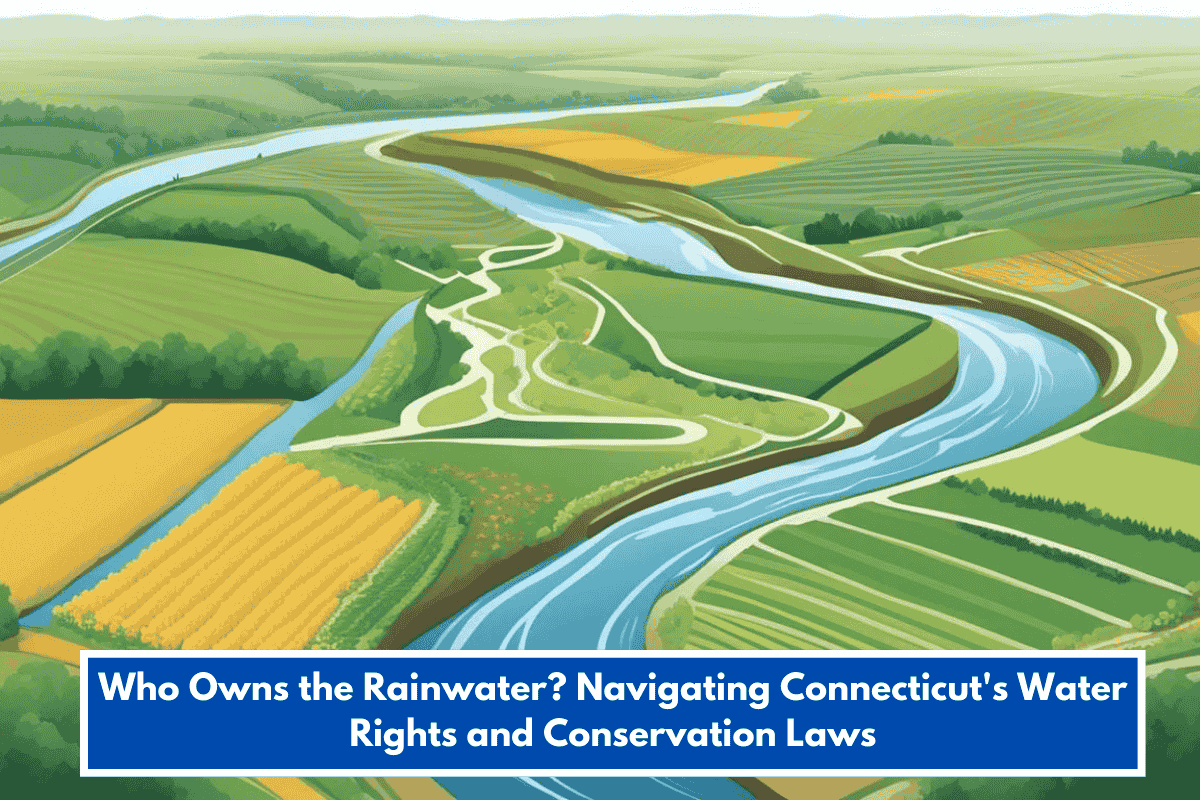
Connecticut follows the riparian doctrine for water rights, meaning landowners adjacent to water bodies have reasonable use rights, but rainwater falling on private property generally belongs to the property owner. No state permit is required for harvesting rainwater, making it a straightforward practice for conservation.
Harvesting Permissions
Rainwater collection is explicitly allowed under the 2018 Connecticut State Building Code, Section 1303, for non-potable uses like irrigation, garden watering, or stormwater management. The state promotes it through guides like “Rainfall as a Resource” from the Department of Energy and Environmental Protection, encouraging rain barrels without restrictions.
Usage Limits
Systems must comply with plumbing codes for construction and distribution, typically for outdoor or indoor non-drinking applications such as flushing toilets. Storage is unregulated for small-scale residential setups, but large commercial systems may need local approvals to ensure no conflict with public water rights.
Conservation Incentives
Local programs in some Connecticut cities offer rain barrel rebates, integrating harvesting into watershed plans to reduce runoff and pollution. Property owners retain full ownership of collected rainwater as a private resource, distinct from regulated surface or groundwater.
SOURCES
[1](https://rainwatercollectortanks.com/is-rainwater-harvesting-illegal-in-america-resolved/)
[2](https://www.ntotank.com/blog/rainwater-harvesting-laws-regulations-and-rights-by-us-state)
[3](https://worldwaterreserve.com/is-it-illegal-to-collect-rainwater/)
[4](https://4perfectwater.com/blog/rainwater-harvesting-laws)
[5](https://www.jud.ct.gov/lawlib/Notebooks/Pathfinders/SurfaceWater.pdf)