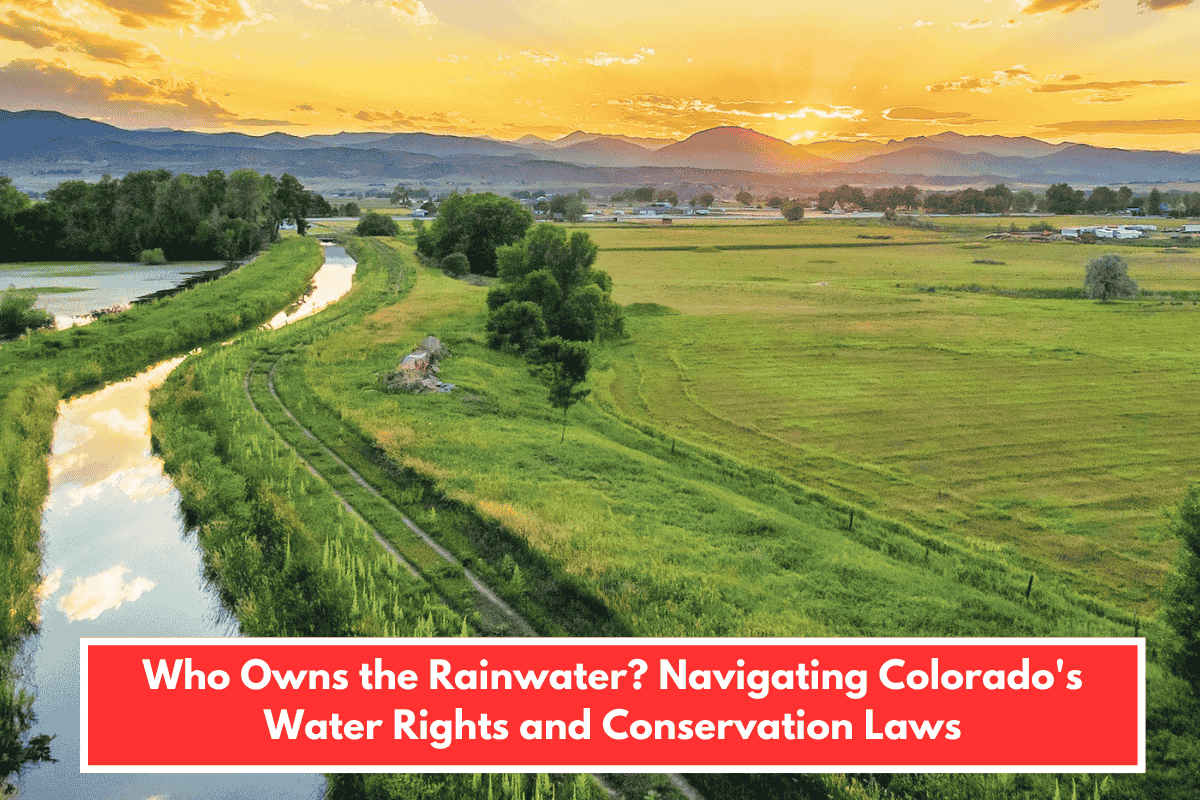
Colorado follows the prior appropriation doctrine for water rights, meaning rainwater and other water belongs to the public until appropriated for beneficial use, with no automatic private ownership upon collection. Homeowners face strict limits on rainwater harvesting due to these rights, emphasizing conservation amid shortages.
Prior Appropriation System
Water rights prioritize the first user (“first in time, first in right”), requiring diversion from streams, rivers, or aquifers for uses like irrigation or municipal supply. Rights are decreed by water courts after application, public notice, and adjudication to avoid injuring senior rights holders.
Rainwater Harvesting Rules
Rainwater is tributary groundwater or surface water, so capturing it in barrels often requires a permit if over minor amounts (e.g., 110 gallons in some cases), as it impacts downstream rights. Exemptions exist for small-scale residential use, but larger systems need Division of Water Resources approval to prevent waste or injury.
Conservation Measures
- Beneficial use mandates: Water must serve agriculture, domestic, or industrial needs without excess.
- Transfers and changes: Selling or altering use requires water court approval with engineering reviews.
- Enforcement: Seven water divisions administer calls on junior users during shortages.
SOURCES
[1](https://jbakerlawgroup.com/who-owns-the-water-rights-to-a-property-in-colorado/)
[2](https://www.ltgc.com/resources/water-law2/)
[3](https://watercolorado.com/water-rights-overview/)
[4](https://watereducationcolorado.org/water-101/water-law-policy-regulation/water-rights/)
[5](https://www.ltgc.com/resources/water-law1/)