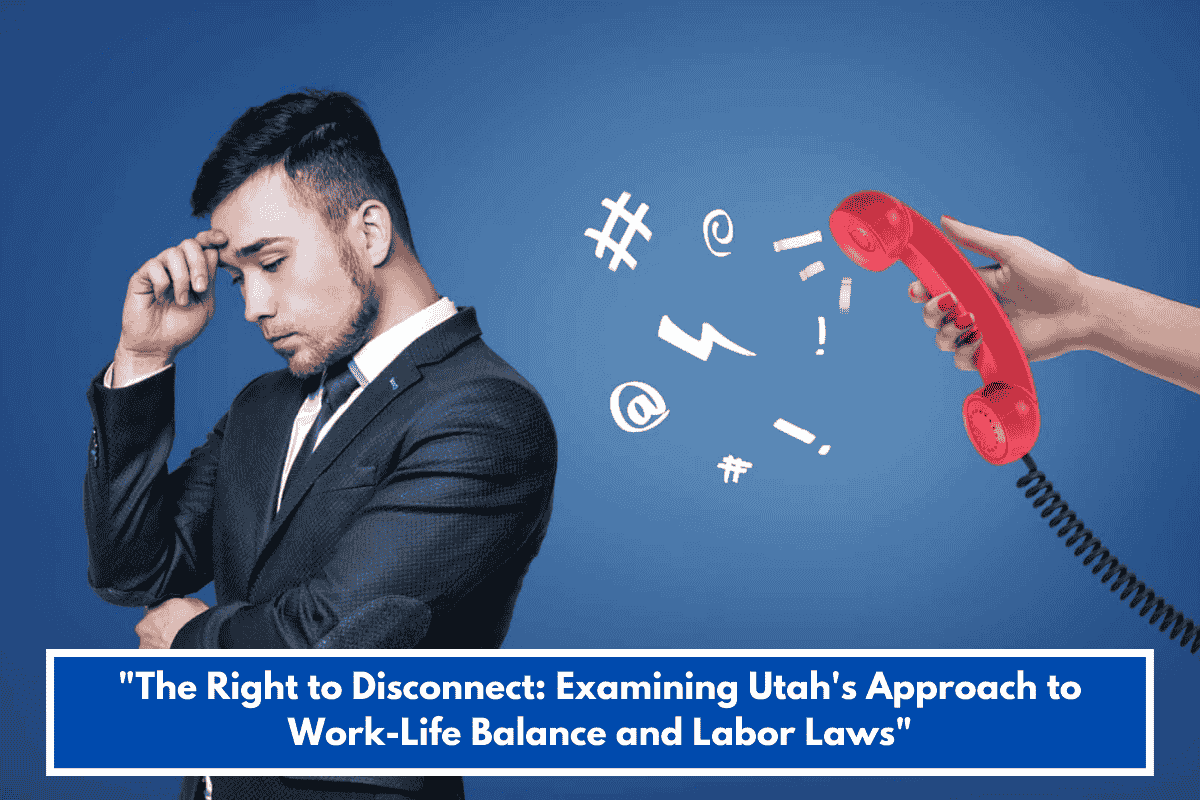
Utah does not have a “right to disconnect” law mandating employees ignore work communications outside hours, unlike proposals in states like California. Work-life balance relies on employer policies, with labor laws focusing on wage protections, discrimination bans, and overtime for non-exempt workers rather than after-hours contact limits.
Labor Protections
Utah’s labor code under Title 34A emphasizes fair pay, safe conditions, and anti-harassment via 2025 amendments like SB 86, expanding workplace protections without addressing disconnection. Employers must provide meal breaks and rest for certain shifts, but remote monitoring or email expectations fall under voluntary agreements.
Emerging Trends
No 2025 bills enacted right-to-disconnect rights; utility disconnection rules protect against service cutoffs in disputes, unrelated to work communications. National trends suggest future proposals, but Utah prioritizes flexibility for businesses over mandated boundaries.
SOURCES
[1](https://citizenportal.ai/articles/6367071/Committee-approves-bill-prohibiting-respondents-from-disconnecting-utilities-for-protected-people-during-short-window)
[2](https://dpu.utah.gov/customer-service/faqs/what-are-my-rights-and-responsibilities-as-a-residential-utility-customer/)
[3](https://natlawreview.com/article/right-disconnect-needed-solution-or-potential-disruption-businesses-and-employees)
[4](https://www.postercompliance.com/blog/right-to-disconnect/)
[5](https://www.akerman.com/en/perspectives/hrdef-the-right-to-disconnect-in-the-us-what-employers-need-to-know-about-emerging-proposals.html)