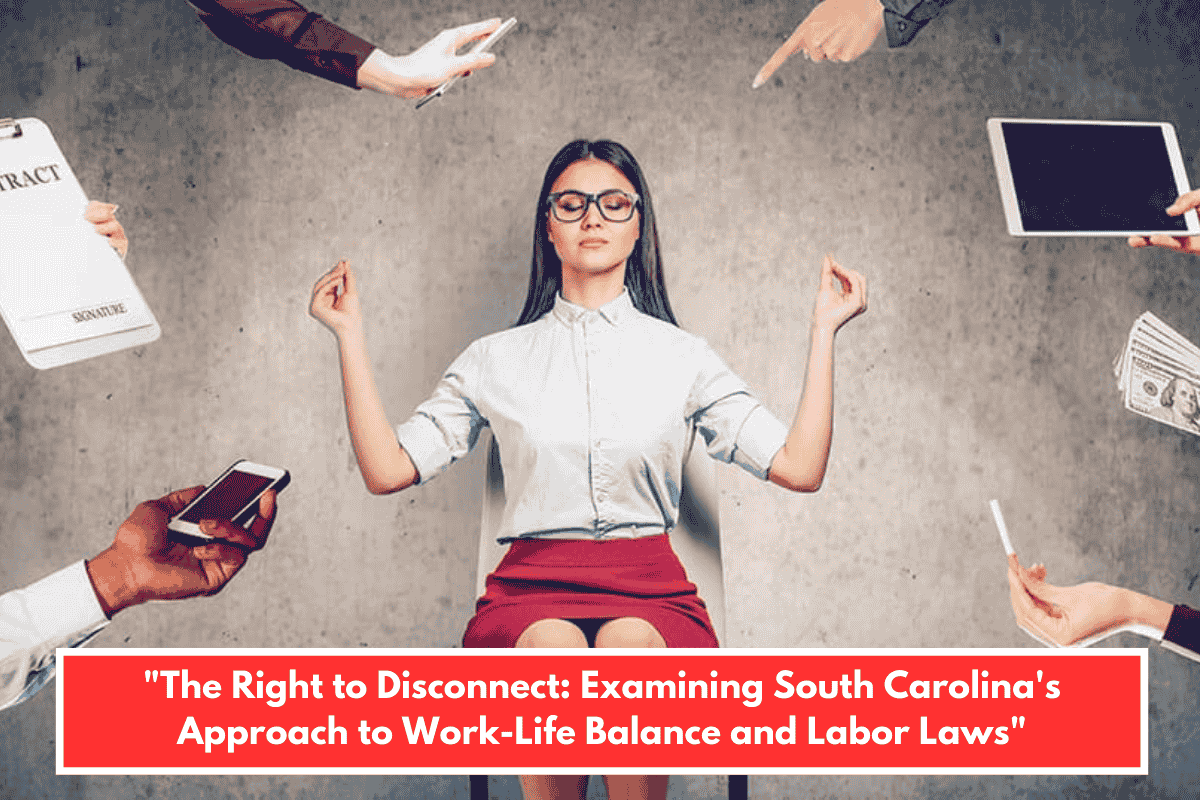
South Carolina lacks a statutory “right to disconnect” law as of 2026, unlike states experimenting with such measures or countries like Australia. Instead, its labor laws prioritize at-will employment and minimal after-hours mandates, leaving work-life balance largely to employer policies and federal FLSA overtime rules.
No State Mandate
South Carolina follows traditional employment standards without specific protections for ignoring work communications outside scheduled hours. Employers can expect responsiveness from exempt employees without violating state law, though excessive demands risk constructive discharge claims under common law.
Work-Life Policies
Companies often adopt voluntary guidelines through handbooks, respecting breaks under OSHA and wage laws. Public sector roles, like those in state agencies, emphasize hazard-free workplaces but omit disconnection rights.
Federal Overlaps
FLSA governs non-exempt overtime pay for hours over 40 weekly, indirectly supporting rest by capping uncompensated work. Title VII and ADA offer accommodations for family or health needs disrupting balance, but no blanket right exists.
SOURCES
[1](https://www.fairwork.gov.au/employment-conditions/hours-of-work-breaks-and-rosters/right-to-disconnect)
[2](https://www.justiceatwork.com/do-you-have-the-right-to-disconnect/)
[3](https://www.rudnerlaw.ca/right-to-disconnect-policy/)
[4](https://www.postercompliance.com/blog/right-to-disconnect/)
[5](https://iuslaboris.com/insights/the-right-to-disconnect-which-countries-have-legislated/)