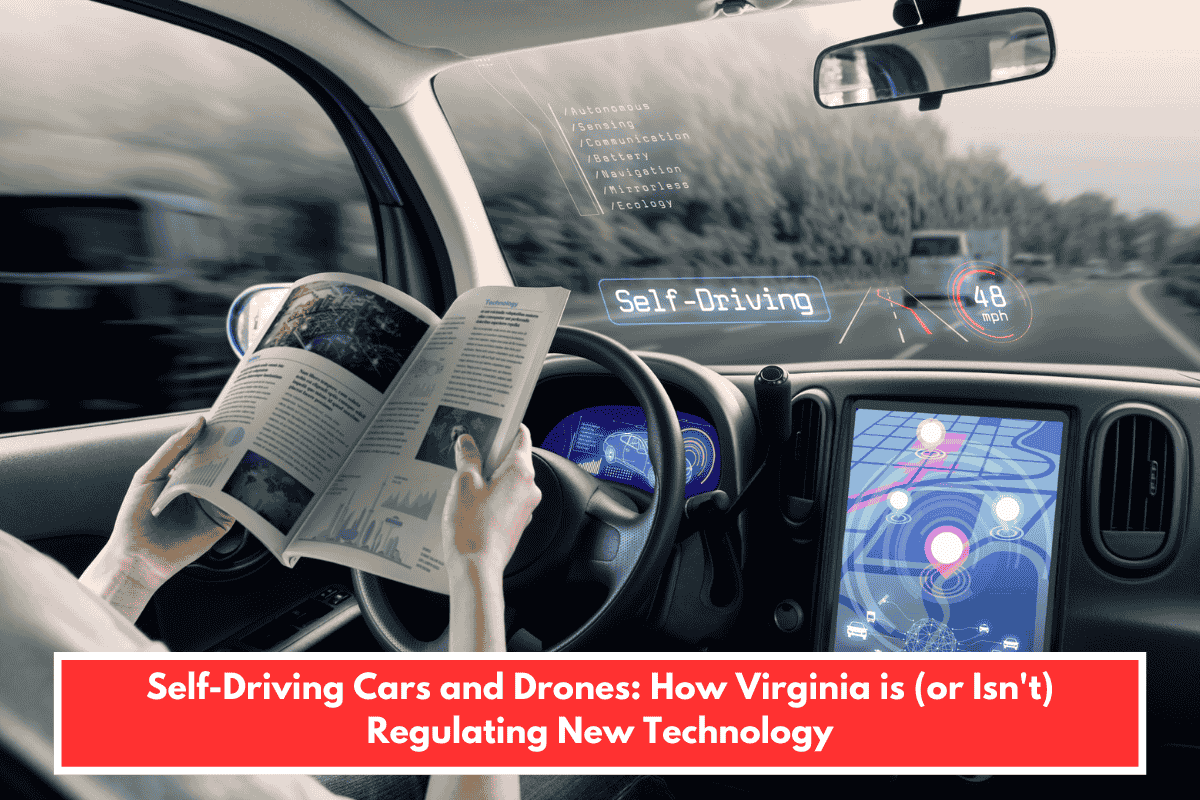
Virginia maintains a relatively hands-off approach to regulating self-driving cars, prioritizing innovation over strict mandates, while drone operations follow strict federal FAA rules with targeted state restrictions on privacy and emergency use. Recent 2026 bills propose licensing for fully autonomous vehicles but prohibit driverless commercial operations. Drone laws emphasize no-fly zones and warrants for law enforcement use.
Self-Driving Car Regulations
Virginia’s current laws require a human driver behind the wheel for autonomous vehicles (AVs), with no comprehensive state-specific framework beyond infrastructure support and testing pilots. House Bill 1124 (2026) prohibits fully driverless AVs from operating as motor carriers for passengers or property without a qualified human operator. House Bill 1125 (2026) directs the Department of Motor Vehicles to develop autonomous operation licenses for fully AVs and automated driving systems. A 2025 working group studies AV integration, with a report due to the legislature by November 2026.
Drone Regulations
All drone flights in Virginia must comply with FAA Part 107 for commercial pilots or recreational TRUST rules, including registration for drones over 0.55 lbs, visual line-of-sight, and altitude limits under 400 feet. State laws ban drones for trespassing, spying, or peeping (Class 1 misdemeanor), and restrict use near emergency scenes without fire chief approval. Law enforcement requires warrants for drone use except in exigent circumstances, and local governments cannot regulate drones statewide. Drones are prohibited in state parks without special permits.
Recent Developments
In 2025, Virginia allocated $1 million for first responders to transition to secure, U.S.-made drones amid national security concerns over foreign models like DJI. AV research continues via partnerships like Virginia Tech with NVIDIA for testing emergency vehicle interactions. No major overhauls occurred by early 2026, maintaining the innovation-friendly stance.