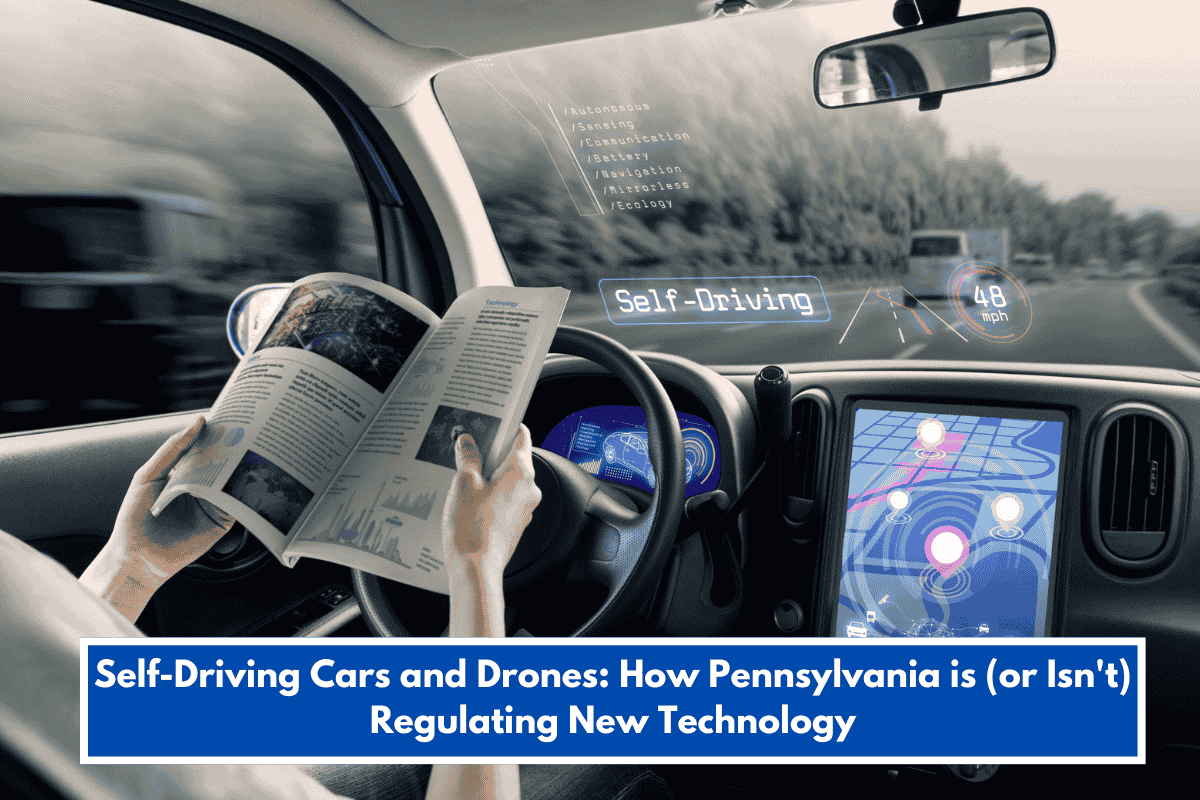
Pennsylvania actively regulates self-driving cars through state laws and PennDOT guidelines allowing certified driverless operations, while drone rules primarily follow federal FAA standards with added state restrictions on privacy and safety. Act 130 of 2022 enables testing and deployment of autonomous vehicles without human drivers if conditions like $1 million insurance are met.
Self-Driving Car Regulations
Pennsylvania legalized autonomous vehicle operations via Act 130 (effective July 2023), permitting driverless cars and trucks—including platooning—on public roads after PennDOT certification.
PennDOT updated Publication 950 in October 2024 to authorize fully driverless highly automated vehicles (HAVs) without a safety driver, including remote operations, developed with industry input.
Vehicles must be titled as HAVs, carry proof of insurance, and follow incident reporting procedures; seven companies were already testing pre-2023.
Drone Regulations
Drones adhere to FAA Part 107 for commercial use, requiring Remote Pilot Certificates, registration, visual line-of-sight, and weight under 55 pounds.
State law (18 Pa. C.S. § 3505) prohibits drones from endangering people, invading privacy via surveillance in private areas without consent, or delivering contraband.
No unique state registration exists beyond FAA rules, emphasizing federal primacy for aviation safety.
SOURCES
[1](https://www.margolisedelstein.com/articles/pennsylvanias-new-autonomous-vehicle-law-takes-effect-in-2023/)
[2](https://www.psats.org/penndot-adopts-guidelines-for-driverless-av-operations/)
[3](https://www.pa.gov/agencies/penndot/news-and-media/newsroom/statewide/2024/penndot-adopts-new-automated-vehicle-guidelines-for-driverless-operation)
[4](https://www.palegis.us/statutes/consolidated/view-statute?txtType=HTM&ttl=75&div=0&chpt=85&sctn=8&subsctn=0)
[5](https://www.belllg.com/blog/can-my-employer-legally-monitor-my-emails-at-work/)