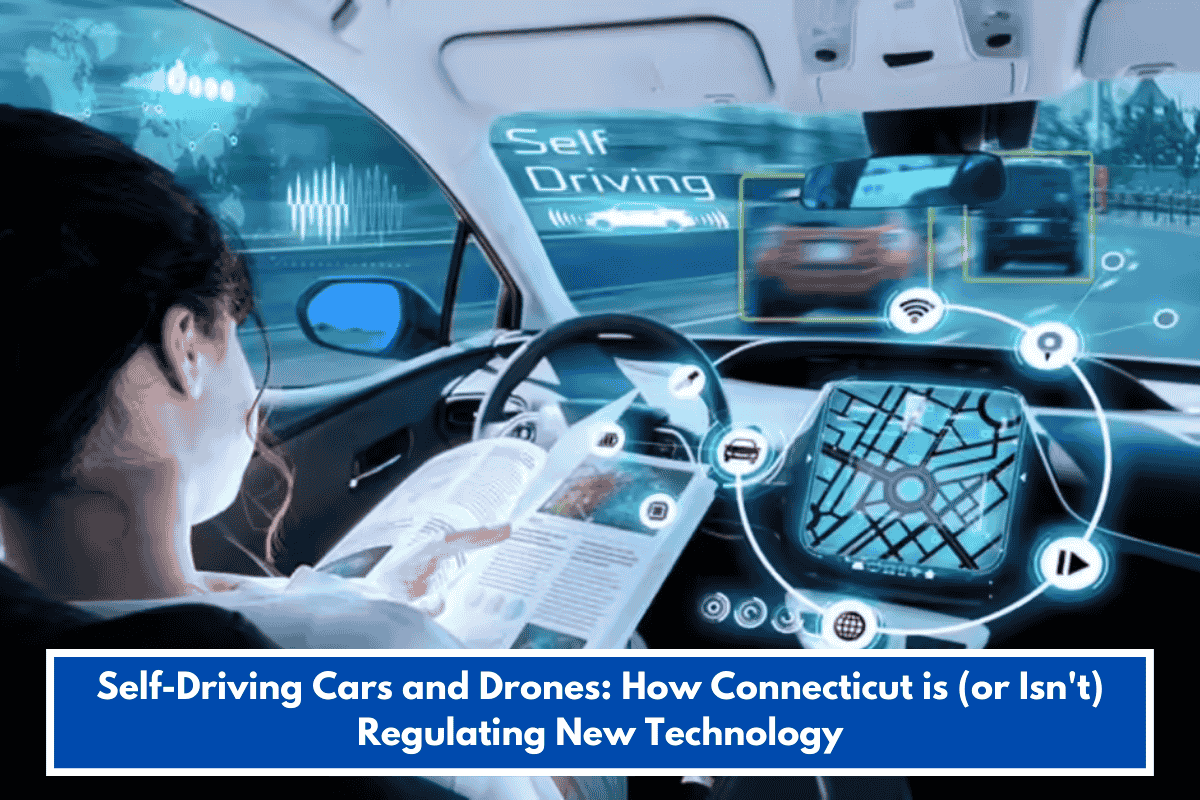
Connecticut regulates self-driving cars through a pilot program allowing up to four municipalities to test fully autonomous vehicles (level 4 or 5). Key rules include requiring a human safety operator physically inside the vehicle, capable of taking immediate control, and that testing is restricted to specified locations and hours. Operation on limited-access highways is prohibited. Testers must register vehicles and maintain $5 million liability insurance for damages caused by autonomous cars. The program involves inter-agency oversight to ensure safety and compliance with both state traffic laws and federal automotive standards.
Regarding drones, Connecticut follows FAA regulations with additional state laws requiring drone operators to avoid flying over private property without permission and to respect privacy and safety laws. Drone commercial use demands registration and remote pilot certification. State laws also address no-fly zones around critical infrastructure and events, but there are no unique Connecticut statutes that heavily restrict drones beyond federal rules as of 2025.
Overall, Connecticut embraces testing and integration of self-driving cars in a controlled manner while aligning drone laws with federal standards, ensuring technology advances with safety and privacy protections in mind.
SOURCES
[1](https://www.cga.ct.gov/2025/rpt/pdf/2025-R-0107.pdf)
[2](https://scaffidilaw.com/connecticut-may-soon-allow-self-driving-car-tests/)
[3](https://law.justia.com/codes/connecticut/title-13a/chapter-241/section-13a-260/)
[4](https://www.suismanshapiro.com/blog/who-is-responsible-in-a-self-driving-car-accident-in-connecticut/)
[5](https://tech.co/logistics/which-states-are-self-driving-trucks-legal-guide)