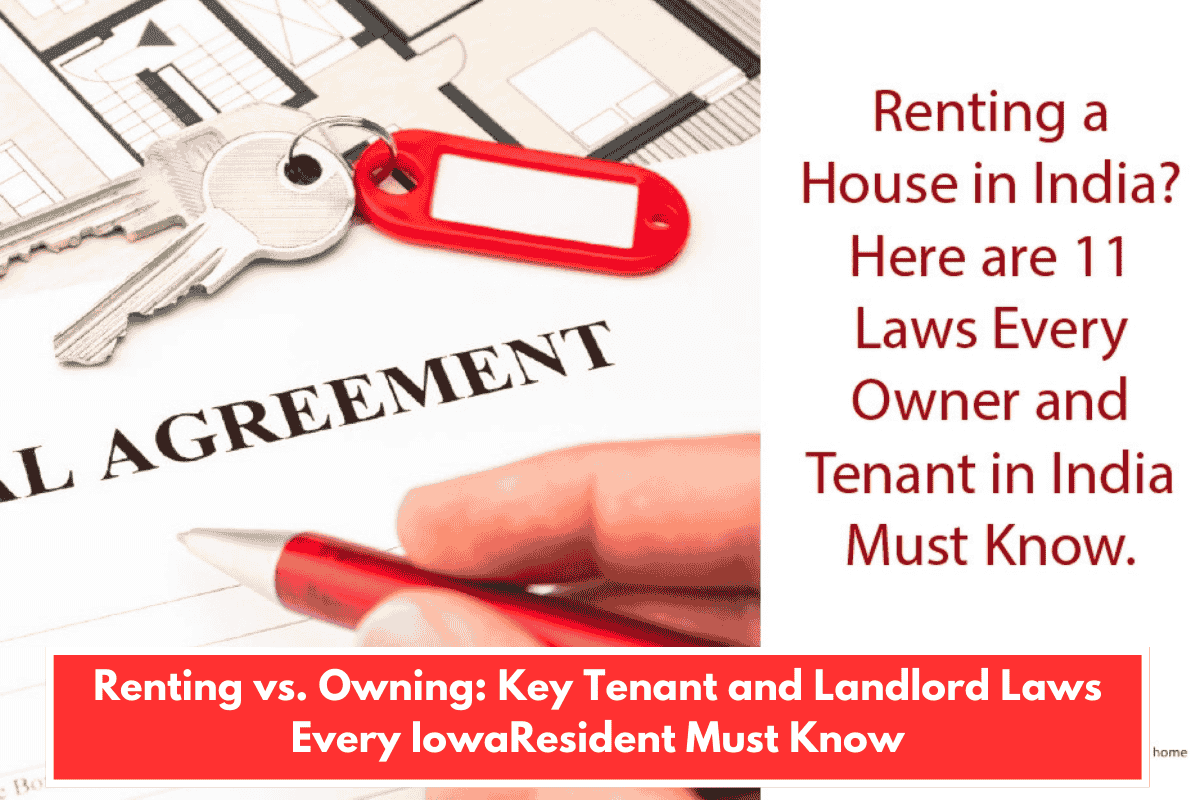
Iowa’s landlord-tenant relationships are governed by the Uniform Residential Landlord and Tenant Act (Chapter 562A), which outlines clear rights and duties for both renters and owners to ensure fair housing. Renting offers flexibility without long-term ownership costs, while owning provides equity but demands maintenance and mortgage stability—key laws help navigate both paths.
Landlord Duties
Landlords must maintain habitable units compliant with health, safety, and building codes, including functional plumbing, heating, electrical systems, and structural integrity. They provide required disclosures (e.g., lead paint, radon), return security deposits within 30 days (max two months’ rent) with itemized deductions, and give reasonable notice before entry except emergencies. No rent control exists, but increases require notice at lease end.
Tenant Rights
Renters are entitled to quiet enjoyment, timely repairs, and protection from discrimination or retaliation. They can request fixes in writing, use “repair and deduct” if landlords fail, or break leases early for military orders, uninhabitable conditions, or domestic violence. Month-to-month tenancies need 30 days’ notice to end; fixed-term leases expire naturally unless renewed.
Ownership Considerations
Owners avoid tenant disputes but face property taxes, insurance, and repairs under local codes without URLTA protections. Iowa law requires habitable standards for sales/transfers, and homeowners associations may add rules on rentals if converting to investment property. Renting suits short-term needs; owning builds wealth long-term amid rising Iowa home values.