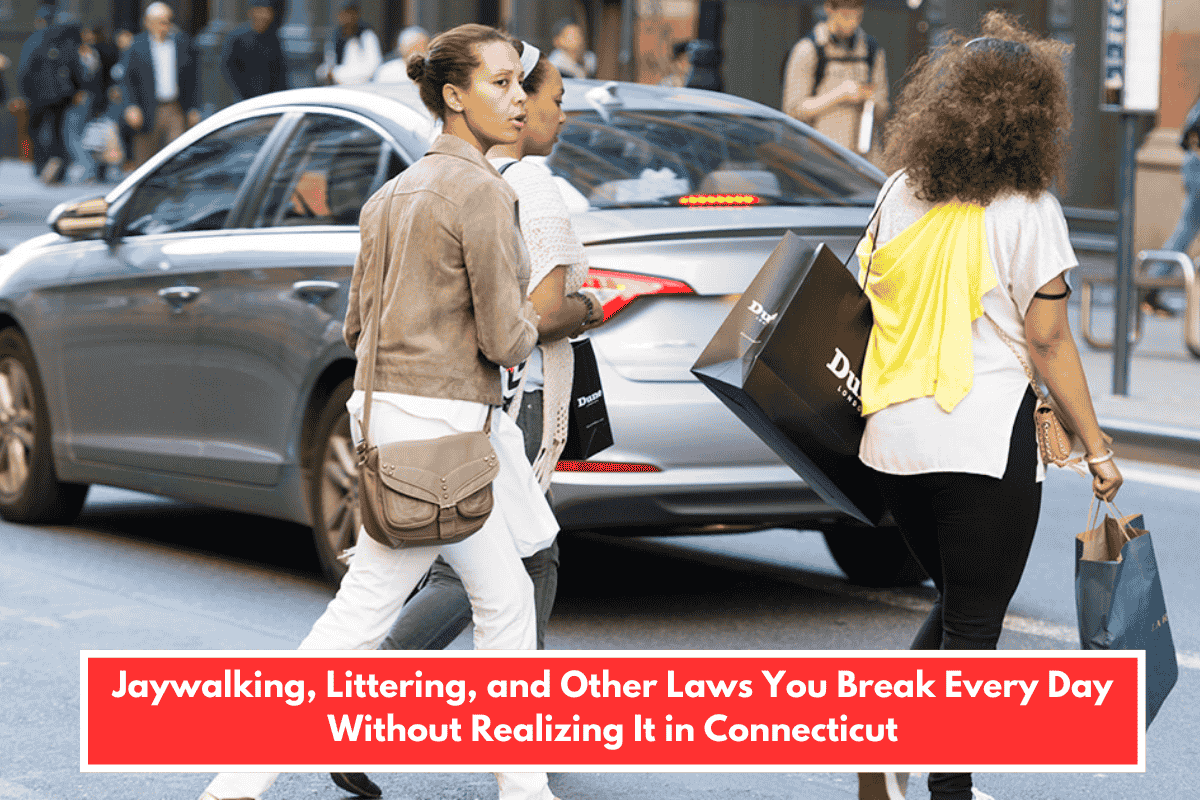
No, jaywalking and littering in Connecticut are not laws you break “every day without realizing” as casual or overlooked offenses; they carry defined penalties under state traffic and environmental codes.
Jaywalking Rules
Connecticut General Statutes §14-300b prohibits crossing roadways outside marked or unmarked crosswalks at intersections, sudden entry into traffic paths creating hazards, or intoxicated walking on roads, classifying violations as infractions with fines up to $50. Pedestrians must yield outside crosswalks, but drivers still hold a duty to avoid collisions where possible, though jaywalking contributes to comparative fault reducing injury claims if over 51% responsible.
Littering Penalties
Under §53-182, littering highways or public places incurs fines from $35 to $100 for first offenses, escalating for repeats, enforced via environmental protection laws targeting intentional disposal. Unlike myths, enforcement focuses on visible dumping, not minor accidental drops.
Daily Compliance Tips
Use crosswalks and signals at intersections; drivers yield to signaled pedestrians per 2021 updates. Proper waste disposal avoids fines—carry bags for trash on walks. No broad “hidden” bans exist beyond standard civic duties.
SOURCES
[1](https://www.weberandrubano.com/blog/is-jaywalking-legal-in-connecticut/)
[2](https://www.cbrattorneys.com/connecticut-jaywalking-law/)
[3](https://law.justia.com/codes/connecticut/title-53/chapter-943/section-53-182/)
[4](https://legal-resources.uslegalforms.com/j/jay-walking)
[5](https://www.cga.ct.gov/ps97/rpt/olr/htm/97-r-0173.htm)