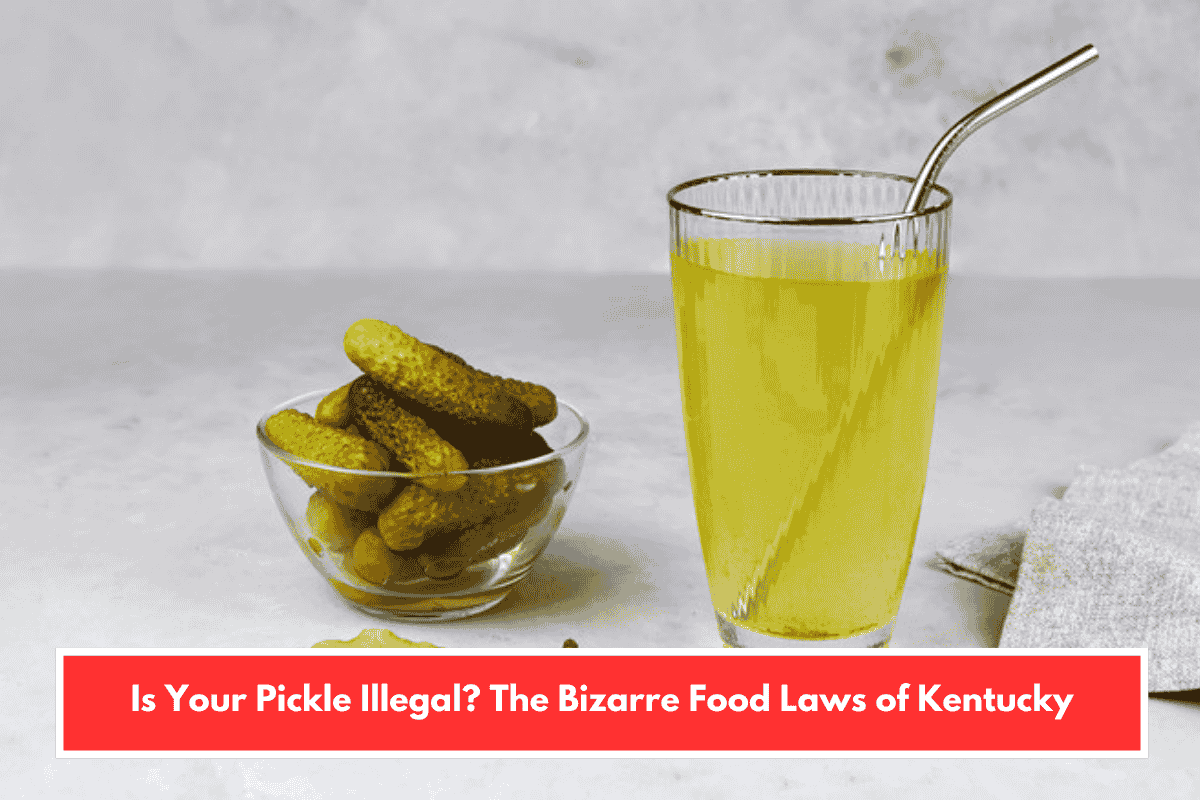
Kentucky lacks a specific law declaring pickles illegal or requiring them to bounce, contrary to some viral myths. That quirky “bouncing pickle” rule actually stems from a 1940s anecdote in Connecticut, where a food commissioner jokingly suggested using a bounce test to check pickle freshness after vendors sold unfit ones. No verified Kentucky statute exists on pickles; instead, the state’s odd food-related laws focus elsewhere.
Actual Kentucky Food Laws
Kentucky prohibits carrying an ice cream cone in your back pocket, a holdover from the horse-thieving era when treats lured animals. Another bans selling or dyeing baby chicks, ducklings, rabbits, or fowl under two months old in groups smaller than six, with fines from $100 to $500.
Origins of Pickle Myths
Social media posts falsely attribute the bounce test to Kentucky, blending it with real Connecticut history. These tales exaggerate early food safety efforts, like spotting spoiled pickles, but remain unenforceable folklore. Kentucky’s food regs emphasize general health codes over such specifics.
SOURCES
[1](https://wbkr.com/strange-kentucky-laws/)
[2](https://www.thepioneerwoman.com/just-for-fun/g69150975/weird-food-laws-across-america/)
[3](https://www.youtube.com/watch?v=rDgtXLO174c)
[4](https://www.onelegal.com/blog/funny-us-laws-that-might-surprise-you/)
[5](https://www.tasteofhome.com/collection/we-found-weird-laws-about-food-from-every-state/)