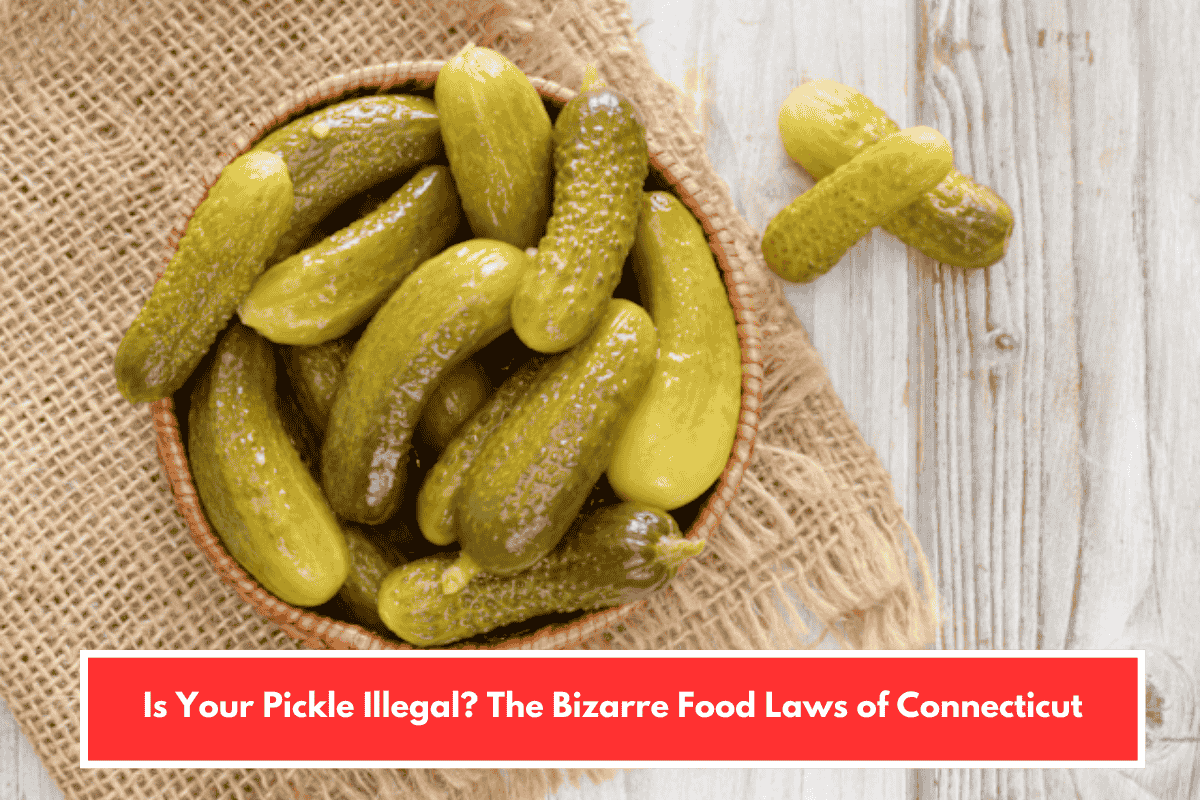
No, there are no bizarre or specific Connecticut laws making common pickles illegal; state food regulations focus on safety standards like adopting the FDA Food Code for handling, labeling, and inspections rather than prohibiting everyday foods.
Cottage Food Operations
Connecticut’s 2025 cottage food laws under Senate Bill SB154 allow home-based production and sales of non-perishable items like jams, breads, and candies (potentially including pickled goods if low-risk), but require permits, labeling, and sales limits within a 20-mile radius of the producer’s home. These updates expand venues like farm stores and cafes but mandate compliance with hygiene and inspection rules to prevent contamination.
Key Restrictions
Businesses generating over 26 tons of food waste annually must recycle organics starting March 2025 under the Commercial Organics Recycling Law, indirectly affecting food producers but not home pickling. PFAS chemicals are banned in food packaging effective post-2021, ensuring safer containers for preserved foods like pickles. All food establishments need local health district licensing, emphasizing cleanliness over outright bans on specific items.
SOURCES
[1](https://www.youtube.com/watch?v=688CpXosjZ4)
[2](https://www.michaelbest.com/Newsroom/373509/Food-amp-Beverage-Regulatory-Update-ndash-June-2025)
[3](https://www.scrrra.org/connecticut-organics-recycling-law/)
[4](https://portal.ct.gov/dph/food-protection-program/regulations)
[5](https://www.ccthd.org/food-establishments)