Washington deeds define property boundaries based on legal descriptions, surveys, and plats recorded with county assessors, making backyard fences a common source of disputes if they encroach or ignore lines. State laws under RCW 16.60 require shared costs and maintenance for boundary fences, while adverse possession risks title shifts after 10 years of unchallenged use.
Boundary Determination
Deeds reference metes and bounds, lot numbers, or recorded plats to establish lines; always verify via county records or professional survey under RCW 58.09 before fencing. Misplaced fences (even by mistake) must be removed within three months of line determination, or sooner if cropping the neighbor’s field. Courts prioritize surveys in disputes.
Fence Laws
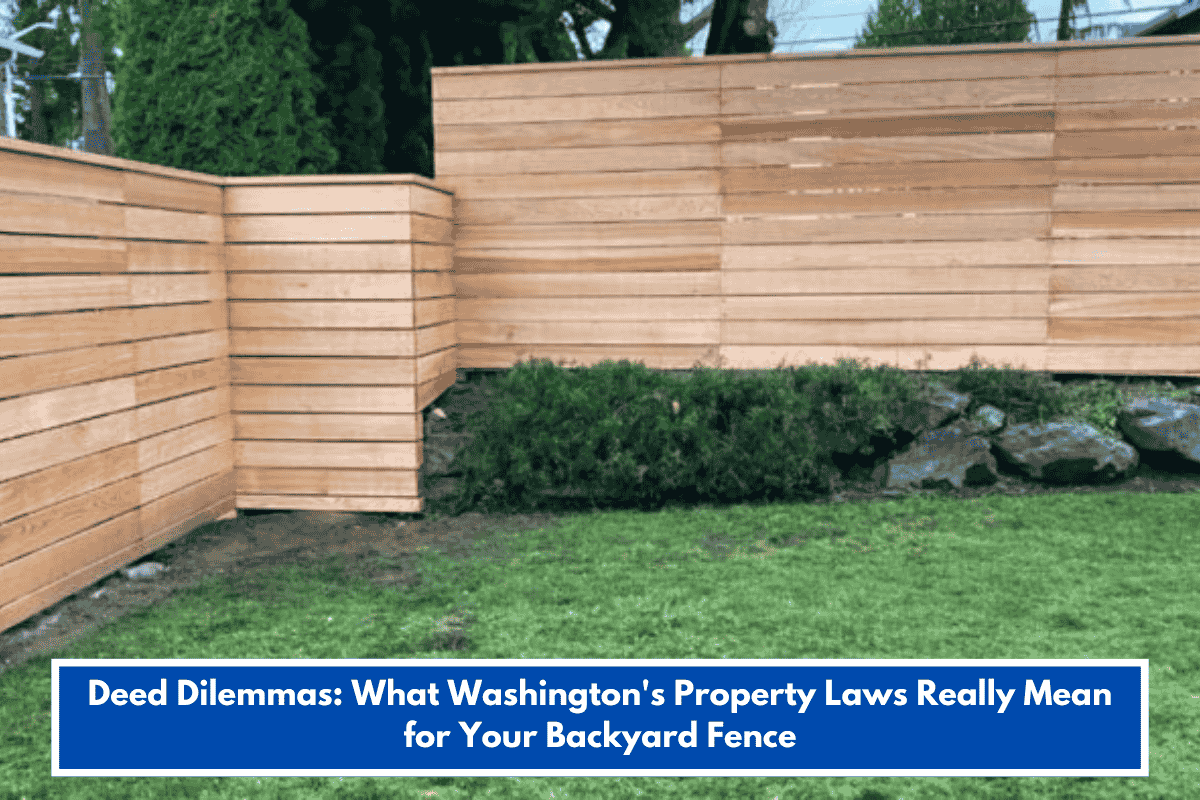
A lawful fence needs at least four barbed wires spaced specifically, 48 inches high at top, or equivalent strength; local zoning caps backyard heights at 6 feet, front at 4 feet, with permits for taller. Boundary fences create joint ownership, mandating 50/50 cost-sharing for build/maintenance after notice (RCW 16.60.020-030); hog fencing extras are optional.
Neighbor Disputes
Encroachment allows removal demands; unresolved issues go to small claims for reimbursement or injunctions. Spite fences (maliciously built to annoy, per RCW 7.40.030) face court-ordered removal and damages. Communicate first, then mediate before suing.
Adverse Possession Risks
Open, notorious, continuous use of neighbor’s land (e.g., via fence-enclosed yard) for 10+ years can claim title; stricter 7-year statutory version needs color of title and taxes paid. Deeds don’t protect unchallenged encroachments long-term.