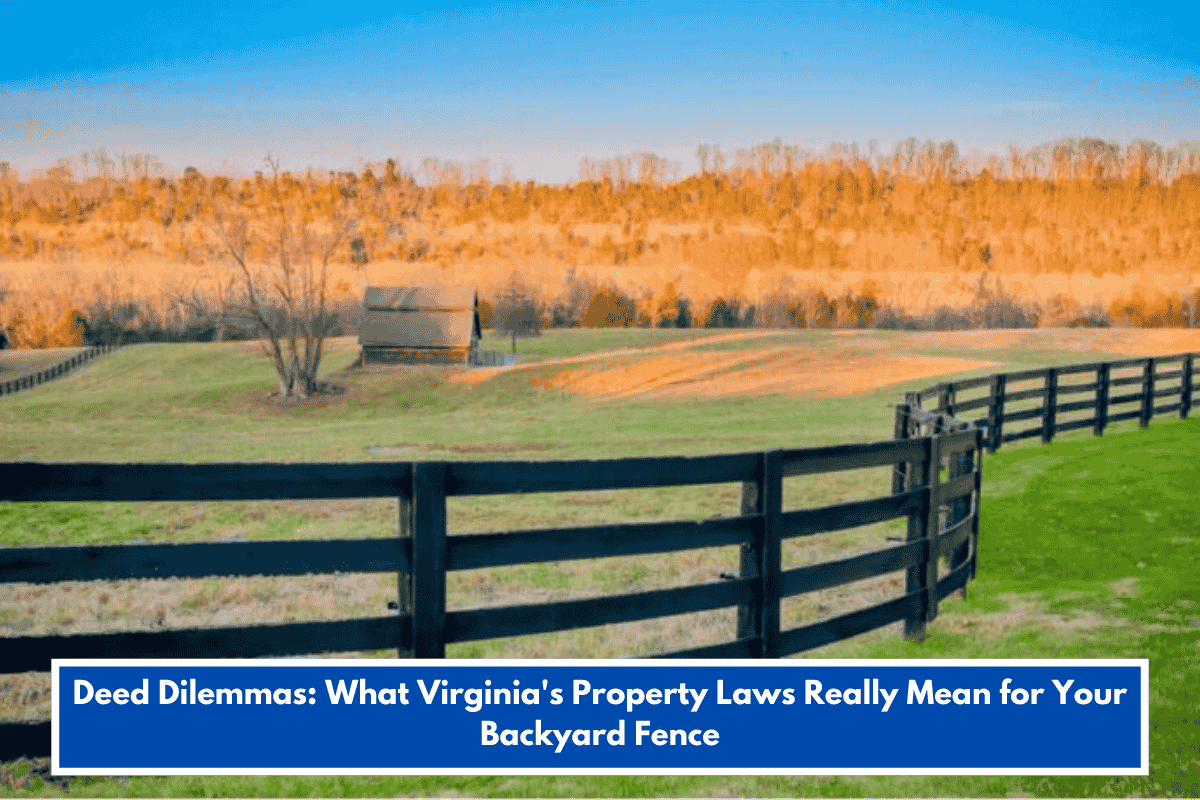
Virginia’s property deeds define ownership boundaries, but backyard fences often trigger disputes under specific fence laws in Title 55.1, Chapter 28 of the Code of Virginia. These rules clarify shared responsibilities and resolve “dilemmas” like costs, repairs, and encroachments.
Division Fence Rules
Adjoining landowners must build and maintain boundary (division) fences at joint equal expense, unless one opts to leave land open or they agree otherwise in writing.
For new fences, send written notice; the recipient has 10 days to opt out or 30 days to contribute half the cost—failure makes them liable, binding successors if recorded.
Existing fences require 30-day repair notice; non-compliance allows full repair with half-cost recovery via debt action.
Boundary and Deed Issues
Deeds and surveys set true property lines—fences on the line are shared; off-line fences belong to the builder but can’t encroach without permission.
Check local zoning for height (often 6 feet residential), setbacks, and permits; shared fences need neighbor agreement to avoid trespass claims.
Disputes use surveys; unrecorded agreements don’t bind new owners.
Adverse Possession Risks
A fence encroaching for 15+ years may claim adverse possession if possession is actual, open, exclusive, continuous, hostile, and under color of title (Virginia standard).
However, building or replacing a fence alone rarely suffices without proving all elements, especially post-survey knowledge.
Courts resolve via quiet title actions; consult a surveyor first.