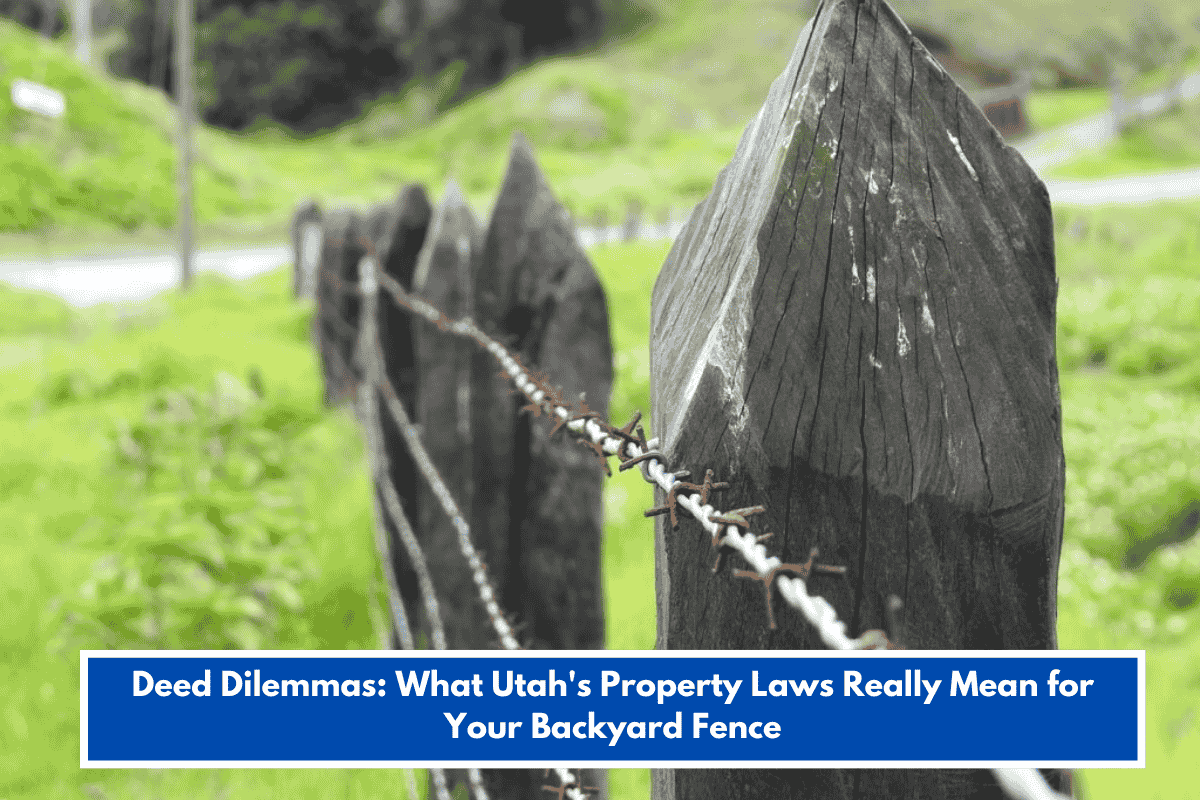
Utah property laws, governed by Title 57 of the Utah Code, determine backyard fence issues through deed descriptions, boundary lines, and local ordinances, requiring fences to stay within your legal property lines to avoid encroachment disputes or adverse possession claims. Deeds must include precise legal descriptions (e.g., metes and bounds or lot/plat references) to define boundaries clearly, with recording requirements ensuring public notice of ownership.
Boundary Determination
Property lines follow the legal description in the recorded deed, often verified via surveys; disputes arise if fences cross lines, potentially leading to quiet title actions. Neighbors can resolve via agreement or court under Utah Code § 57-1, with surveyors providing evidence; unrecorded changes risk fraudulent deed claims per 2025 HB 108.
Fence Regulations
Utah lacks statewide fence height laws for backyards, deferring to local zoning (e.g., 6-foot residential limits common); spite fences over 7 feet may be deemed nuisances if malicious. HOAs impose stricter rules via CC&Rs, with 2025 updates codifying developer duties but not altering general boundary fences.
Dispute Resolution
Encroachment allows demands to remove or lawsuits for trespass; compensation via negotiation or court if damage proven, with statutes of limitations applying. Adverse possession requires 7 years’ open use with taxes paid; title searches and surveys prevent dilemmas.
SOURCES
[1](https://www.deedclaim.com/utah/deed-requirements/)
[2](https://www.counselourhoa.com/articles/639-new-2025-hoa-laws-and-what-they-mean-for-your-hoa)
[3](https://le.utah.gov/xcode/Title57/C57_1800010118000101.pdf)
[4](https://attorneyatlawmagazine.com/public-articles/estate-planning/property-classifications-for-married-couples-in-utah-when-and-why-they-matter-in-estate-planning)
[5](https://le.utah.gov/xcode/Title57/Chapter3/C57-3-S105_2025110620251206.pdf)