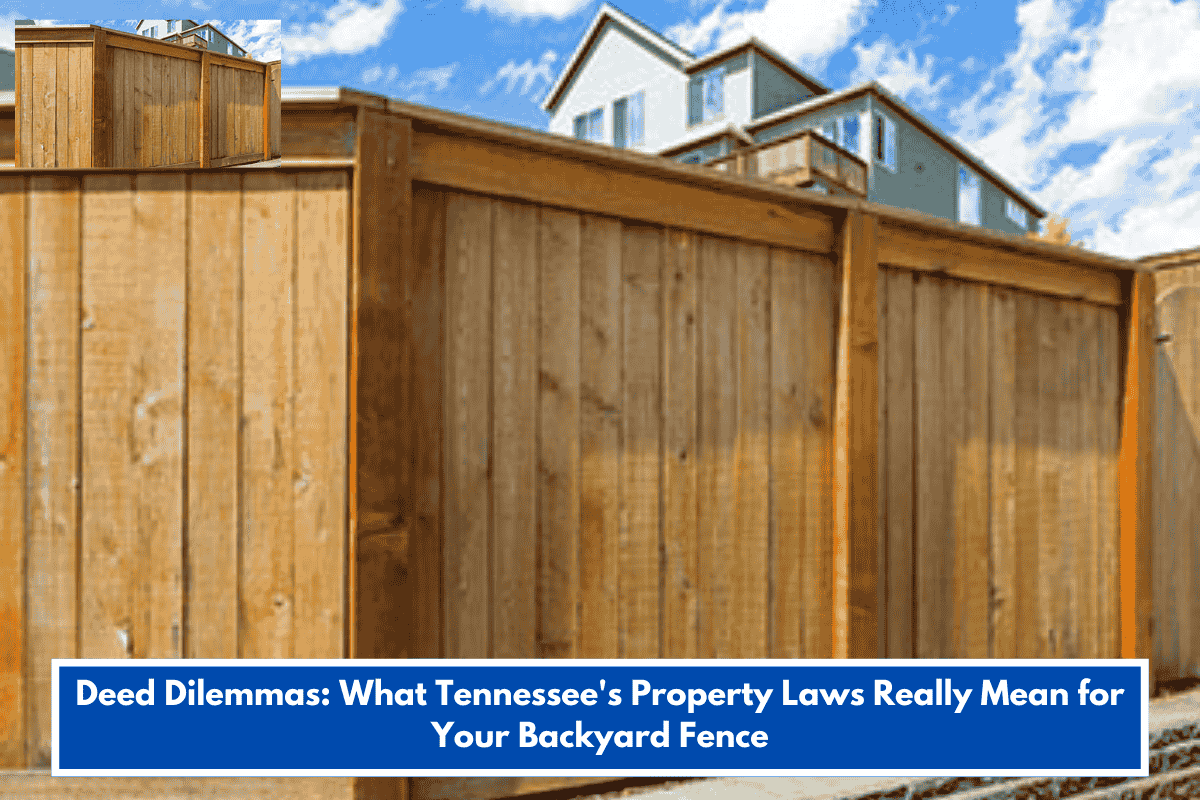
Tennessee property laws require shared responsibility for boundary fences, meaning deeds often define lines but state statutes govern fence disputes and maintenance. Backyard fences on property lines qualify as partition fences under Tenn. Code § 44-8-202, with costs split equally between adjoining owners. Deeds clarify exact boundaries via surveys, preventing encroachment claims.
Boundary Fence Rules
Adjoining landowners must jointly erect, repair, or maintain partition fences; using a neighbor’s fence as your boundary triggers proportional cost liability. Local ordinances or HOAs may impose height (often 6 feet max), material, or setback rules beyond state law. Spite fences—built maliciously to annoy without benefit—are prohibited.
Dispute Resolution
Failing agreement, either party petitions a General Sessions judge to appoint three freeholders for binding cost assessment. Livestock areas demand “lawful fences” like specific barbed wire setups to contain animals. Accurate surveys from deeds resolve line disputes; unrecorded fences don’t shift boundaries absent deed reference.
Deed Implications
Deeds control true property lines; fences slightly over the line risk trespass suits unless prescriptive rights (20-year open use) apply. Rural properties emphasize livestock fencing, while urban zones defer to municipal codes for aesthetics and drainage. Consult county records or surveyors for deed-specific compliance.