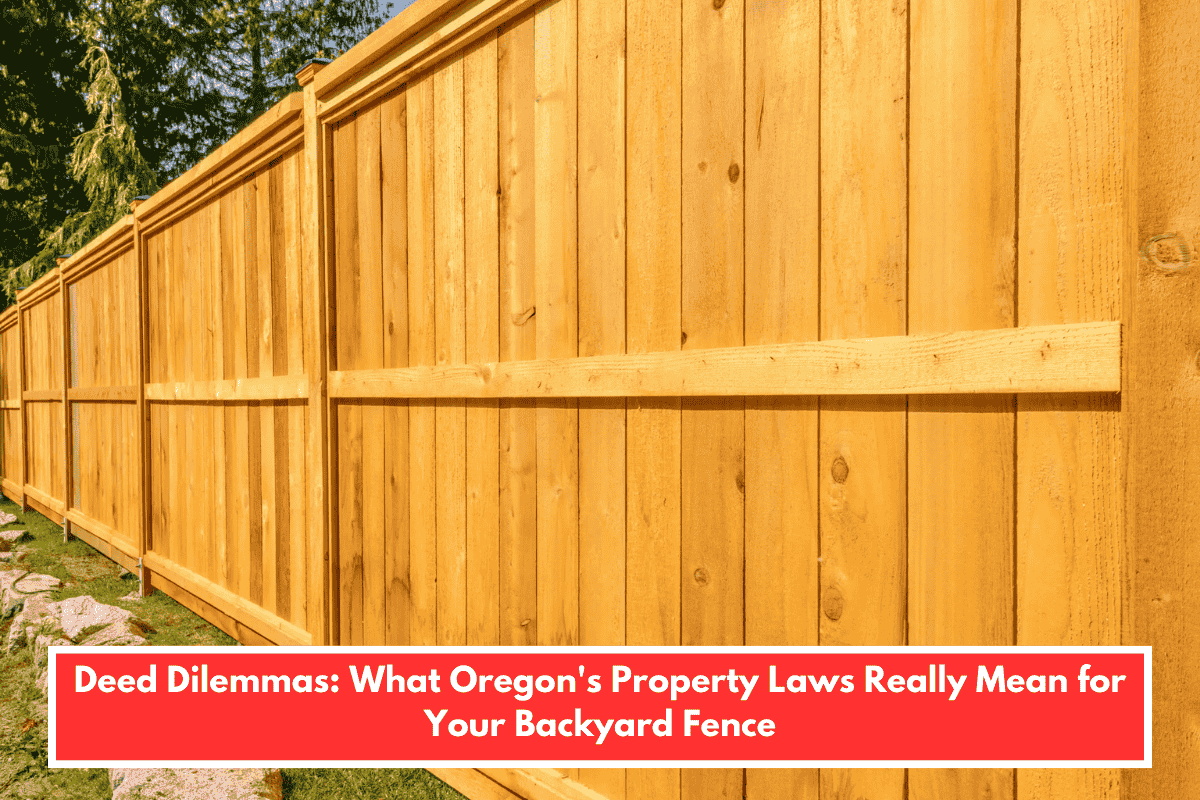
Oregon property laws govern backyard fences through a mix of state statutes and local zoning rules, often focusing on height limits, setbacks, and shared responsibilities to prevent neighbor disputes. Deeds may include restrictive covenants adding further limits, but state laws like those on boundary fences and adverse possession typically take precedence in conflicts.
Fence Height and Setback Rules
Local codes vary, but common Oregon guidelines include:
- Fences up to 6-8 feet tall in backyards, often requiring engineering for heights over 7-8 feet (e.g., Portland mandates licensed design above 8 feet).
- Must stay within property lines; front yard limits are stricter (e.g., 3.5-4.5 feet max near streets).
- Setbacks like 3-5 feet from property lines in some areas, with living ground cover required in buffer zones.
Shared Fences and Neighbor Disputes
Oregon law treats boundary (“partition”) fences as jointly owned:
- Costs for building, maintaining, or repairing must be shared equally; one owner can recover half plus attorney fees if the other refuses.
- If a fence encroaches, notify the neighbor—they have 1 year to remove it before you can act.
- Check your deed for HOA or covenant restrictions, which could prohibit certain materials or heights beyond state rules.
Adverse Possession Risks
Long-term fence encroachments can lead to adverse possession claims:
- After 10 years of open, continuous use (post-1990 claims need “honest belief” it was your land), the fence owner may gain title to the strip.
- Courts weigh “relative hardship”—minor encroachments might stay with damages paid, but intentional ones usually require removal.
Survey your property first and communicate early to avoid these issues.