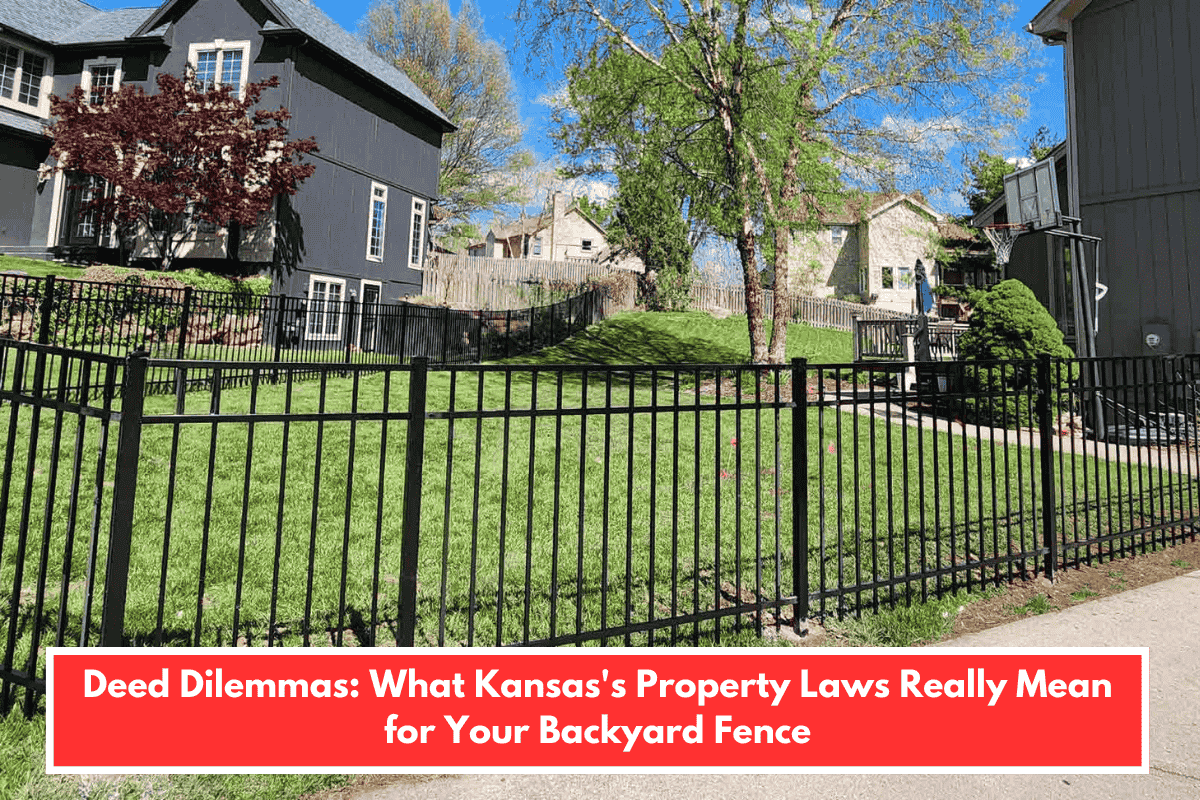
Kansas property deeds define backyard boundaries precisely, but fence laws emphasize shared responsibility for partition fences along property lines. Disputes hinge on “sufficient” fences and formal resolution processes rather than unilateral actions.
Fence Ownership Rules
Fences on boundary lines are jointly owned by adjoining landowners, who must equally share building, maintenance, and repair costs for “sufficient” fences—defined as sturdy post-and-wire, hedge, or turf barriers capable of containing livestock. You can build entirely on the line (half on each property), but encroaching onto a neighbor’s land without permission risks removal orders; survey your deed first via county register. No contribution required if adjacent land remains unenclosed and unused in common.
Dispute Resolution
Neighbors unable to agree notify county commissioners, who appoint “fence viewers” (typically two commissioners) to inspect and assign equal shares in writing, recorded at the register of deeds—binding on current and future owners. Decisions are final/non-appealable if viewers are properly appointed; otherwise, appealable under K.S.A. 19-223. Non-compliant parties face costs, interest, and fees after subsequent viewings.