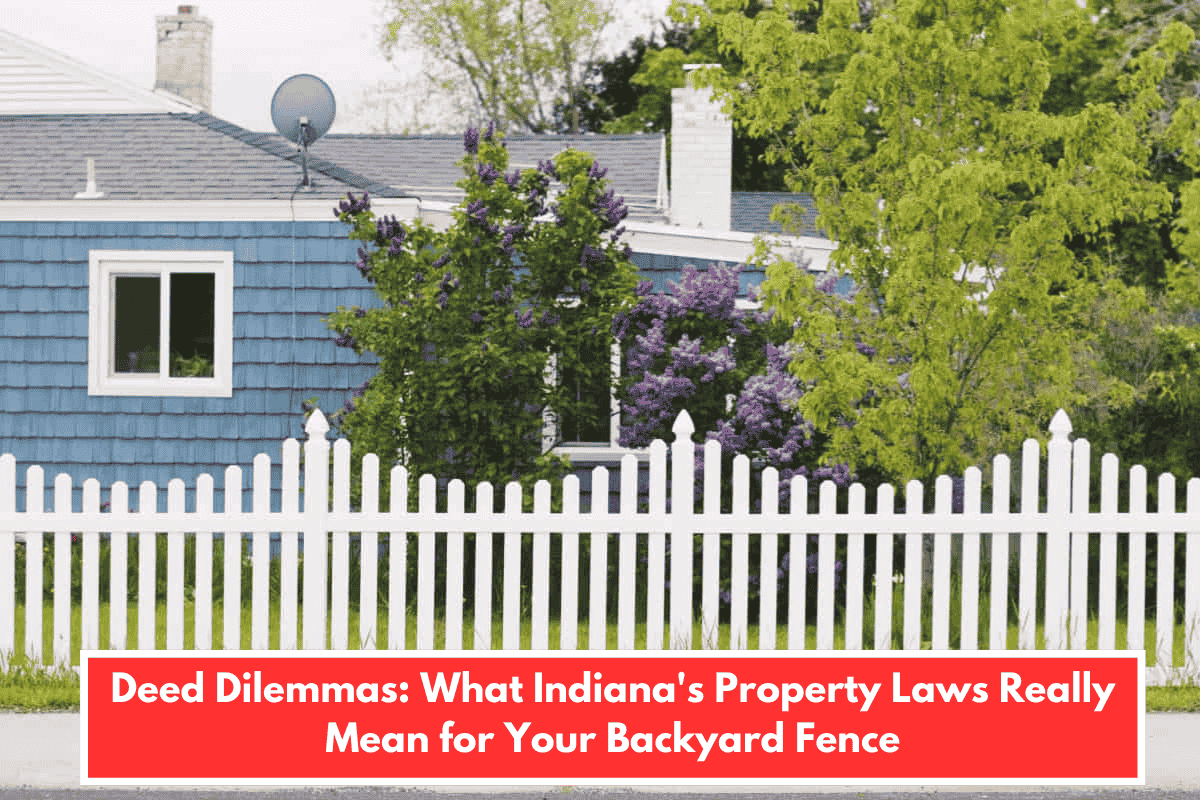
Indiana property deeds define legal boundaries, but backyard fences often spark disputes over lines, maintenance, and restrictions tied to local zoning or easements noted in deeds.
Fence Placement Rules
Fences on shared boundaries—called partition fences—must stay on or inside your property line to avoid trespass claims. Check your deed for easements (e.g., utilities, drainage) that prohibit fencing, and call 811 before digging; setbacks vary by locality, like 2 feet from roads in Tippecanoe County. Height limits differ: front yards often cap at 3-4 feet, rear/side at 6 feet (up to 8 feet for open designs in some counties), with chain-link banned in many residential front yards.
Shared Responsibilities
For boundary fences, adjoining owners split costs equally under Indiana Code § 32-26-9-3, mainly in rural areas; urban rules follow zoning. East-west lines split north owner (west half) and south owner (east half); disputes go to township trustees for arbitration.
Adverse Possession Risks
Long-term use of land beyond your deed—like mowing or fencing a strip for 10+ years—can lead to adverse possession claims if open, continuous, exclusive, hostile, and notorious. Courts upheld this in cases like the Whites gaining land along a longstanding fence without a survey. Survey before building to confirm lines per IC § 36-2-12-10.
SOURCES
[1](https://www.trialguy.com/slips-trips-and-falls/)
[2](https://www.907attorney.com/slip-and-fall-accidents/)
[3](https://www.injuryak.com/anchorage-premises-liability-lawyer/)
[4](https://www.kelleyandcanterbury.com/practice-areas/trips-slips-falls/)
[5](https://jimglaserlaw.com/who-is-at-fault-in-a-slip-and-fall-case/)