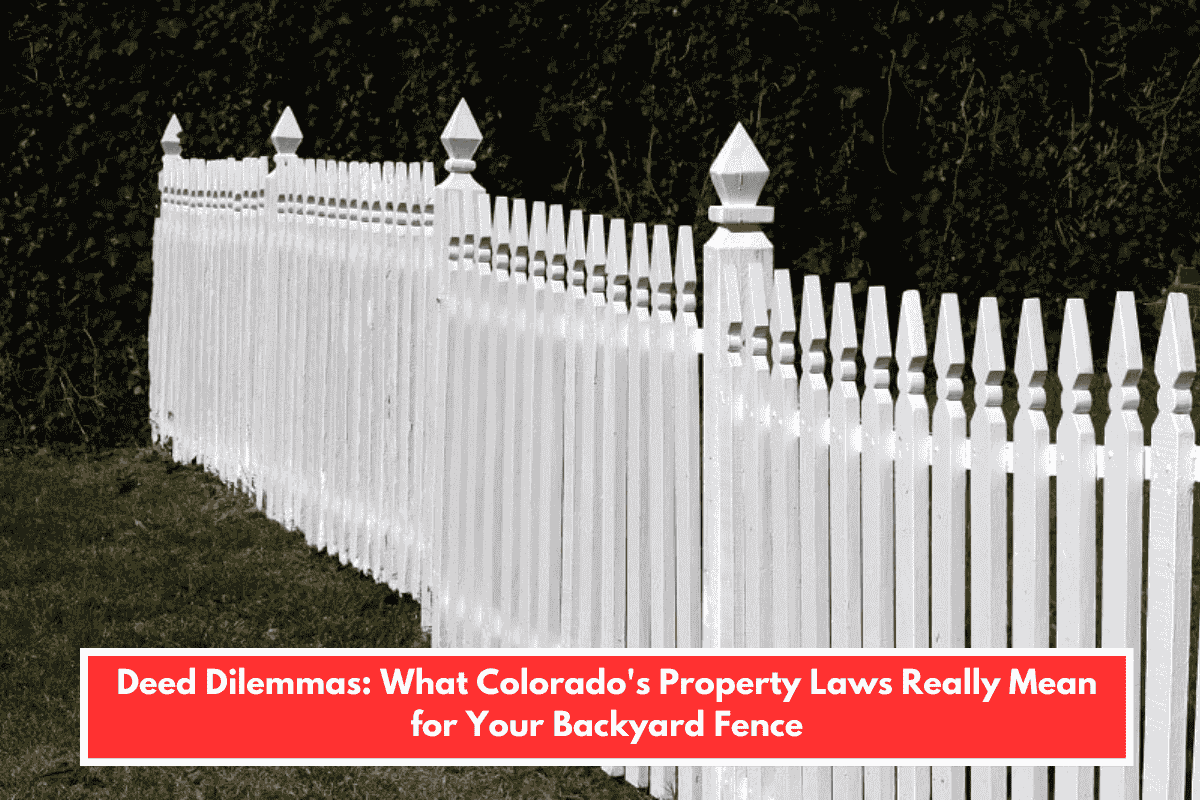
Colorado property deeds define ownership boundaries precisely, impacting backyard fences under the “Good Neighbor Fence Law” and partition fence statutes. Disputes often arise over shared lines, costs, and encroachments, resolved by verifying deeds and following state rules for construction and maintenance.
Boundary Fences
Colorado Revised Statutes § 35-46-112 require adjoining owners to share costs equally for building and maintaining partition (boundary) fences absent a written agreement. One owner proposing a fence must notify the neighbor in writing with details on location, materials, dimensions, and costs; the neighbor has 30 days to agree or opt out, forfeiting shared use if they decline. Deeds establish the exact line—fences cannot encroach without consent, or it risks trespass claims.
Repair Obligations
Under § 35-46-113, owners split repair costs 50/50; written notice of needed fixes gives the recipient 30 days to act, or the notifier can repair and seek reimbursement. Failure to maintain can lead to lawsuits, with courts referencing property deeds and surveys for boundaries.
Local Variations
Cities impose height limits (often 6 feet max), setback rules, and permit needs; check municipal codes for spite fences (nuisances blocking views unreasonably). Always survey via deed records before building to avoid dilemmas.
SOURCES
[1](https://duramaxfences.com/colorado-residential-fencing-laws-know-your-rights-and-responsibilities/)
[2](https://blacklinehhp.com/colorado-residential-fence-law-understanding-your-rights-and-responsibilities/)
[3](https://nesbittlawoffices.com/blog/boundary-disputes-between-neighbors/)
[4](https://leg.colorado.gov/bills/hb25-1023)
[5](https://www.coloradorpm.com/fence-laws-in-colorado/)