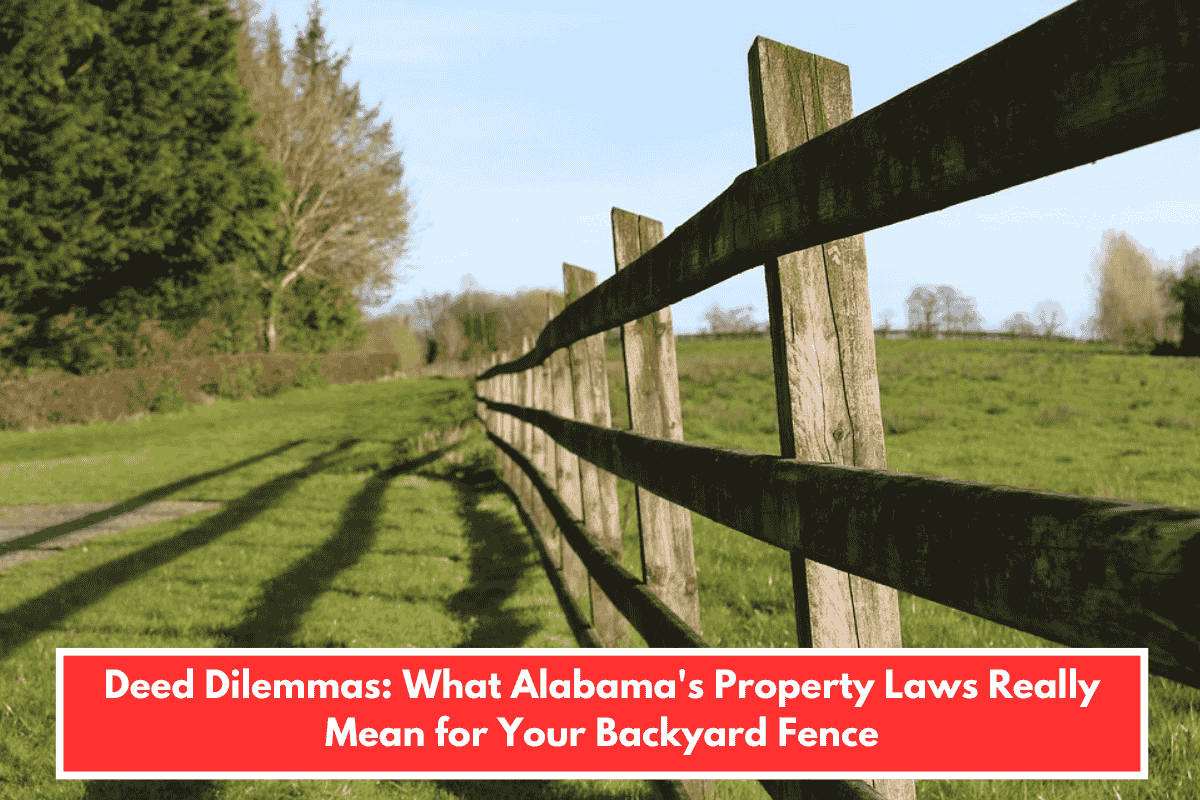
Alabama property laws, primarily under Title 35 (Property) and Title 3 (Animals), regulate backyard fences through boundary rules, partition requirements, and livestock protections, impacting deeds via potential adverse possession or disputes. Deeds define ownership lines, but fence placement can lead to legal claims if they encroach or imply possession over time. Owners must verify boundaries via surveys before building to avoid dilemmas like shared costs or title challenges.
Fence Standards
Lawful fences must reach at least five feet high, with specific rail (rails ≤4 inches apart every two feet), paling (≤3 inches apart), wire (e.g., 3+ wires for cattle, 7+ for livestock), or woven wire specs to contain animals. Ditch fences require four-foot width and height compliance to qualify as legal against livestock trespass. Non-compliant setups risk liability for animal damage or penalties like $50 forfeitures for unsafe enclosures.
Boundary and Partition Rules
Partition fences between improved lands fall under joint occupant expense per Ala. Code § 35-7-1 et seq., with equal repair shares unless agreed otherwise; neglect allows cost recovery plus damages. Encroaching fences on neighbor property demand removal requests or court orders, as they violate deed lines without easement. Always survey deeds to confirm boundaries, as old fences can trigger disputes.
Adverse Possession Risks
Long-term fence maintenance with land use (e.g., mowing beyond the line) risks adverse possession claims after 10 years’ continuous, hostile, open possession under color of title or 20 years without. Fences symbolize possession, potentially altering deed rights via quiet title actions. Courts weigh actual use consistent with ownership to resolve backyard conflicts.