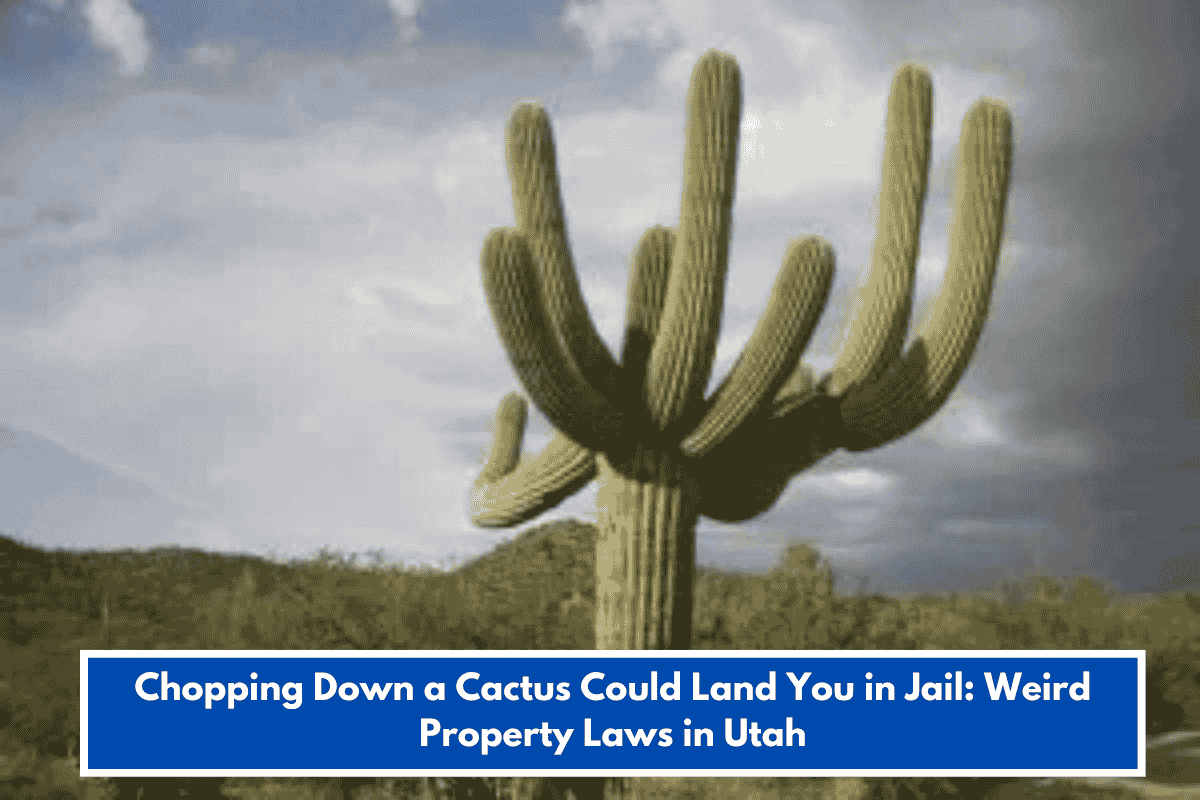
No specific Utah law makes chopping down a cactus in your own yard a felony, unlike Arizona’s strict protections for native species like saguaros. Utah regulates certain protected plants under the Native Plant Protection Act, but common yard cacti or non-native varieties face no such penalties, falling instead under local zoning or HOA rules. Always verify ownership and species before removal to avoid fines.
Protected Plants in Utah
Utah’s Division of Forestry, Fire & State Lands lists about 80 sensitive species requiring permits for harvest or removal, even on private property, with violations as misdemeanors carrying fines up to $1,000. Backyard ornamentals like prickly pear typically qualify as exempt unless designated rare, focusing protections on desert ecosystems rather than suburban landscaping.
Property Owner Rights
Homeowners can generally trim or remove non-protected vegetation on their land, subject to municipal ordinances on tree/cactus size or nuisance complaints from neighbors. HOAs often impose additional landscaping restrictions, potentially requiring approval for major changes. Consult local codes or a surveyor for boundary-line plants to prevent disputes.
SOURCE
[1](https://www.foodhandlersguide.com/state-requirements/cottage-food-laws-in-delaware/)
[2](https://regulations.delaware.gov/AdminCode/title16/Department%20of%20Health%20and%20Social%20Services/Division%20of%20Public%20Health/Health%20Systems%20Protection%20(HSP)/4458A.shtml)
[3](https://delcode.delaware.gov/title3/title3.pdf)
[4](https://www.delawareonline.com/story/news/local/2025/06/30/delaware-styrofoam-polystyrene-ban-begins-whats-impact-for-restaurants/84131077007/)
[5](https://regulations.delaware.gov)