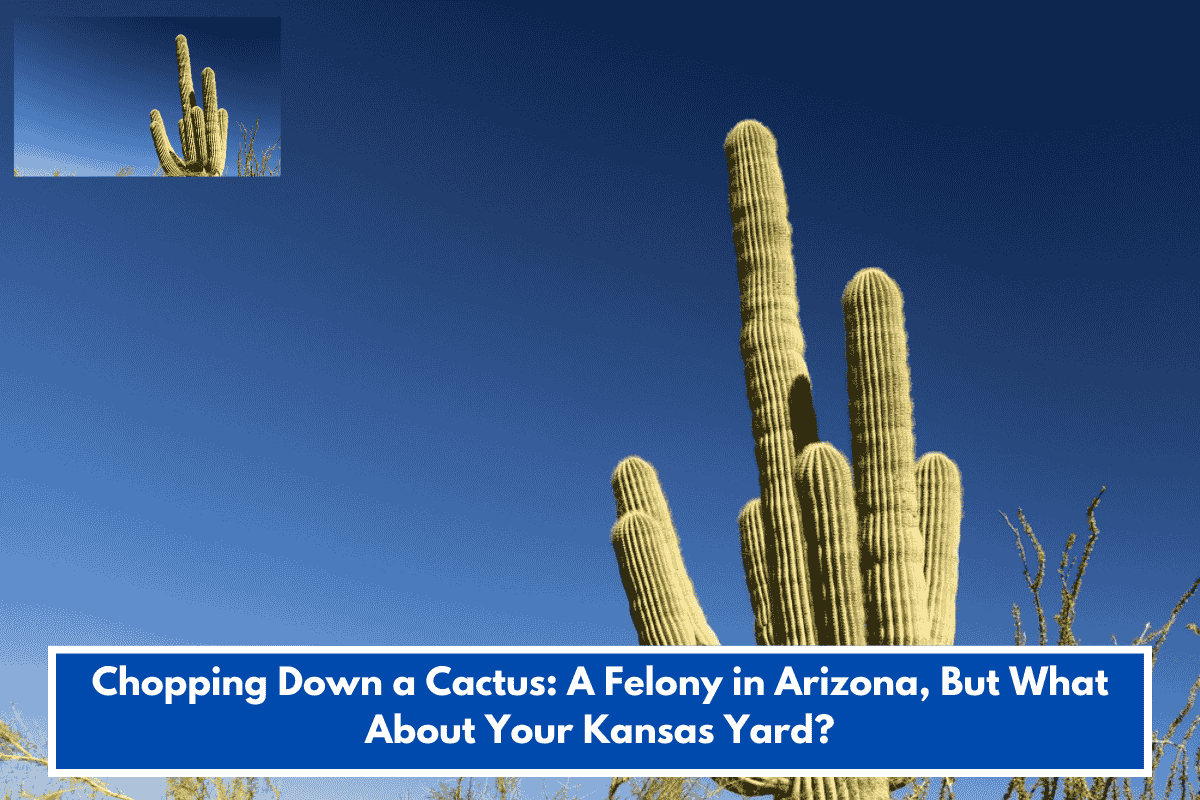
No, chopping down a cactus in your own Kansas yard is not illegal under state law. Unlike Arizona, where native saguaro and certain protected cacti are safeguarded by strict statutes (often treating removal as a felony for species like saguaro without permits), Kansas lacks similar protections for cacti on private property.
Arizona Context
Arizona classifies several native cacti (e.g., saguaro, prickly pear in protected zones) as protected plants under ARS §3-901 et seq., making unauthorized removal, transport, or destruction a class 5 felony for large specimens or repeat offenses, with fines up to $10,000 plus jail time. This stems from conservation needs in the desert ecosystem. Homeowners must get permits even for their yard if it’s a protected species.
Kansas Rules
Kansas has no statewide felony or misdemeanor bans on destroying non-native or ornamental cacti (like prickly pear or opuntia commonly grown in yards) on private land. Cacti aren’t listed as noxious weeds or protected natives in Kansas statutes (K.S.A. Ch. 2 on agriculture focuses on crops, invasives like marijuana, not succulents).
Local zoning or HOA rules might restrict “yard waste” or tree removal permits, but that’s civil, not criminal. Protected plants apply mainly to state parks or public lands (KAR 115-18-20 bans vegetation removal there).
Practical Considerations
If your cactus is psychoactive (e.g., peyote, Lophophora williamsii), federal and Kansas drug laws could apply due to mescaline, but common yard varieties aren’t scheduled that way.
Check city ordinances (e.g., Wichita or Topeka) for nuisance laws on overgrowth, but chopping your own is fine absent disputes. For rare natives, confirm with Kansas Department of Agriculture—no felony risk here.