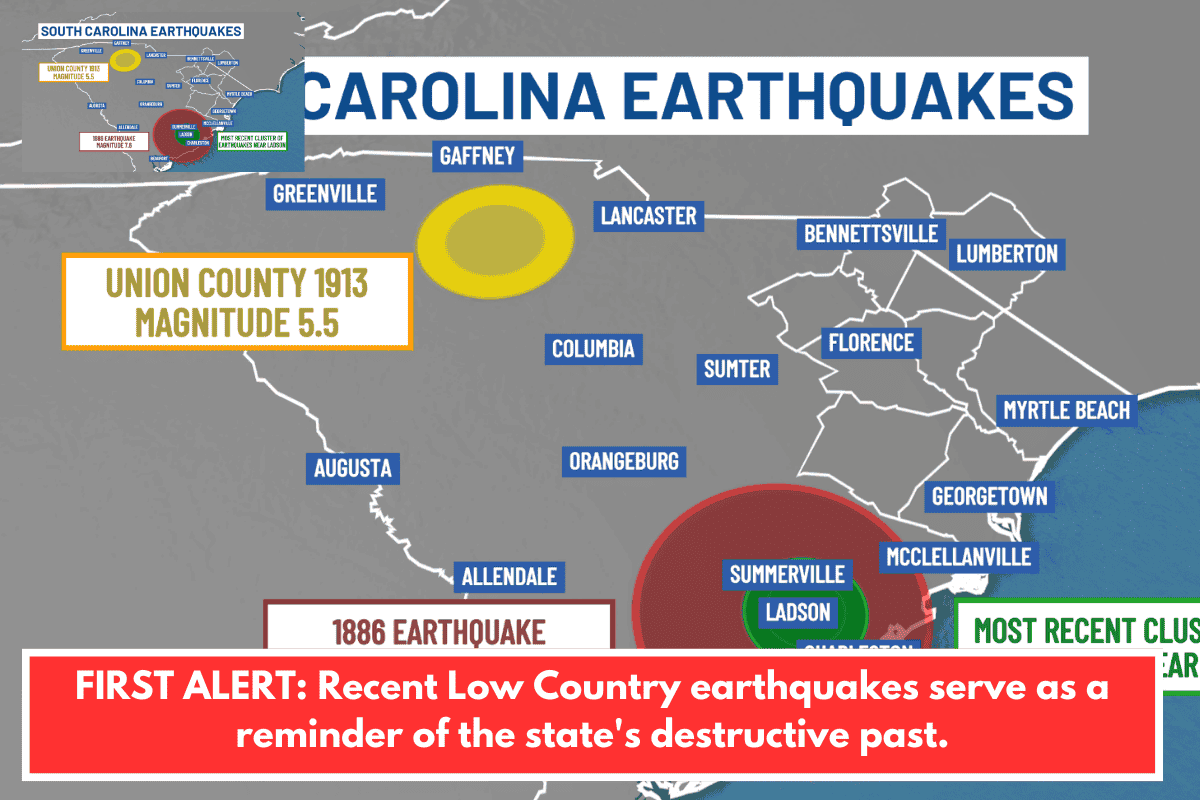
Those minor quakes near Centerville in the Lowcountry—2.9 on Saturday and 2.3 earlier in the week—serve as a timely wake-up call for South Carolina folks, especially closer to Charleston and Myrtle Beach. Over 800 reports to the USGS highlight how even small tremors get noticed here, with no damage or injuries so far per the SC Emergency Management Division. Daily aftershocks this week underscore the area’s subtle but persistent activity.
SC’s Seismic Snapshot
South Carolina sits in an intraplate zone, so quakes stem from internal stresses or ancient faults, not plate edges like in California. Key facts:
- 70% in Coastal Plain: Clustered west/north of Charleston; hidden faults lurk under sediments.
- Historic heavy-hitters: 1886 Charleston M7.6 killed ~60, wrecked the city, felt from Cuba to NY. 1913 Union County M5.5 shook three states but caused little harm.
- Ancient evidence: Geologic scars (sand blows, fissures) point to 5+ big ones in 5,000 years.
No prediction tech exists yet, but the SC Geological Survey maps hazards and pushes prep—like signing up for USGS alerts.
Prep Tips for Lowcountry Residents
Given your ties to Mount Pleasant and North Charleston, here’s a quick action plan:
- Secure your space: Bolt heavy furniture, strap water heaters, install latches on cabinets.
- Emergency kit: Water (1 gal/person/day for 3 days), non-perishables, flashlight, battery radio, first aid, cash, meds.
- Family plan: Designate out-of-area contacts; practice “drop, cover, hold under” drills.
- Stay informed: USGS app or notifications; check SCEMD for local risks.
These steps build resilience without overkill—think of it like prepping for a hurricane, but for shakes from below.
Any recent shakes near you, or want a customized home safety checklist?