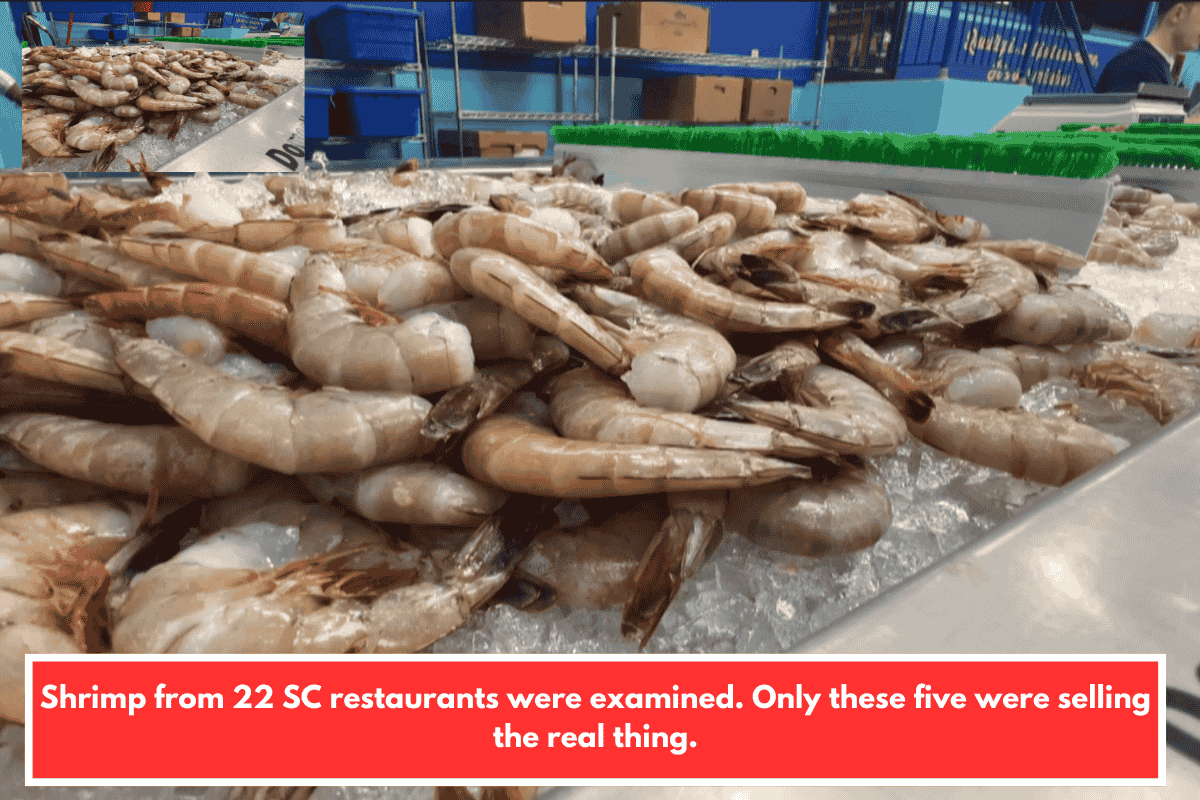
A second round of genetic testing at more than 20 restaurants in Charleston found that most are still serving farm-raised imported shrimp, with some allegedly implying the product is wild-caught and local.
The testing was conducted by SeaD Consulting on behalf of the Southern Shrimp Alliance, which represents shrimpers in eight southern coastal states, including South Carolina. The effort is part of a broader multi-state investigation into shrimp mislabeling and substitution fraud.
Slight Improvement from Last Year
In the initial round of testing a year ago, shrimp from 44 Charleston-area restaurants were analyzed. Only 4 of those 44 establishments — about 9% — were found to be serving wild American shrimp.
During the latest round, conducted Feb. 10–11, 22 of those same restaurants were retested. Five of the 22 — or 23% — were serving wild-caught American shrimp, representing a slight improvement.
However, according to SeaD Consulting, the remaining 17 restaurants serving imported, farm-raised shrimp implied it was U.S. wild-caught.
Restaurants found in both rounds to be serving American shrimp included Acme Lowcountry Kitchen in Isle of Palms, Grace & Grit in Mount Pleasant, and Rappahannock Oyster Bar in Charleston. Two others — Amen Street Fish & Raw Bar and Mt. Pleasant Seafood — were found to have switched to American shrimp after previously selling imports.
Industry Push for Labeling Laws
The shrimping industry has long argued that restaurants are misleading customers at a time when domestic shrimpers are struggling to compete with cheaper foreign imports.
SeaD founder Dave Williams said accurate labeling is critical because about 70% of seafood spending in the U.S. occurs in restaurants. The alliance argues consumers should be able to decide whether they want to support American wild-caught fisheries or imported farm-raised shrimp.
Five of the eight southern shrimping states have passed seafood labeling or disclosure laws. Industry leaders say they hope South Carolina will follow suit. The South Carolina Shrimpers Association is currently working on proposed labeling legislation.
Last year, the association filed a federal lawsuit against 40 Charleston-area restaurants, accusing them of falsely advertising South Carolina seafood while serving foreign shrimp.
Results from similar testing in Myrtle Beach are expected to be released next week.